Rats are among the most persistent pests that can invade homes, gardens, and storage areas. They are not only destructive but also carry harmful diseases that pose a risk to humans and pets. Learning how to make homemade rat traps provides a safe, effective, and affordable solution to reduce their presence while avoiding toxic chemicals.
Homemade traps are versatile and can be customized based on the type of rat infestation and the area to be treated. By using simple materials available at home, anyone can build functional traps that target rats efficiently. These methods not only save money but also allow homeowners to monitor and control infestations responsibly.
Types of Homemade Rat Traps
Different types ofhomemade rat traps can serve varied purposes, from capturing rats alive to killing them instantly. Choosing the right trap type is essential for both effectiveness and safety.
Some traps are designed for repeated use, while others are meant for quick elimination. Understanding the characteristics of each trap will help you implement a control strategy that fits your home environment and infestation level.
Bucket Trap
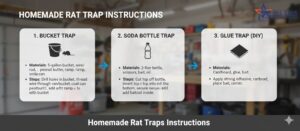
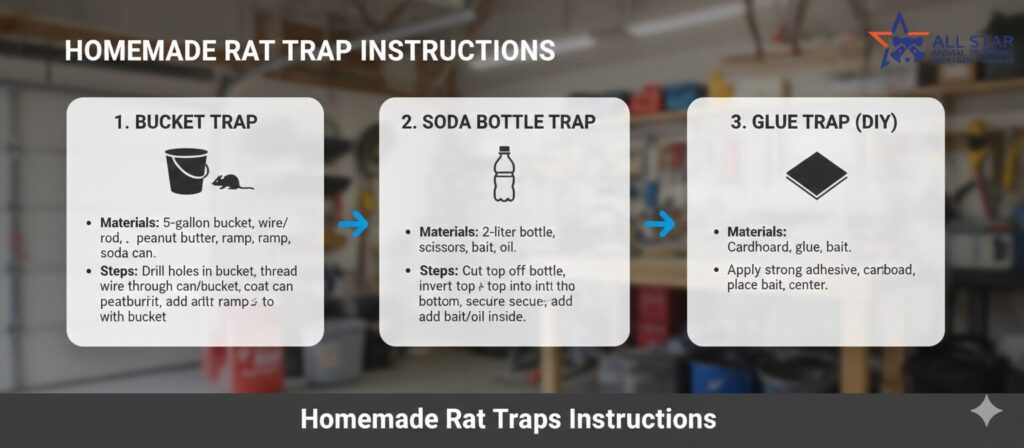
A bucket trap is one of the simplest and most effective methods to catch rats. It typically consists of a bucket, a ramp, and bait such as peanut butter or grains. Rats climb the ramp to reach the bait and fall into the bucket, where smooth walls prevent escape. This type of trap is reusable and requires minimal maintenance, making it cost-effective and environmentally friendly.
Snap Trap
Snap traps provide instant results, designed to kill rats immediately upon triggering. They consist of a spring-loaded mechanism that snaps shut when the rat touches the bait. Proper placement along rat pathways or near their nests greatly enhances their efficiency. These traps require careful handling to ensure safety for humans and pets while remaining highly effective.
Bottle Trap
Bottle traps are inexpensive and versatile, often made using recycled bottles or containers. The mechanism relies on rats stepping onto a rolling or tipping bottle to reach the bait, causing them to fall into a capture area. This design is lightweight, portable, and easy to set up in multiple locations. By experimenting with different baits, homeowners can identify the most attractive food to their local rat population.
Step-by-Step Homemade Rat Trap Instructions
Creating a homemade rat trap requires basic materials and careful assembly. Following a structured process ensures higher success rates and safer operation.
Proper placement of the trap is as important as the construction itself. Placing traps near walls, burrows, or areas where rat droppings are visible increases the likelihood of capture.
Materials Needed
To build effective traps, gather materials such as a bucket or container, a wooden plank for a ramp, and bait like peanut butter or grains. Glue or tape may be required to secure moving parts or stabilize structures.
Additional items such as a knife or scissors may be necessary for cutting and shaping components.
Preparing the Trap
Clean all containers thoroughly to remove odors that could deter rats. Attach the ramp securely to ensure rats can climb easily without slipping. Apply bait in a way that attracts rats while preventing them from taking it without triggering the trap.
Setting the Trap
Place the trap along walls, near corners, or by known rat pathways for maximum effectiveness. Test the stability of ramps and moving parts to ensure smooth operation. Monitor the traps daily, removing captured rats and refreshing bait as needed to maintain efficiency.
Tips for Maximizing Trap Effectiveness
Rats are cautious and intelligent, often avoiding areas that feel unsafe or contaminated. Regular cleaning of traps and rotating bait types can improve capture rates. Using multiple traps in areas of heavy activity ensures better coverage and faster results.
Choosing the Right Bait
Rats are attracted to high-protein foods like peanut butter, nuts, and small pieces of meat. Bait should be secured to prevent rats from stealing it without activating the trap. Testing different baits helps determine which one is most effective for your local rat population.
Ideal Placement
Traps should be placed near walls, behind furniture, or in hidden corners. Avoid open spaces where rats may hesitate to approach due to perceived danger. Documenting successful trap locations allows better planning for long-term control.
Maintenance and Safety
Daily checking of traps prevents odor buildup and maintains efficiency. Wear gloves when handling traps and captured rats to avoid contact with bacteria and viruses. Keep traps away from children and pets to ensure safety.
Short-Term vs Long-Term Trapping Strategies
Immediate trapping addresses current infestations, while preventive measures reduce future risks.
Short-term traps are useful during an active infestation, providing rapid results. Long-term strategies such as sealing entry points, maintaining cleanliness, and monitoring food sources help prevent new rats from entering. Combining both approaches ensures sustainable control.
Common Mistakes to Avoid
Traps are only effective when used correctly, and certain errors can hinder results.
Placing traps in open areas, using weak bait, or neglecting maintenance can lead to failure. Understanding and avoiding these mistakes ensures higher success rates and safer operation.
Placing Traps in Open Areas
Rats feel vulnerable in open spaces, reducing the likelihood of trap interaction. Always place traps against walls, behind furniture, or in dark corners. Adjust trap locations based on observed rat activity to improve results.
Using Weak Bait
Bait that lacks a strong scent or protein content is less likely to attract rats. Use fresh and aromatic bait for maximum appeal. Rotating bait types keeps rats engaged and prevents avoidance.
Neglecting Traps
Unattended traps lose effectiveness quickly due to stale bait or decaying captured rats. Check traps daily to reset and clean as needed. Maintaining traps ensures smooth operation and consistent capture rates.
Homemade Rat Trap Cost
Homemade traps are far more affordable than commercial alternatives.
Most traps can be built for under $10 using household items like jars, buckets, and scrap wood. Even a minimal investment can produce reliable, reusable traps for ongoing rat control.
| Trap Type | Materials Needed | Estimated Cost |
| Bucket Trap | Bucket, plank, bait | $5-$8 |
| Snap Trap | Wood, metal spring, bait | $3-$6 |
| Bottle Trap | Bottle, rolling mechanism, bait | $2-$5 |
Eco-Friendly Considerations
Reusable traps reduce waste, and using natural bait ensures safe and humane control. These practices allow homeowners to address infestations responsibly while minimizing ecological impact.
Humane Alternatives
Live-catch traps provide a non-lethal option, allowing rats to be relocated safely. Release captured rats far from residential areas to prevent their return. Monitoring ensures humane treatment and avoids prolonged stress on trapped animals.
Reusing Materials
Repurposing jars, bottles, or scrap wood is environmentally friendly and reduces costs. Ensure all materials are clean and safe for trap construction. This approach encourages sustainability while maintaining trap effectiveness.
Signs That You Need Homemade Rat Traps
Recognizing early signs of rat activity is crucial for effective control.
Rat droppings, gnawed furniture, damaged wires, and nighttime noises indicate infestation. Prompt use of traps prevents escalation and protects property.
Placement and Monitoring Techniques
Proper placement and consistent monitoring maximize trap effectiveness.
Check traps daily to remove captured rats, refresh bait, and adjust positions as necessary. Tracking high-activity areas allows strategic placement for continuous control.
Additional Prevention Tips
Traps work best alongside preventive measures that reduce rat attraction.
Seal holes, store food in airtight containers, and maintain clean surroundings. Managing waste, trimming vegetation near homes, and eliminating standing water limit opportunities for rat habitation.
Conclusion
Homemade rat traps offer an effective, affordable, and eco-friendly solution to rat infestations. By following proper construction, placement, and maintenance instructions, homeowners can manage rat problems safely and efficiently.
Combining immediate trapping with preventive practices ensures long-term control. Implementing these methods consistently will reduce rat activity while saving money and minimizing environmental impact.
FAQs
1. Can homemade traps work in apartments?
Yes, they are effective in apartments if placed near walls or behind furniture where rats are active. Proper hygiene and monitoring increase success.
2. How do I prevent bait theft without triggering the trap?
Secure the bait on a platform or container to ensure rats must engage with the trap mechanism to access it.
3. Can I make a trap without using wood or metal?
Yes, plastic containers and bottles can serve as effective materials for DIY traps.
4. How many traps should I set at once?
Multiple traps increase coverage and capture rates, especially in areas with heavy rat activity.
5. Can these traps be used for mice as well?
Yes, but smaller traps or scaled-down designs are more effective for mice.
6. Is it safe to leave traps overnight?
Yes, as long as they are placed out of reach of pets and children.
7. How long should I leave a trap before changing bait?
Check daily; fresh bait increases capture likelihood and prevents spoilage.
8. Can homemade traps prevent future infestations?
Combined with sealing entry points and proper hygiene, traps help manage and reduce new infestations.
Humane Wildlife Removal You Can Trust
When nuisance wildlife becomes a problem, rely on All Star Animal Trapping for professional and humane animal removal services. We safely remove raccoons, skunks, squirrels, rodents, and more — protecting your home and family the right way.