Snake fencing has become a crucial safety investment for homeowners, agricultural landowners, and commercial properties located in snake-prone regions. As natural habitats shrink and urban development expands, snakes increasingly enter residential and working spaces in search of shelter and food. This has made snake fencing one of the most reliable preventive solutions for long-term protection.
Understanding how to determine the pricing for snake fencing based on property size is essential for accurate budgeting and planning. Property size directly affects materials, labor, preparation work, and long-term maintenance. This detailed guide explains every size-related factor that professionals consider when calculating snake fencing costs.
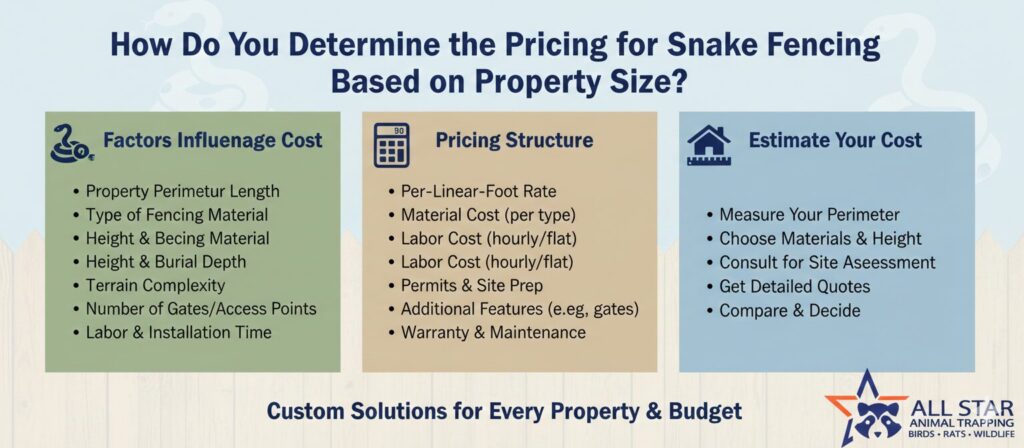
What Does Pricing Based on Property Size Actually Mean?
Pricing based on property size focuses primarily on the total perimeter that needs protection. Snake fencing is installed along boundaries where snakes may enter, not across the entire land area.
Larger properties typically have longer perimeters, which require more fencing materials and installation time. However, pricing is influenced by more than just size, including layout, accessibility, and terrain complexity.
How Is Property Size Measured for Snake Fencing Projects?
Property size for snake fencing is measured in linear feet rather than square footage. Contractors walk the boundary lines to calculate the exact fencing length required.
This method ensures that no vulnerable entry points are overlooked. Accurate measurement prevents underestimating materials and helps avoid costly adjustments during installation.
Perimeter Measurement Process
Professionals use measuring tools and site mapping to outline the fencing path. This ensures accuracy and proper material allocation.
Identifying Natural Barriers
Walls, water bodies, or steep terrain may reduce fencing needs. These features can lower overall costs if strategically used.
Partial vs Full Perimeter Assessment
Some properties require only partial fencing. This reduces total cost while maintaining protection.
How Does Perimeter Length Influence Snake Fencing Pricing?
Perimeter length is the most influential factor in determining cost. Each additional linear foot increases material usage and labor time.
Longer fencing lines also require more support posts, anchoring, and alignment checks. As perimeter length grows, installation becomes more labor-intensive and expensive.
- Longer perimeters require additional mesh panels.
- Increased length raises labor hours and equipment use.
How Does Property Shape Affect Cost Calculations?
Simple rectangular properties are easier and cheaper to fence. Irregular shapes increase installation complexity and time.
Curves, angles, and uneven boundary lines require customized fitting. These adjustments raise labor costs and increase material waste.
Irregular Layouts
Complex layouts require precision cutting and extra support. This increases installation time significantly.
Corner Reinforcement Needs
Multiple corners require additional posts for stability. Each post adds material and labor costs.
Narrow or Elongated Properties
These shapes increase fencing length without increasing usable space. This often leads to a higher cost per square foot.
How Does Fence Height Impact Pricing Based on Property Size?
Fence height directly affects how much material is needed. Taller fencing requires more mesh, stronger posts, and deeper anchoring.
On large properties, height increases compound costs significantly. Taller fencing also requires more labor and safety precautions during installation.
- Taller fences increase material weight and cost.
- Higher fences require stronger structural support.
How Does Terrain Complexity Increase Costs on Larger Properties?
Terrain plays a major role in pricing, especially on large properties. Uneven land requires specialized installation techniques.
Slopes, rocky soil, and unstable ground increase labor time and equipment needs. The more terrain variations across a property, the higher the overall cost.
Sloped Land Installation Challenges
Sloped areas require stepped or angled fencing. This prevents gaps but increases labor intensity.
Rocky or Hard Soil Conditions
Rocky soil slows digging and post placement. Specialized tools may be required.
Soft or Sandy Ground
Soft soil requires reinforced anchoring. Extra materials are often needed for stability.
How Does Vegetation Coverage Affect Pricing?
Dense vegetation increases preparation work before fencing can begin. Clearing plants ensures proper fence placement and durability.
Large properties often require extensive clearing, which adds labor and disposal costs. Vegetation management is essential for effective fencing.
- Thick vegetation increases labor time.
- Disposal of cleared materials adds cost.
When Does Partial Fencing Make Sense for Cost Reduction?
Partial fencing is ideal when snake activity is concentrated in specific areas. Instead of fencing the entire perimeter, installers focus on high-risk zones.
This approach significantly reduces material and labor costs. It is commonly used for large properties with natural barriers.
Targeted Protection Zones
Fencing is installed only where snakes are likely to enter. This keeps costs manageable.
Combining Natural Barriers
Natural features reduce fencing requirements. This lowers overall expenses.
Budget-Friendly Strategy
Partial fencing offers protection without full perimeter costs.
How Do Gates and Access Points Impact Pricing?
Gates add complexity to snake fencing installations. Each gate must be sealed properly to prevent snake entry.
Larger properties often require multiple access points. Every additional gate increases material, labor, and design costs.
Pedestrian Gates
Small gates are affordable and easy to install. They require minimal reinforcement.
Vehicle Access Gates
Wide gates need heavy-duty materials. These significantly increase costs.
Multiple Entry Locations
Each entry point increases installation time. Costs rise with each added gate.
How Do Labor Costs Scale With Property Size?
Labor costs increase as property size increases. Larger installations require more time and workforce coordination.
Extended timelines raise labor charges. Complex properties may need specialized crews.
- Larger projects take longer to complete.
- Skilled labor increases overall cost.
How Do Material Choices Differ for Small vs Large Properties?
Small properties often use lighter materials. Large properties require durable fencing for long-term performance.
Heavy-duty materials cost more upfront but reduce maintenance. Material selection must balance cost and longevity.
- Durable materials increase upfront cost.
- Quality materials reduce long-term expenses.
What Hidden Costs Are Associated With Large Properties?
Large properties often include unexpected expenses. These hidden costs are not always included in initial quotes.
Transportation across large sites increases labor time. Soil testing, drainage work, and reinforcement add to the total cost.
- Site logistics increase labor hours.
- Environmental adjustments raise expenses.
How Can Property Owners Control Snake Fencing Costs?
Smart planning helps control costs effectively. Understanding property risks prevents unnecessary fencing.
Cost-Saving Tips:
- Focus fencing on high-risk zones
- Prepare the land before installation.
- Compare multiple contractor quotes.s
- Choose durable materials wisely.
- Plan future expansions.
How Does Maintenance Cost Increase With Property Size?
Larger fencing systems require more inspections. Increased fence length creates more potential weak points.
Regular maintenance prevents expensive repairs. Larger properties should budget for routine upkeep.
- Larger fences need frequent inspections.
- Preventive maintenance lowers repair costs.
Conclusion
Understanding how to determine the pricing for snake fencing based on property size allows property owners to make informed decisions. Property size affects perimeter length, labor, materials, terrain preparation, and long-term maintenance. Larger properties naturally require higher investment, but strategic planning can reduce unnecessary costs.
By evaluating layout, terrain, access points, and fencing scope, property owners can balance safety and budget. Professional assessments ensure accurate pricing and long-lasting protection. Snake fencing remains one of the most effective solutions for preventing dangerous encounters.
FAQs
1. Does a larger property always mean higher fencing cost?
Generally, yes, but layout and terrain can influence costs significantly.
2. Can partial fencing work for large properties?
Yes, especially when snake entry points are limited.
3. Is perimeter length more important than land area?
Yes, pricing is based on perimeter length rather than total area.
4. Do irregular property shapes increase cost?
Yes, complex shapes require more labor and customization.
5. Can snake fencing be installed in stages?
Yes, phased installation helps manage budgets effectively.
6. Does soil condition affect pricing?
Yes, rocky or soft soil increases installation difficulty.
7. Are large properties harder to maintain?
They require more inspection, but are manageable with quality materials.
8. Can snake fencing be expanded later?
Yes, modular designs allow easy future expansion.
Humane Wildlife Removal You Can Trust
When nuisance wildlife becomes a problem, rely on All Star Animal Trapping for professional and humane animal removal services. We safely remove raccoons, skunks, squirrels, rodents, and more — protecting your home and family the right way.