
Opossums are highly adaptable wildlife animals that often invade residential areas in search of food, shelter, and warmth. Once they identify a safe environment, they can enter homes through small gaps, vents, and crawl spaces. Learning how to prevent opossum entry is essential for homeowners who want to avoid structural damage, health risks, and recurring wildlife problems.
Preventing opossum entry requires a proactive and layered approach rather than relying on a single solution. From sealing entry points and removing food sources to managing landscaping and installing physical barriers, every step plays an important role. This comprehensive guide explains in detail how to prevent opossum entry permanently while keeping your property secure and wildlife-safe.
Understanding Opossum Behavior to Prevent Opossum Entry
To effectively prevent opossum entry, it is important to understand how opossums behave. Opossums are nocturnal animals, meaning they are most active at night when human activity is minimal. During this time, they search for food and safe nesting locations.
Opossums are not aggressive by nature, but they are opportunistic. If they discover an easy way into a home or yard, they will return repeatedly. Understanding this behavior helps homeowners focus on eliminating access points and attractants that make properties appealing to opossums.
Why Opossums Target Homes and Buildings
Homes offer everything opossums need to survive. Warmth, darkness, protection from predators, and easy food access make residential properties ideal shelters. Attics, crawl spaces, decks, garages, and sheds are especially attractive.
Another major factor is human food waste. Open garbage bins, compost piles, pet food, and fallen fruits draw opossums close to homes. Once nearby, they begin exploring ways to enter structures. Removing these attractions is a critical step to prevent opossum entry.
Early Warning Signs of Opossum Entry
Recognizing early signs of opossum activity can prevent a minor issue from turning into a major infestation. Since opossums are nocturnal, signs are often noticed during daylight hours.
Common warning signs include scratching or thumping sounds at night, droppings near foundations, damaged vents, and overturned trash cans. You may also notice a strong, unpleasant odor caused by nesting materials or waste. Acting early is key to preventing opossum entry from becoming permanent.
Inspecting Your Home for Opossum Entry Points
A thorough inspection of your home is one of the most important steps to prevent opossum entry. Opossums can enter through openings as small as a few inches, especially if the area is damaged or weak.
Inspect the roofline, vents, chimneys, soffits, siding, foundation cracks, and crawl space openings. Even minor damage can become an entry point. Regular inspections help homeowners identify vulnerabilities before opossums exploit them.
Sealing Entry Points to Prevent Opossum Entry
Sealing all potential entry points is the most effective long-term solution. Opossums rely on accessible openings, and once these are eliminated, they move on to easier locations.
Use durable materials such as metal flashing, hardware cloth, concrete filler, and weather-resistant sealants. Avoid lightweight materials that opossums can chew or tear. Proper sealing not only helps prevent opossum entry but also improves energy efficiency and pest control.
Preventing Opossum Entry Through Attics and Roofs
Attics are among the most common nesting areas for opossums. They provide warmth, insulation, and minimal disturbance. Broken vents, loose shingles, and uncapped chimneys are major access points.
Installing chimney caps and reinforcing roof vents with metal mesh can greatly reduce the risk. Regular roof maintenance ensures that storms and aging materials do not create new access points. Preventing attic access is critical for stopping opossum entry entirely.
Crawl Space and Foundation Protection for Opossum Prevention
Crawl spaces are dark, quiet, and hidden, making them ideal shelters for opossums. Gaps in crawl space doors or damaged foundation vents provide easy access.
Installing crawl space barriers and reinforcing vents with strong mesh can block entry. Foundation cracks should be sealed promptly. Protecting crawl spaces plays a major role in preventing opossum entry and maintaining structural integrity.
Removing Food Sources to Prevent Opossum Entry
Food availability is one of the strongest attractants for opossums. Eliminating food sources makes your property far less appealing.
Trash cans should have tight-fitting lids and be stored securely. Pet food should never be left outdoors overnight. Compost piles should be sealed, and fallen fruit should be removed daily. Consistent food management is essential to prevent opossum entry.
Managing Pet Food and Bird Feeders
Pet food bowls and bird feeders are common causes of repeated opossum visits. Spilled seeds and leftover food provide easy meals.
Feed pets indoors whenever possible and clean outdoor feeding areas thoroughly. Place bird feeders away from buildings and regularly clean beneath them. These simple habits significantly reduce the risk of opossum entry.
Yard Maintenance to Prevent Opossum Entry
A cluttered yard offers shelter and hiding places for opossums. Overgrown vegetation, debris piles, and unused materials create ideal nesting conditions.
Trim bushes and shrubs near the foundation. Remove piles of leaves, wood, and debris. Store firewood elevated and away from the home. A clean, open yard discourages opossums from settling nearby.
Tree Trimming and Landscaping Control
Trees and vines can act as natural ladders for opossums. Low-hanging branches allow easy roof access.
Trim trees at least six to eight feet away from the house. Remove vines climbing walls or fences. Landscaping control is a powerful method to prevent opossum entry through upper levels of the home.
Installing Physical Barriers to Prevent Opossum Entry
Physical barriers are highly effective for long-term prevention. Fencing, screens, and exclusion systems block common access points.
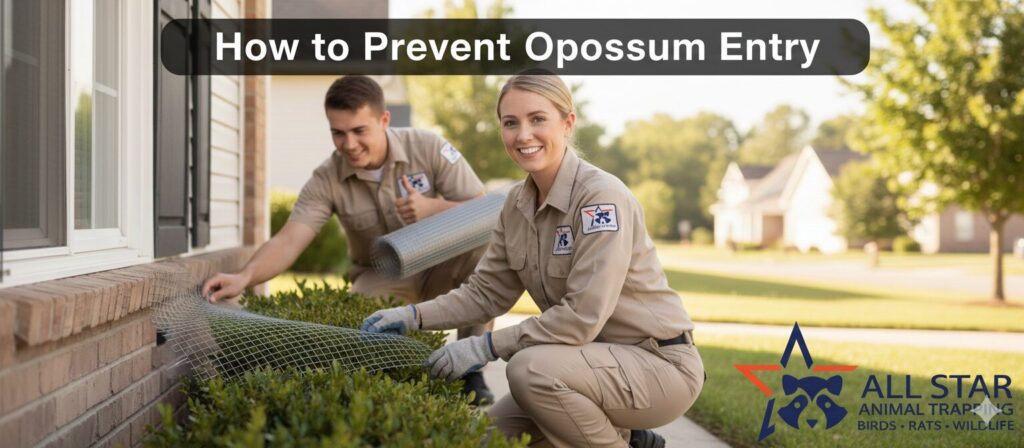
Fences should be made of metal and buried several inches underground to prevent digging. Install door sweeps on exterior doors and reinforce vents with hardware cloth. Physical barriers create a strong defense against opossum entry.
Deck and Porch Exclusion Methods
Decks and porches are frequent nesting areas. Opossums often enter through gaps beneath these structures.
Install lattice panels or metal mesh around the perimeter and secure them tightly to the ground. These exclusion methods prevent access while maintaining airflow and appearance.
Using Deterrents to Prevent Opossum Entry
Deterrents can help discourage opossums when used alongside physical prevention methods. Opossums are sensitive to sudden light, movement, and strong smells.
Motion-activated lights and sprinklers can startle opossums at night. Commercial repellents may provide short-term results. Deterrents should support, not replace, sealing and maintenance efforts.
Eliminating Water Sources to Prevent Opossum Entry
Water is another key attractant. Leaking hoses, standing water, and pet bowls can draw opossums close.
Fix leaks promptly and improve drainage around your property. Empty outdoor water bowls at night. Reducing water availability makes your home less attractive to wildlife.
Ongoing Monitoring to Prevent Opossum Entry
Prevention does not end after initial repairs. Seasonal changes, storms, and wear can create new vulnerabilities.
Schedule routine inspections of roofs, foundations, and barriers. Watch for new signs of activity, such as droppings or digging. Ongoing monitoring ensures long-term success.
When Professional Wildlife Control Is Necessary
If opossums have already entered your home, professional wildlife control may be required. Improper handling can be dangerous and illegal in some areas.
Professionals use humane removal methods and provide exclusion services. They also identify hidden entry points that homeowners may overlook. Professional help ensures complete prevention of future opossum entry.
Quick Prevention Checklist
- Seal all vents, gaps, and openings.
- Secure trash, compost, and pet food
- Maintain landscaping and trim trees.
- Install fencing and a crawl space barrier.
- Use motion-activated deterrents
- Remove standing water sources
Conclusion
Preventing opossum entry requires a comprehensive and consistent approach. Opossums rely on access to shelter, food, and water, and removing these elements makes your property unattractive. Small preventive steps can stop large and costly problems.
By sealing entry points, maintaining your yard, securing food sources, and monitoring your property regularly, homeowners can prevent opossum entry effectively. Long-term prevention protects both your home and the surrounding environment.
FAQs
1. Can opossums squeeze through small openings?
Yes, opossums can fit through surprisingly small gaps if the opening is weak or flexible.
2. Do opossums cause structural damage?
Yes, they can damage insulation, vents, wiring, and wooden structures.
3. Are opossums dangerous to pets?
They are usually non-aggressive, but conflicts can occur if pets corner them.
4. Do deterrents permanently stop opossums?
No, deterrents work best when combined with sealing and cleanup.
5. How often should inspections be done?
At least twice a year and after storms or renovations.
6. Can opossums climb fences?
Yes, they are skilled climbers and require secure barriers.
7. Is DIY prevention effective?
Yes, when done thoroughly and consistently.
8. Should opossums be removed humanely?
Yes, humane methods are safer and legally required in many areas.
Humane Wildlife Removal You Can Trust
When nuisance wildlife becomes a problem, rely on All Star Animal Trapping for professional and humane animal removal services. We safely remove raccoons, skunks, squirrels, rodents, and more — protecting your home and family the right way.