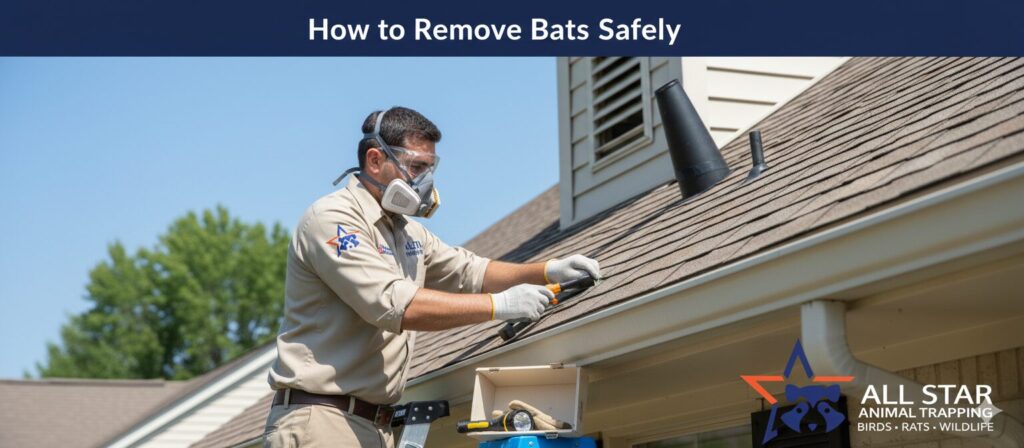
Owning property in Los Angeles, California requires more than vigilance; it demands a clear understanding of wildlife intrusions. How to remove bats safely helps homeowners, property managers, and families handle infestations responsibly, ensuring animal welfare, health protection, and legal compliance. Professional guidance covers non-lethal exclusion, entry sealing, and cleanup processes, reducing risks and preventing recurring bat problems.
From residential attics to home structures, these techniques offer specialized bat management and assist with infestation resolution, protecting occupants and buildings. By following safe removal steps, bat control in Los Angeles becomes ethical, effective, and free from unnecessary harm, giving confidence to every client.
What Is How to Remove Bats Safely?
How to remove bats safely encompasses a wide range of humane and legal practices designed to resolve building infestations. These methods include one-way exclusion devices, entry point sealing, guano cleanup, and sanitation. Their primary objective is to evict bats without injury while preventing re-entry. By prioritizing safe techniques, property owners gain compliant solutions that protect both wildlife and structures.
Beyond basic eviction, how to remove bats safely provides comprehensive strategies that help clients make informed decisions. Specialists conduct inspections, install exclusion tools, and perform decontamination. This expertise is particularly important in areas like Los Angeles, where bat species are protected and regulations prohibit harmful methods, making safe removal essential for legal and successful results.
Definition and Scope of Safe Bat Removal Techniques
Safe bat removal techniques govern all aspects of compassionate eviction practices, non-lethal methods, prevention measures, and regulatory compliance. They include valve installations, mesh screening, sealing work, and droppings removal. These techniques ensure bat welfare, protect properties, and provide a framework that regulates residential and commercial infestations to maintain health and safety. Safe removal also adapts to local protected species laws, making professional handling vital for ethical resolution.
The scope of how to remove bats safely also covers process details, ensuring inspections, exclusions, reports, and cleanups are thorough and compassionate. Without proper safe practices, improper attempts can lead to trapped bats, disease spread, or legal violations. Ethical techniques guarantee that infestations are resolved responsibly, effectively, and in accordance with current wildlife regulations, protecting properties long-term.
Who Needs How to Remove Bats Safely?
Anyone discovering bats in structures benefits from safe removal techniques, including homeowners, landlords, businesses, and facility managers. Homeowners rely on safe guidance for attic infestations to confirm colonies, verify entry points, and ensure protected eviction. Businesses depend on techniques to meet health codes, reduce liability, and secure premises. Properties with vulnerable occupants require support to manage risks tied to noise, odors, and diseases.
Even small colonies can grow rapidly. Residential bat techniques safeguard families from histoplasmosis, structural damage, or disturbances. Safe removal ensures that every infestation is handled ethically, risks are minimized, and buildings are restored, providing security for both health and property value.
Importance of How to Remove Bats Safely
- How to remove bats safely is essential for preventing harm, ensuring animal welfare, and complying with protected species laws.
- Experts can apply safe devices and seals that untrained efforts may overlook.
- Implementing safe techniques early ensures infestations are resolved before spreading, making outcomes smoother and more effective.
- Technique transparency also provides clarity and confidence. Safe bat control
- ensures practices align with local regulations, ethical standards, and safety protocols.
- Additionally, safe techniques help reduce re-infestation by thorough prevention, keeping properties bat-free for years to come.
Protecting Properties and Health
Protecting properties involves safe exclusion, sealing gaps, and removing droppings. Professionals install devices, sanitize areas, and prevent returns. Technique verification gives assurance that buildings are safe and clean.
Without safe practices, properties risk guano accumulation, structural weakening, or rabies exposure. Safe bat management addresses issues promptly, preventing long-term health and repair complications, and ensuring stable, protected environments.
Avoiding Harmful Methods and Legal Issues
Many bat problems worsen from lethal attempts, trapped animals, or incomplete work. Avoiding pitfalls involves licensed assessment, non-lethal methods, and expert execution to prevent violations. Safe techniques ensure all steps, timelines, and outcomes are ethical and reliable.
Safe measures reduce fines, animal suffering, and re-infestations. When techniques are safely managed, owners proceed confidently, knowing issues are resolved responsibly and future problems minimized.
How to Remove Bats Safely for Homeowners
Safe support for homeowners ensures detailed inspections, colony verification, and full compliance. Safe bat processes guide through exclusion, cleanup, and prevention, reducing risks and restoring attics.
In bat-prone regions like Los Angeles, homeowners benefit greatly from safe techniques, where protected species demand specialized, ethical intervention for safe homes.
One-Way Exclusion Devices
Installing valves allows bats to exit but not re-enter. This safe step prevents trapping and ensures protected eviction.
Guano Cleanup and Sanitation
Removing droppings and disinfecting prevents spore inhalation and odors. Oversight requires protective gear and proper disposal.
How to Remove Bats Safely for Businesses
Commercial properties face amplified risks from bats. Techniques ensure code compliance, verified methods, and enforceable prevention.
Professional guidance protects from liability, operational disruptions, or damage, while maintaining smooth and sanitary facilities.
Sealing Commercial Entry Points
Sealing requires adherence to building standards. Services identify gaps, ensuring structures are secured.
Health and Safety Protocols
Protocols define inspections, exclusions, and cleanups for all stakeholders. Reviews ensure reliable outcomes, protecting employees and clients.
Role of Bat Removal Experts in Safe Techniques
Bat removal experts provide specialized safe control, ensuring compliance and safeguarding property interests. Experts guide inspections, install devices, and handle cleanups, maintaining ethics and effectiveness throughout.
Inspection and Exclusion Planning
Professional inspection ensures risks are clear, legal, and compliant with standards. Experts evaluate colonies, clarify options, and prevent issues.
Cleanup and Prevention Recommendations
Recommendations support clients during processes, address infestations proactively, and ensure buildings meet health needs, avoiding future returns.
Common Challenges in Safe Bat Removal
Common issues include maternity seasons, multiple entries, guano hazards, and legal timing restrictions. Early professional help identifies these, implements solutions, and ensures welfare.
Protected Species Restrictions
Handling federal protections resolves timing limits, non-lethal requirements, or permits. Clear compliance checks prevent violations.
Re-Infestation Risks
Compliance with thorough sealing prevents returns, gaps, or overlooked points. Oversight ensures all practices follow safe guidelines.
Are Safe Bat Removal Techniques Effective?
Safe techniques prevent health risks, ensure compliance, and protect long-term integrity. Ethical intervention facilitates responsible and thorough resolution.
Key Features of How to Remove Bats Safely
- Inspections ensure accurate colony assessments and planning.
- Exclusion devices cover safe one-way exits.
- Sealing work verifies gaps and prevents re-entry.
- Guano removal handles hazards efficiently and safely.
- Homeowner techniques ensure proper attic restoration.
- Business protocols protect from liability and disruptions.
- Compliance with regulations prevents fines and issues.
- Commercial techniques manage larger structures and risks.
- Residential methods safeguard health and comfort.
- Long-term prevention preserves property value and peace.
How to Choose Safe Bat Removal Techniques
Evaluating licenses, safe certifications, and transparency ensures selection of qualified providers. Safe bat consultation helps clients decide on processes, ethics, and expertise.
Experience and Expertise
Experienced firms understand species identification, exclusion techniques, and cleanup protocols. Their knowledge anticipates and manages infestations safely.
Techniques, Transparency, and Client Reviews
Safe techniques and positive client reviews indicate reliability. Consultation clarifies approaches, scope, and service quality.
Reference Table
| Service Area | Purpose | Outcome |
| Initial Property Inspection | Locate all entry points and assess colony size | Accurate eviction plan and timing recommendation |
| One-Way Valve Installation | Allow bats to exit main roosts safely | Safe removal without trapping inside |
| Exclusion Tube Placement | Fit over smaller holes for targeted exit | Complete colony evacuation from specific areas |
| Caulk and Sealant Application | Fill cracks and crevices permanently | Blocked minor entry points with weatherproof seal |
| Expanding Foam Usage | Seal irregular or larger gaps | Durable closure for uneven surfaces |
| Hardware Cloth Screening | Cover vents, chimneys, and openings | Maintained ventilation while excluding bats |
| Soffit and Eave Sealing | Reinforce weak roofline areas | Prevented climbing and squeezing entries |
| Ridge Vent Modifications | Install bat-resistant covers | Protected roof ventilation from intrusion |
| Chimney Cap Installation | Mesh cap with proper spacing | Safe flue use and bat exclusion |
| Attic Gable Vent Netting | Temporary netting for exit monitoring | Controlled eviction with visual confirmation |
| Roof Shingle Gap Sealing | Close under-shingle spaces | Eliminated common roof entry routes |
| Window and Door Frame Sealing | Address frame gaps and weathering | Secured building envelope completely |
| Guano Removal and Bagging | Safe collection of droppings | Eliminated health hazards from spores |
| HEPA Vacuum Sanitation | Deep clean affected areas | Removed residual dust and contaminants |
| Disinfection and Deodorization | Apply enzyme treatments | Neutralized odors and pathogens |
| Insulation Replacement (if needed) | Remove contaminated material | Restored attic insulation and air quality |
| Follow-Up Re-Inspection | Check for re-entry signs | Confirmed long-term success and seal integrity |
| Prevention Consultation | Recommend lighting or deterrents | Reduced future attraction to property |
| Maternity Season Coordination | Schedule outside protected periods | Ethical and legal compliance |
| Full Documentation | Provide proof of safe handling | Record for wildlife authorities if required |
How to Remove Bats Safely Overview – Final Thoughts
Following how to remove bats safely makes wildlife infestations predictable, compassionate, and resolvable. Homeowners, businesses, and managers benefit from ethical techniques that prevent harm, ensure compliance, and safeguard health. Timely safe interventions strengthen confidence, reduce risks, and ensure clean resolutions.
When to Start Safe Removal
Safe removal should begin upon discovering signs like noises or droppings. Early consultation prevents growth, identifies solutions, and clarifies legal timing.
Long-Term Benefits of Safe Techniques
Safe techniques provide long-term security, ensure effective exclusion, and protect property condition. Ongoing prevention safeguards against recurring infestations over time.
Conclusion
Bat infestations in buildings are complex and carry potential health dangers. How to remove bats safely provides clarity, protect structures and occupants, and ensure compliance with laws. Professional safe approaches allow homeowners, businesses, and managers to make informed decisions, avoid risks, and preserve long-term safety. With thorough inspections, non-lethal exclusion, cleanup, and sealing, managing bats becomes ethical, effective, and permanent.
Frequently Asked Questions
1. What are safe techniques to remove bats?
Safe techniques include inspections, one-way valves, sealing, and guano cleanup. Additional steps cover sanitation and prevention. This ensures compassionate resolution from the start. Safe practices identify effective options. Ethical approaches deliver protection without harm.
2. Do I need professionals to remove bats safely?
Professionals ensure compassionate, legal, and effective handling for welfare. They help avoid risks and improper methods. Protected species laws support expert intervention. Reviews highlight compliance and success. Smart choices lead to better outcomes and peace.
3. How does safe removal help with attic bats?
Safe removal for attics covers valve installation, sealing, and cleanup. It minimizes health risks and structural damage. Custom techniques address common roosts. Ethical seals protect family spaces. Professional support ensures ongoing safety without issues.
4. What is a safe bat removal assessment?
A safe assessment evaluates colony size, entry points, and guano levels. It identifies risks and recommends non-lethal solutions. This forms the basis for legal plans. Experts provide thorough, compassionate guidance. It prevents escalation or improper actions.
5. Are safe bat removal techniques expensive?
Techniques vary by infestation size and cleanup needs. Basic exclusions are reasonable, while full restoration adds value. Competition offers fair pricing. Investing in safety prevents higher health damages. Overall, safe removal proves cost-effective long-term.
6. Can safe techniques prevent bat returns?
Detailed safe removal includes sealing and prevention measures. It reduces risks through thorough planning and valves. Transparent processes avoid gaps. Comprehensive strategies handle potential re-entry. Good techniques ensure lasting, bat-free results.
7. How do laws affect safe bat removal?
Laws protect bats and prohibit harm or disturbance during maternity seasons. This requires professional timing and documentation. Strong regulations cover compassionate practices. Adhering to rules prevents fines and issues. Reliable techniques ensure fully legal processes.
8. Is professional safe removal needed for residential buildings?
Residential structures face direct exposure, making safe removal essential for family protection. It covers extensive sealing and cleanup. Professional action provides health coverage. Custom plans prevent complications. Expert intervention maintains wellness standards.
9. How do I choose safe bat removal techniques?
Evaluate provider licenses, safe certifications, and experience first. Check transparency in methods and client reviews. Compare non-lethal techniques, timing, and compliance. Ask about processes and ethics directly. Select based on welfare, reliability, and expertise.
10. What are the long-term benefits of safe techniques?
Safe techniques deliver ongoing prevention, reducing return chances. They ensure compliance and property protection. Savings come from avoiding health issues and repairs. Peace of mind lasts with ethical practices. Overall investment maintains safety and value over years.
Humane Wildlife Removal You Can Trust
When nuisance wildlife becomes a problem, rely on All Star Animal Trapping for professional and humane animal removal services. We safely remove raccoons, skunks, squirrels, rodents, and more — protecting your home and family the right way.