
Birds are fascinating creatures, but when they invade your property, they can cause serious damage and health concerns. Learning how to safely exclude birds from your property ensures a clean, safe, and comfortable environment for you and your family. Effective bird exclusion not only protects your home but also keeps local wildlife safe and unharmed.
Using safe and humane methods to deter birds prevents structural damage, protects gardens, and minimizes contamination from droppings. By understanding bird behavior and choosing the right strategies, homeowners can manage infestations without harming the animals. Implementing these techniques guarantees long-term results while maintaining an eco-friendly approach.
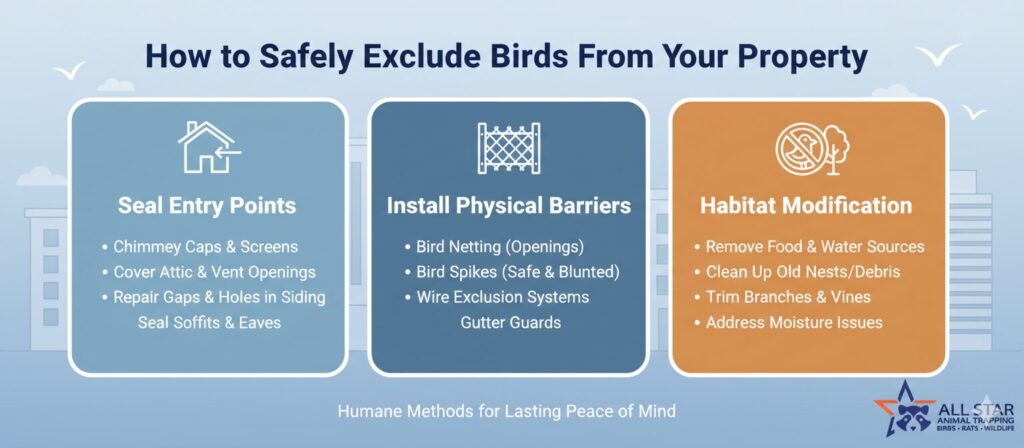
Understanding Bird Behavior
Birds are naturally drawn to food sources, nesting sites, and safe resting areas. Knowing how to safely exclude birds from your property starts with understanding what attracts them. Identifying the species and their habits helps you target solutions more effectively.
Nesting season is a critical time when birds are most likely to invade buildings and gardens. Recognizing peak periods allows homeowners to take proactive measures before infestations become serious. Simple observations, like noting where droppings appear or which areas are frequented, provide valuable insight.
Common Birds That Invade Properties
House sparrows, pigeons, and starlings are the most frequent intruders. Each species has distinct nesting habits and preferred perching spots. Understanding these preferences helps in selecting the right exclusion methods.
Seasonal Patterns
Bird activity varies with the seasons. Spring and summer see higher nesting behavior, while winter may bring birds seeking warmth. Seasonal adjustments in exclusion strategies improve effectiveness.
Preventing Access Points
The first step in learning how to safely exclude birds from your property is to identify and secure entry points. Birds can squeeze through tiny gaps and enter attics, vents, and chimneys.
Sealing openings with mesh screens, netting, or weatherproof materials prevents unwanted access. Regular inspections of roofs, eaves, and windows ensure no gaps are overlooked. These preventative steps reduce the chance of a bird infestation before it starts.
Using Mesh Screens
Mesh screens are effective for vents and chimneys. They prevent birds from entering while allowing airflow. Installing screens requires minimal effort and provides long-term protection.
Door and Window Barriers
Birds often enter through open doors and windows. Installing fine netting or temporary barriers during peak bird activity prevents entry. These solutions are both cost-effective and safe.
Bird Netting Solutions
Bird netting is one of the safest methods to prevent birds from landing or nesting. Proper installation is crucial for effectiveness.
Bird netting comes in durable materials that withstand weather conditions. Positioning nets over gardens, balconies, and open spaces ensures birds cannot access these areas. Regular checks prevent sagging or damage that may allow birds to enter.
- Durable and UV-resistant nets: Long-lasting and effective under sunlight.
- Easy installation: Can be attached to poles, walls, or ceilings.
- Eco-friendly: Humane solution without harming birds.
- Versatile use: Suitable for fruit trees, patios, and rooftop gardens.
- Low maintenance: Simple to clean and inspect regularly.
Scare Tactics That Work
Visual and auditory deterrents can effectively discourage birds. These tactics mimic predators or create uncomfortable environments.
Holographic tape, scare balloons, and reflective surfaces confuse and scare birds away. Sound-based deterrents emit predator calls or high-frequency noises, preventing birds from settling. Combining multiple tactics increases long-term effectiveness.
Visual Deterrents
Brightly colored objects or predator decoys trigger birds’ natural fear instincts. Regularly changing positions prevents habituation. Placement near nesting-prone areas is most effective.
Auditory Deterrents
Ultrasonic devices or recorded predator calls keep birds on alert. Devices must be installed in areas birds frequently visit. Short bursts of sound are more effective than continuous noise.
Roof and Gutter Protection
Birds often target roofs and gutters for nesting. Securing these areas is essential for exclusion.
Installing gutter guards prevents nesting materials from accumulating. Roof spikes or angled barriers make landing uncomfortable for birds without causing harm. Routine roof inspections catch potential issues early, reducing the need for extensive repairs.
Garden and Crop Protection
Birds can cause significant damage to gardens and crops. Learning how to safely exclude birds from your property ensures plants thrive without interference.
Protecting individual plants with cages or nets keeps fruit and vegetables safe. Companion planting and using decoy crops can divert birds away from valuable produce. Rotating these methods prevents birds from adapting to your strategy.
- Protective netting over plants: Prevents direct access to fruits and vegetables.
- Bird scare tapes: Reflective and fluttering in the wind, effective for open gardens.
- Decoy crops: Divert attention from main crops using sacrificial plants.
- Raised planters: Difficult for ground-feeding birds to access.
- Predator decoys: Owls or hawks deter birds naturally without harm.
Safe Chemical Deterrents
Certain chemical repellents are safe for birds and effective in small doses. Always choose products labeled non-toxic and eco-friendly.
These repellents can be applied to rooftops, ledges, or garden areas. Birds instinctively avoid treated surfaces, reducing the chance of nesting or feeding. Following manufacturer instructions ensures safety for humans, pets, and wildlife.
Regular Cleaning and Maintenance
Maintaining a clean property is critical for long-term bird exclusion. Droppings, food scraps, and clutter attract birds.
Regular cleaning of gutters, patios, and garden areas removes temptations. Disinfecting bird-prone areas reduces disease risk. Clean environments make your exclusion measures more effective.
Gutter Cleaning Tips
Remove leaves and debris to prevent birds from nesting. Use gloves and safe cleaning tools. Consistency in cleaning prevents repeated infestations.
Patio and Balcony Maintenance
Keep food sources covered or stored indoors. Sweep surfaces frequently to eliminate crumbs. Well-maintained spaces deter birds naturally.
Professional Bird Control Services
In severe cases, professional services provide specialized solutions. Experts can install netting, spikes, and deterrents safely and efficiently.
Hiring professionals ensures humane treatment of birds while achieving lasting results. They also provide maintenance and advice tailored to your property.
Conclusion
Learning how to safely exclude birds from your property protects your home, garden, and health. By combining preventative measures, physical barriers, deterrents, and safe repellents, homeowners can manage bird activity effectively. Regular maintenance and monitoring ensure long-lasting results while keeping birds unharmed.
Safe bird exclusion also supports the environment by promoting humane treatment. Implementing these strategies enhances your property’s safety, cleanliness, and aesthetic appeal. Following these steps guarantees peace of mind and a bird-free home without causing harm to wildlife.
FAQs
Q1: Can I exclude birds without harming them?
Yes, all methods mentioned are safe and humane. Birds are deterred rather than injured.
Q2: How often should I check my exclusion devices?
Inspect weekly for damage or wear. Regular checks maintain effectiveness.
Q3: Are ultrasonic devices safe for pets?
Most are safe, but check the label. Avoid exposure to small animals sensitive to high frequencies.
Q4: Do reflective tapes work on all birds?
They are most effective on small to medium birds. Large birds may require additional deterrents.
Q5: When is the best time to start bird exclusion?
Before nesting season begins in spring. Early measures prevent infestations.
Q6: Can plants alone prevent birds from entering my garden?
Plants help, but are rarely sufficient alone. Combine with netting or decoys for full protection.
Q7: Are roof spikes harmful to birds?
No, they are designed to prevent landing without causing injury. Proper installation ensures safety.
Q8: Should I hire a professional immediately?
Only for severe infestations or hard-to-reach areas. Minor issues can be managed with DIY solutions.
Humane Wildlife Removal You Can Trust
When nuisance wildlife becomes a problem, rely on All Star Animal Trapping for professional and humane animal removal services. We safely remove raccoons, skunks, squirrels, rodents, and more — protecting your home and family the right way.