Squirrels may seem harmless when you see them darting around trees, but once they find their way into your home, they can cause serious damage. Learning how to spot squirrel entry points in your home is essential for protecting your property. These agile rodents are skilled at squeezing through small gaps in roofs, vents, and walls, often going unnoticed until they’ve caused damage. Identifying entry points early can save you time, money, and stress.
Many homeowners underestimate the persistence of squirrels. By knowing how to spot squirrel entry points in your home, you can take proactive measures to block their access. From gnawed wood to chewed insulation, recognizing these warning signs allows you to prevent infestations before they start. Prevention is far easier and cheaper than repairing damage caused by a full-blown squirrel invasion.
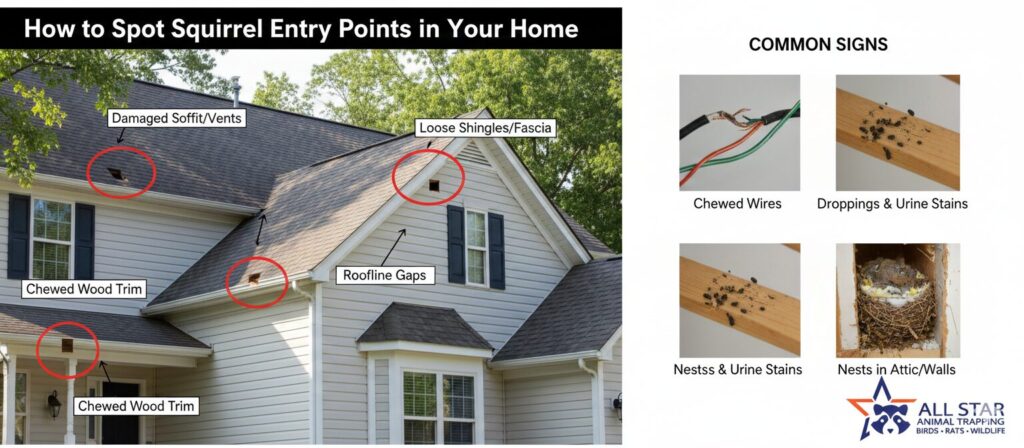
Common Signs of Squirrel Entry in Your Home
Squirrels leave noticeable traces when they attempt to enter your property. Learning to identify these signs is the first step in spotting potential entry points.
Visual Damage Indicators
- Chewed holes in siding, vents, or eaves
- Scratches or gnaw marks on wooden surfaces
- Shredded leaves or nesting material near roofs
Droppings and Urine
Squirrel droppings are small, dark, and pellet-shaped. They often accumulate near entry points and in attics. Detecting droppings early can indicate recent squirrel activity.
Noise and Movement
Scratching, rustling, or scampering sounds in the attic or walls usually signal that squirrels are present. These noises are most noticeable at dawn and dusk when squirrels are most active.
Inspecting Roofs for Potential Squirrel Entry Points
Your roof is one of the most vulnerable parts of your home. Squirrels can leap from trees and climb almost any surface to reach gaps in shingles or tiles. Regular roof inspections are critical for spotting potential entry points.
Checking Shingles and Flashing
Loose or missing shingles create gaps that squirrels can exploit. Examine flashing around chimneys, vents, and roof edges for signs of wear or damage.
Roof Vents and Soffits
Soffits and roof vents are favorite entry points for squirrels seeking attic access. Look for gnaw marks or accumulated debris near these areas. Installing metal mesh or vent guards can prevent squirrel intrusion.
Chimney Openings
Chimneys without caps are an open invitation. Evensquirrels that cannot climb may find their way inside if the flue or cap is missing or damaged.
Attic Inspection Tips to Spot Squirrel Access
Attics provide warmth, shelter, and safety for squirrels. Once inside, they can chew wiring, insulation, and structural beams. Regular attic inspections are vital for early detection.
Droppings and Nesting Materials
Check insulation for shredded materials or droppings. Squirrels often create nests using insulation, fabric, or leaves.
Access Hatches
Ensure attic access panels are properly sealed. Loose panels or small gaps can provide squirrels with easy entry.
Sounds of Activity
Scratching, thumping, or scampering noises indicate active squirrels. These sounds are louder at night or during early morning.
Wall and Siding Weak Points
Squirrels can gnaw through wood, vinyl, and even thin metal. Walls and siding are common targets for creating entry points.
Inspecting Exterior Walls
Look for small holes or cracks along siding, especially near corners, eaves, and utility lines.
Gaps Around Utilities
Pipes, electrical conduits, and cable lines often leave gaps between walls and the building. These should be sealed with durable materials to block squirrels.
Doors, Windows, and Other Openings
Even small gaps around doors and windows can be exploited by squirrels. Check all exterior access points for damage or weakness.
Window Frames and Screens
Ensure screens are intact and frames are tightly sealed. Gaps larger than 1 inch can be entry points.
Doors and Door Sweeps
Install door sweeps on exterior doors. Look for spaces beneath garage doors, side doors, and sliding doors.
Weather Stripping
Replace worn weather stripping to prevent squirrels from slipping through narrow gaps.
Chimneys, Vents, and Exhaust Openings
Chimneys and vents are easy targets for squirrels looking to access your attic or roof.
Chimney Caps
Install durable caps to prevent entry. Regularly check for loose or damaged caps.
Exhaust Vents
Dryer vents, bathroom vents, and kitchen exhausts can serve as access points. Guard these vents with metal mesh to block entry.
Roof Vent Maintenance
Inspect all roof vents for gnaw marks, droppings, or debris accumulation. Clean and secure them regularly.
Gutter and Eaves Examination
Gutters and eaves are often overlooked but provide squirrels with routes to the roof and attic.
Debris and Nesting Signs
Check gutters for twigs, leaves, or small nests. These indicate squirrel activity nearby.
Trimming Nearby Trees
Squirrels use tree branches to jump onto your roof. Trim branches at least 6–8 feet away from the house.
Installing Gutter Guards
Mesh guards or screens can prevent squirrels from entering through eaves or gutters.
Foundation and Crawl Space Entry Points
Squirrels don’t just enter from above. Small gaps at the foundation or crawl spaces can allow access.
Foundation Vents
Inspect all foundation vents and seal gaps with heavy-duty wire mesh.
Gaps Around Pipes
Check for openings around water lines, gas lines, and electrical conduits. Seal gaps with steel mesh or cement.
Crawl Space Doors
Ensure doors fit tightly and inspect for signs of chewing. Squirrels can squeeze through even tiny gaps.
- Inspect foundation vents regularly
- Seal cracks in the basement walls
- Use wire mesh for crawl spaces.
- Check utility line gap.
- Trim vegetation near the foundation.
Tools and Techniques for Detecting Hidden Squirrel Entry Points
Some entry points are not immediately visible. Special tools help identify hidden gaps.
Flashlights and Mirrors
Use mirrors to inspect tight spaces and behind structures.
Motion Sensor Cameras
Install cameras near suspected entry points to confirm squirrel presence.
Seasonal Checks
Inspect twice a year, particularly before winter when squirrels seek shelter.
Seasonal Behavior and Squirrel Entry Patterns
Squirrels increase activity in fall and winter as they search for shelter. Understanding this behavior helps in spotting entry points.
Fall and Winter Signs
- Increased gnawing around vents and roofs
- New nests in attics or eaves
- Droppings and food stashes
Preventive Measures
Seal gaps before cold weather. Trim trees and install barriers on vents and chimneys.
Professional Squirrel Prevention and Exclusion Services
DIY methods are effective, but professional services provide comprehensive protection.
Inspection and Sealing
Professionals can identify hard-to-find entry points and seal them properly.
Attic Cleanup
Removal of nests, droppings, and contaminated insulation is critical for hygiene and safety.
Long-Term Protection
Professionals can install durable metal mesh, vent guards, and chimney caps to prevent recurring issues.
Conclusion
Spotting squirrel entry points in your home is the first step to preventing infestations and protecting your property. Regular inspections of roofs, attics, vents, walls, doors, and foundations can help you identify potential gaps before squirrels exploit them. Early detection saves you money and prevents structural damage caused by gnawing and nesting.
Combining DIY measures with professional exclusion services provides the most reliable protection. By sealing openings, trimming tree branches, and installing guards, you can keep squirrels out and ensure your home remains safe, clean, and damage-free. Vigilance and preventive action are the keys to long-term squirrel control.
FAQs
1. How small a hole can squirrels enter through?
Squirrels can squeeze through openings as small as 1.5 inches, making tiny gaps risky.
2. Are attic vents a common entry point?
Yes, vents provide easy access to warm and protected attic spaces.
3. Do tree branches near the roof increase risk?
Yes, overhanging branches let squirrels jump onto your roof.
4. How often should I inspect for entry points?
At least twice a year, and after storms or seasonal changes.
5. Can squirrels chew through metal vents?
Generally, no. Metal guards prevent them from accessing your home.
6. Are doors and windows really a concern?
Yes, even small gaps or damaged screens can be entry points.
7. What signs indicate squirrels in the attic?
Droppings, shredded insulation, and scratching noises are common indicators.
8. Is professional help necessary?
Professionals seal hard-to-reach gaps and provide long-term prevention.
Humane Wildlife Removal You Can Trust
When nuisance wildlife becomes a problem, rely on All Star Animal Trapping for professional and humane animal removal services. We safely remove raccoons, skunks, squirrels, rodents, and more — protecting your home and family the right way.