Birds entering the attic is a common but serious problem for homeowners. Attics provide warmth, shelter, and safety, making them an attractive nesting spot for birds throughout the year. Learning how to stop birds from entering your attic is essential to protect your home from damage, noise, and health risks.
When birds settle in an attic, they can cause insulation damage, block ventilation, and leave behind harmful droppings. Without proper prevention, a small issue can quickly turn into a recurring infestation. This guide explains practical, humane, and effective ways to stop birds from entering your attic permanently.
Why Birds Are Attracted to Attics
Birds naturally seek enclosed and quiet spaces for nesting and roosting. An attic offers protection from predators, harsh weather, and human activity. Understanding this behavior is the first step in learning how to stop birds from entering your attic.
Small openings, warm air leaks, and easy access points make attics especially appealing. Once birds identify your attic as a safe place, they are likely to return season after season unless preventive measures are taken.
Common Entry Points Birds Use to Access Attics
Birds do not need large openings to enter an attic. Even small gaps can become access points if left unsealed. Identifying these areas helps effectively stop birds from entering your attic.
Roof Vents and Exhaust Openings
Uncovered vents are one of the most common entry points for birds. Warm air escaping from vents attracts nesting birds, especially during colder months.
Gaps in Eaves and Fascia
Damaged or loose fascia boards allow birds to slip inside unnoticed. Over time, these gaps become larger and more accessible.
Chimneys and Flues
Open chimneys provide a direct path into attic spaces. Birds often fall inside and begin nesting if no cover is installed.
Early Signs of Birds in Your Attic
Early signs of birds in your attic often appear quietly but become more noticeable over time. You may hear scratching, fluttering, or chirping sounds, especially during early mornings or evenings when birds are most active. Identifying these warning signals early helps prevent nesting damage, insulation contamination, and costly attic repairs.
- Unusual Noises: Repeated flapping, scuffling, or chirping sounds from the ceiling usually indicate birds entering or nesting in the attic.
- Droppings Near Entry Points: Bird droppings around vents, rooflines, or attic openings are a strong sign of ongoing bird activity.
- Visible Nesting Materials: Twigs, feathers, or leaves near roof edges suggest birds are building nests inside the attic space.
- Damaged Vents or Soffits: Birds often peck or widen small gaps in vents and soffits to gain attic access.
- Persistent Odors: A strong, unpleasant smell may develop due to bird droppings or nesting debris accumulating in the attic.
Problems Caused by Birds Living in the Attic
Birds in the attic create both health and structural concerns. Their droppings can contain bacteria, parasites, and fungal spores that affect indoor air quality. Understanding these risks reinforces why it’s important to stop birds from entering your attic.
Nesting materials can block ventilation systems and increase fire hazards. Birds may also damage insulation, reducing energy efficiency and increasing heating or cooling costs.
How to Stop Birds From Entering Your Attic Using Physical Barriers
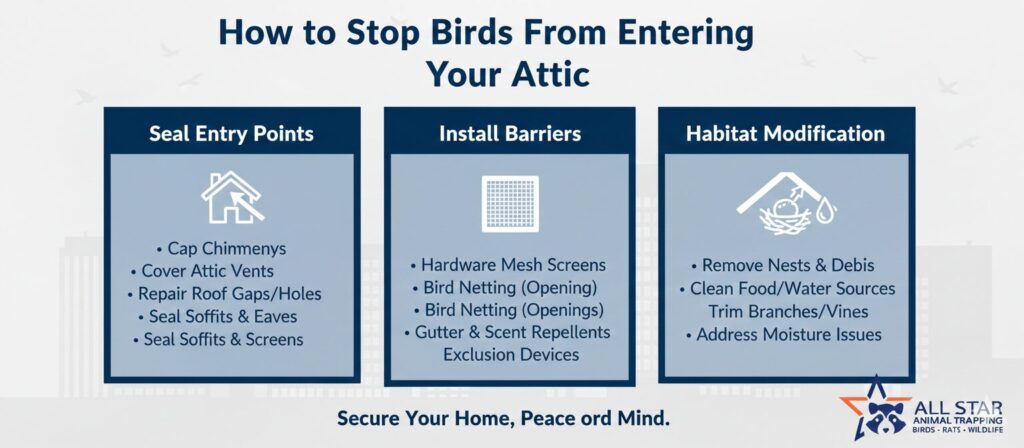
Physical barriers are one of the most effective solutions for long-term prevention. When properly installed, they block access without harming birds. This approach is essential to stop birds from entering your attic permanently.
Install Vent Covers and Screens
Metal vent covers prevent birds from entering while allowing proper airflow. They are durable and resistant to chewing or weather damage.
Chimney Caps for Full Protection
Chimney caps block birds from entering flues and falling into the attic. They also protect against debris and rain.
Seal Gaps and Openings
Sealing cracks, holes, and loose panels removes potential entry points. This step is critical to stop birds from entering your attic.
Using Bird Deterrents to Prevent Attic Entry
Bird deterrents discourage birds from landing or nesting near your roof. They work best when combined with physical barriers. Deterrents help reinforce efforts to stop birds from entering your attic.
Visual Deterrents
Reflective objects and predator decoys create visual disturbances. Birds avoid areas where they feel unsafe.
Sound and Ultrasonic Devices
These devices emit sounds that birds find uncomfortable. They are effective for open roof areas and attic surroundings.
Light-Based Deterrents
Flashing or reflective lights disrupt bird behavior. Birds prefer stable environments and will relocate.
Importance of Regular Roof and Attic Maintenance
Routine maintenance plays a major role in prevention. Regular inspections allow homeowners to catch small issues before birds exploit them. Maintenance is key to learning how to stop birds from entering your attic long-term.
Repairing roof damage, replacing broken vents, and keeping gutters clean all reduce bird attraction. A well-maintained roof offers fewer nesting opportunities.
Humane Ways to Remove Birds From the Attic
If birds are already inside, removal must be handled carefully. Humane removal ensures compliance with wildlife protection laws. Safe removal is an important step before you stop birds from entering your attic again.
Professionals often use one-way exclusion devices that allow birds to leave but not return. Once birds are removed, sealing entry points prevents re-entry.
When to Hire Professional Bird Control Services
Some attic infestations are too complex for DIY solutions. Professional services provide experience, proper equipment, and long-term prevention plans. Hiring experts is often the fastest way to stop birds from entering your attic effectively.
Professionals also ensure that removal and prevention methods are humane and legal. Their solutions reduce the risk of recurring problems.
Key Tips to Stop Birds From Entering Your Attic
- Install vent covers and chimney caps immediately.
- Seal all roof and fascia gaps thoroughly.
- Remove nesting materials promptly.
- Use bird deterrents near rooflines.
- Schedule regular attic inspections.
Long-Term Strategies to Prevent Birds From Returning
Long-term success depends on consistency and layered prevention. Birds may attempt to return if conditions become favorable again. Staying proactive is essential to stop birds from entering your attic permanently.
Combining physical barriers, deterrents, and maintenance creates an environment birds avoid. This integrated approach delivers the best long-term results.
Frequently Asked Questions (FAQs)
1. Can birds cause permanent damage to an attic?
Yes, birds can damage insulation, wiring, and ventilation systems over time if not removed.
2. Is it legal to remove birds from the attic?
Most removals are legal if done humanely and outside protected nesting seasons.
3. Do bird repellents work on their own?
Repellents help, but work best when combined with physical barriers.
4. How quickly should attic birds be removed?
As soon as signs appear to prevent nesting and damage.
5. Can birds enter through very small openings?
Yes, many birds can squeeze through gaps as small as a few inches.
6. Are attic birds a health risk?
Yes, droppings and parasites can affect indoor air quality.
7. Will birds return after removal?
They may return if entry points are not sealed properly.
8. Is professional help worth it?
Yes, professionals provide long-term and reliable prevention solutions.
Conclusion
Learning how to stop birds from entering your attic is essential for protecting your home’s structure, air quality, and safety. Birds are persistent, but with the right combination of barriers, deterrents, and maintenance, attic access can be completely blocked. Early action reduces damage and prevents recurring infestations.
By staying proactive and using humane prevention methods, homeowners can achieve long-term peace of mind. Whether through DIY steps or professional services, taking action now ensures birds stay out of your attic for good.
Humane Wildlife Removal You Can Trust
When nuisance wildlife becomes a problem, rely on All Star Animal Trapping for professional and humane animal removal services. We safely remove raccoons, skunks, squirrels, rodents, and more — protecting your home and family the right way.