Suspecting a rabid raccoon in Los Angeles can be alarming, as rabies in raccoons poses serious risks to humans and pets. Recognizing raccoon rabies symptoms is crucial for ensuring safety and addressing the Los Angeles wildlife problem effectively.
This comprehensive guide explains how to identify rabies in raccoons, what to do if a raccoon is acting strangely, and how to prevent encounters, all while emphasizing humane raccoon removal and compliance with California wildlife laws. Professional help is recommended to handle raccoon rabies risks safely, protecting both homeowners and urban wildlife.
Why Raccoons Are a Concern for Rabies
Raccoons are among the primary carriers of the rabies virus in urban areas, making rabies in raccoons Los Angeles a notable issue. Their nocturnal habits and tendency to rummage through trash cans or enter homes increase the likelihood of encounters with humans or pets. Rabies, a deadly viral disease, is transmitted through bites, posing raccoon health risks to households, especially in areas like Griffith Park or the Santa Monica Mountains.
The prevalence of urban raccoons in Los Angeles exacerbates the risk, as these animals often seek food or shelter in residential spaces. Recognizingraccoon rabies symptoms, such as aggression or disorientation, helps homeowners take swift action to avoid rabies transmission raccoons, ensuring safety and compliance with legal raccoon removal regulations.
Importance of Identifying Rabies Symptoms
Identifying raccoon rabies symptoms is vital for protecting families, pets, and communities from the dangers of rabies. A rabid raccoon may exhibit unusual behavior, such as raccoon aggression or paralysis, which can indicate a serious health threat. Early detection allows for prompt reporting to authorities or wildlife professionals, reducing the risk of raccoon bite risks and ensuring proper handling.
Failure to recognize signs of rabid raccoon behavior can lead to costly consequences, including medical emergencies or property damage from raccoon infestation. By understanding how to identify raccoon rabies, Los Angeles homeowners can take proactive steps to address the Los Angeles raccoon infestation problem safely and humanely.
Understanding Rabies in Raccoons
Rabies is a viral disease affecting the nervous system, and raccoons are particularly susceptible, making rabies in raccoons a significant concern in Los Angeles. The disease spreads through bites, saliva, or contact with infected tissue, posing raccoon health hazards to humans and animals. Understanding the nature of rabies and its prevalence helps homeowners make informed decisions when encountering raccoons acting strangely.
The risks associated with rabies in urban raccoons underscore the need for professional intervention. Attempting to handle a suspected rabid raccoon can lead to serious consequences, including legal violations and health risks, making it essential to rely on experts for raccoon relocation humane services.
What Is Rabies and How It Spreads
Rabies is a fatal viral infection that affects mammals, including raccoons, and is transmitted primarily through bites from an infected animal. The rabies virus targets the nervous system, causing symptoms like raccoon aggression, disorientation, or raccoon paralysis rabies. In Los Angeles,raccoons rummaging garbage or nesting in attics may carry the virus, increasing rabies transmission raccoons risks.
Once contracted, rabies is nearly always fatal if untreated, making immediate action critical. The virus can spread to humans or pets through raccoon bite risks or contact with saliva, highlighting the importance of avoiding direct interaction with raccoons exhibiting rabid raccoon behavior.
Prevalence of Rabies in Los Angeles Raccoons
Rabies in raccoons Los Angeles is a concern due to the city’s large raccoon population and proximity to natural habitats. While not all raccoons carry rabies, the disease is more prevalent in urban wildlife like raccoons than in other animals, especially in areas with dense populations. Raccoons in attic or yard raccoons are common in Los Angeles, increasing the likelihood of encounters with potentially rabid animals.
Local health authorities monitor rabies cases, but the Los Angeles wildlife problem remains significant, particularly in suburban neighborhoods. Homeowners must be vigilant for raccoon behavior changes, such as raccoon noises at night or unusual activity, to address potential rabies risks promptly.
Risks of Rabies to Humans and Pets
Rabies risks humans pets are severe, as the virus can cause neurological damage or death if untreated. Humans may contract rabies through raccoon bites or scratches, while pets are at risk when encountering raccoons in yards or near garbage. Symptoms in humans include fever, confusion, and paralysis, requiring immediate medical attention.
Pets, particularly unvaccinated dogs or cats, are vulnerable to rabies transmission from raccoons, making raccoon safety Los Angeles a priority. Professional raccoon exclusion and rabies professional help are essential to mitigate these risks, ensuring households remain safe from the Los Angeles raccoon infestation.
Signs a Raccoon May Have Rabies
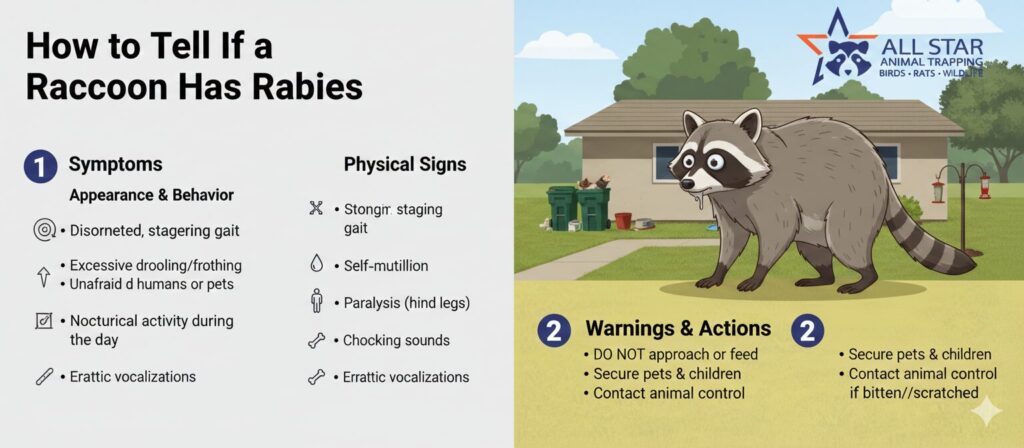
- Raccoon aggression: Unprovoked attacks or growling indicate possible rabies.
- Raccoon disorientation rabies: Stumbling, circling, or appearing confused are common signs.
- Raccoon foaming mouth: Excessive drooling or foaming is a classic rabies symptom.
- Raccoon paralysis rabies: Partial paralysis, such as dragging limbs, suggests advanced rabies.
- Daytime activity: Raccoons active during the day, unlike their nocturnal nature, may be rabid.
- Raccoon noises at night: Unusual vocalizations, like high-pitched screams, can indicate rabies.
What to Do If You Suspect a Rabid Raccoon
When a raccoon acting strangely is spotted, immediate safety precautions must be taken to avoid raccoon health risks. Contacting authorities or wildlife professionals is essential to ensure safe handling and compliance with California raccoon laws. Professional intervention prevents rabies transmission and addresses the Los Angeles wildlife problem effectively.
Ignoring a suspected rabid raccoon can lead to dangerous encounters or legal violations. By following proper protocols and seeking expert help, Los Angeles homeowners can protect their properties and communities from the dangers of rabies in raccoons.
Immediate Safety Precautions
A safe distance of at least 10 feet should be maintained from a suspected rabid raccoon to avoid raccoon bite risks. Pets and children must be kept away from the area, and contact with the raccoon avoided to prevent rabies transmission raccoons. Doors or gates should be closed to limit the raccoon’s movement, especially if it’s near the home.
Attempting to capture or scare the raccoon can provoke raccoon aggression, increasing danger. Homeowners should observe the raccoon from a safe distance and note any raccoon rabies symptoms, such as raccoon foaming mouth or disorientation, to report to professionals for accurate assessment.
Contacting Authorities or Wildlife Professionals
Local animal control or wildlife professionals should be contacted immediately if a raccoon is suspected of having rabies. In Los Angeles, authorities are equipped to handle urban raccoons and assess rabies risks. Providing details about the raccoon’s behavior, such as raccoon disorientation rabies or daytime activity, helps professionals respond effectively.
Professional raccoon removal services ensure humane handling and compliance with legal raccoon removal regulations. All Star Animal Trapping offers expert raccoon relocation humane services, addressing the Los Angeles raccoon infestation safely and efficiently.
Role of Professional Services in Rabies Cases
Professional wildlife services are trained to handle suspected rabid raccoons, using specialized equipment to capture and assess the animal safely. Testing for rabies may be conducted by authorities if the raccoon poses a public health risk. Humane raccoon removal ensures the animal is managed without unnecessary harm, aligning with California wildlife laws.
In Los Angeles, where raccoon rabies symptoms are a concern, professionals also inspect properties for raccoon entry points and provide exclusion services. This comprehensive approach prevents future encounters, protecting homes from raccoon damage and health hazards.
Why You Should Never Approach a Suspected Rabid Raccoon
Approaching a suspected rabid raccoon is dangerous due to the risk of rabies transmission and other health hazards. Raccoons exhibiting raccoon behavior rabies, such as aggression or disorientation, may attack if provoked, leading to serious consequences. Professional intervention is the safest option to avoid raccoon safety Los Angeles issues.
Legal restrictions and health risks further underscore why never approach raccoon is critical. Attempting to handle a raccoon yourself can violate California wildlife laws and exacerbate the Los Angeles wildlife problem, making expert services essential.
Dangers of Direct Contact
Direct contact with a raccoon, especially one showing raccoon rabies symptoms, poses significant raccoon bite risks. Rabies can be transmitted through bites, scratches, or contact with saliva, leading to severe health consequences. Even non-rabid raccoons can carry bacteria like Leptospira in raccoon droppings, causing additional raccoon health hazards.
In Los Angeles, where urban raccoons are common, approaching a raccoon acting strangely can lead to unexpected attacks, particularly if the animal is disoriented or aggressive. Professional raccoon exclusion avoids these dangers, ensuring safe handling by trained experts.
Legal Restrictions for Handling Raccoons
California wildlife laws prohibit harming or relocating raccoons without a permit, especially if rabies is suspected. Violating these regulations can result in fines or legal consequences, as raccoons are protected under state and federal guidelines. Legal raccoon removal requires licensed professionals to ensure compliance.
Attempting DIY raccoon removal can unintentionally harm the animal or disrupt local ecosystems, leading to legal issues. Professional services handle raccoons in accordance with California raccoon laws, ensuring humane treatment and safety for Los Angeles homeowners.
Health Risks Beyond Rabies
Beyond rabies, raccoons pose health risks through raccoon droppings, which may carry parasites like roundworms or bacteria causing diseases. Raccoon damage, such as chewed wires or insulation, can also create safety hazards in homes. These risks are heightened in areas with raccoon infestation, common in Los Angeles.
Professional raccoon relocation humane services include sanitizing affected areas to eliminate raccoon health hazards. By avoiding direct contact, homeowners can prevent exposure to these risks, ensuring their properties remain safe and clean.
Preventing Raccoon Encounters on Your Property
- Secure trash cans: Wildlife-proof bins with locking lids deter garbage raccoons.
- Remove pet food: Pet food raccoons are attracted to bowls left outdoors, especially overnight.
- Seal entry points: Gaps in attics, vents, or foundations should be closed with hardware cloth.
- Maintain landscaping: Trim grass and shrubs to reduce yard raccoons hiding spots.
- Install motion lights: Motion-sensor lights discourage raccoon noises at night.
- Schedule inspections: Regular checks prevent raccoon entry points and infestations.
Why Professional Services Are the Right Choice
Professional raccoon removal services offer expertise in handling urban raccoons, ensuring humane and legal solutions. Trained professionals assess raccoon behavior rabies, perform safe relocations, and provide exclusion services to prevent raccoon damage. Their knowledge of California wildlife laws ensures compliance, protecting homeowners from legal risks.
In Los Angeles, where raccoon rabies symptoms and infestations are common, professional services are trusted for their customer-centric approach. Thorough inspections, humane raccoon exclusion, and sanitizing services ensure homes are protected from the Los Angeles wildlife problem, providing peace of mind.
Expertise in Humane Raccoon Removal
Humane raccoon removal involves live trapping and relocation by licensed wildlife professionals, ensuring no harm to the animal. Expertise in identifying raccoon rabies symptoms, such as raccoon foaming mouth or disorientation, allows for safe handling of potentially rabid raccoons. This approach minimizes risks to homeowners and pets.
Comprehensive services, including sealing raccoon entry points and sanitizing raccoon droppings, prevent future infestations. Los Angeles residents benefit from tailored solutions that address urban raccoon challenges while maintaining ethical wildlife control standards.
Compliance with California Wildlife Laws
California raccoon laws require non-lethal removal methods for raccoons, especially in suspected rabies cases. Licensed professionals ensure compliance, avoiding fines for harming raccoons or violating wildlife regulations. Their knowledge of legal raccoon removal protects homeowners from legal consequences.
By adhering to state and federal guidelines, professional services ensure raccoons are relocated responsibly, maintaining ecological balance. This compliance is critical in Los Angeles, where urban wildlife raccoons are prevalent, ensuring safe and legal resolutions.
Customer-Centric Approach for Los Angeles Residents
A customer-centric approach ensures homeowners are informed throughout the raccoon removal process, from inspection to exclusion. Clear communication and tailored solutions address the unique challenges of raccoon safety Los Angeles, particularly in areas with high raccoon populations. This approach builds trust and ensures satisfaction.
Services like raccoon relocation humane and property inspections provide long-term protection, preventing raccoon damage and health risks. Los Angeles residents rely on professionals to resolve the Los Angeles raccoon infestation efficiently and ethically.
Conclusion
Recognizing raccoon rabies symptoms is essential for addressing the Los Angeles wildlife problem safely. By avoiding direct contact, contacting professionals, and implementing preventive measures, homeowners can protect their properties from rabies in raccoons and related risks. Humane raccoon removal ensures safety and compliance with California wildlife laws.
Key Takeaways for Identifying Raccoon Rabies
- Raccoon rabies symptoms include aggression, disorientation, and foaming at the mouth.
- Avoid raccoon contact to prevent rabies transmission and health hazards.
- Professional raccoon exclusion ensures humane and legal handling.
- Preventive measures like securing trash and sealing entry points deter raccoons.
Next Steps for Protecting Your Los Angeles Home
If a raccoon acting strangely or showing raccoon rabies symptoms is spotted, immediate action is recommended. Contacting All Star Animal Trapping for a professional inspection ensures safe, humane resolution, keeping Los Angeles homes secure from raccoon infestation and rabies risks.
Frequently Asked Questions About Raccoon Rabies
How can I tell if a raccoon has rabies?
Raccoon rabies symptoms include raccoon aggression, raccoon disorientation rabies, raccoon foaming mouth, or raccoon paralysis rabies. Daytime activity or unusual raccoon noises at night may also indicate rabies, requiring professional assessment.
What should I do if I see a raccoon acting strangely in Los Angeles?
A safe distance should be maintained, pets and children kept away, and professional wildlife services contacted immediately. Suspect rabid raccoon Los Angeles cases require expert handling to ensure raccoon safety Los Angeles and prevent rabies transmission.
Can raccoon rabies spread to humans or pets?
Rabies risks humans pets through raccoon bite risks or contact with saliva. Unvaccinated pets are particularly vulnerable, making rabies professional help essential to avoid health hazards from rabies in raccoons Los Angeles.
Why is it dangerous to approach a raccoon with rabies?
Approaching a raccoon with rabies risks bites, scratches, or rabies transmission raccoons, leading to severe health consequences. Raccoon health hazards, including bacteria in raccoon droppings, further increase dangers, requiring professional raccoon exclusion.
How do professionals handle raccoon removal?
Professional raccoon removal involves live trapping, relocation, and sealing raccoon entry points, ensuring humane and legal handling. Sanitizing services address raccoon droppings health risks, protecting Los Angeles homes from raccoon damage and rabies.
Humane Wildlife Removal You Can Trust
When nuisance wildlife becomes a problem, rely on All Star Animal Trapping for professional and humane animal removal services. We safely remove raccoons, skunks, squirrels, rodents, and more — protecting your home and family the right way.