Raccoons are intelligent and adaptable animals that often invade residential and commercial properties, causing damage to gardens, attics, and garbage areas. While these animals can be a nuisance, it is important to trap them humanely to ensure their safety and comply with wildlife regulations. Humane trapping avoids unnecessary harm while effectively resolving property issues.
Using proper techniques for humane raccoon trapping requires understanding their behavior, using the right traps, and employing effective bait and placement strategies. Homeowners and property managers benefit from humane methods that balance effectiveness with animal welfare. These strategies also help prevent repeat invasions, maintaining both property integrity and ethical wildlife management.
Understanding Raccoon Behavior Before Trapping
Before attempting to trap a raccoon humanely, it is crucial to understand its natural habits and tendencies. Raccoons are nocturnal, which means most of their activity occurs at night, and they rely heavily on their senses of touch, smell, and memory. Knowing these patterns allows for more precise trap placement and timing.
Raccoons are highly intelligent and curious creatures that are often attracted to human food sources. Pet food, garbage bins, and fruit trees frequently draw raccoons into residential areas. Recognizing feeding and nesting behaviors helps ensure that humane traps are set in the most effective locations.
Feeding Preferences
Raccoons eat a wide variety of foods, including fruits, vegetables, small animals, insects, and human leftovers. In urban and suburban environments, they frequently forage in garbage bins and around bird feeders. Using bait that mimics natural preferences increases the chances of successful capture.
Shelter and Resting Areas
Raccoons seek sheltered locations such as attics, sheds, and hollow trees for resting and nesting. Identifying these locations is key to placing traps strategically. Avoid disturbing nests directly, as this may increase aggression or stress.
Choosing the Right Trap for Humane Capture
Selecting the appropriate trap is critical for humane raccoon trapping. Live traps are the safest option because they contain the animal without causing injury, allowing for safe relocation or professional removal.
Cage-style traps with spring-loaded doors are common due to their durability and ability to securely hold raccoons. Using high-quality traps reduces the risk of escape or injury, ensuring the animal remains calm while captured.
Standard Cage Traps
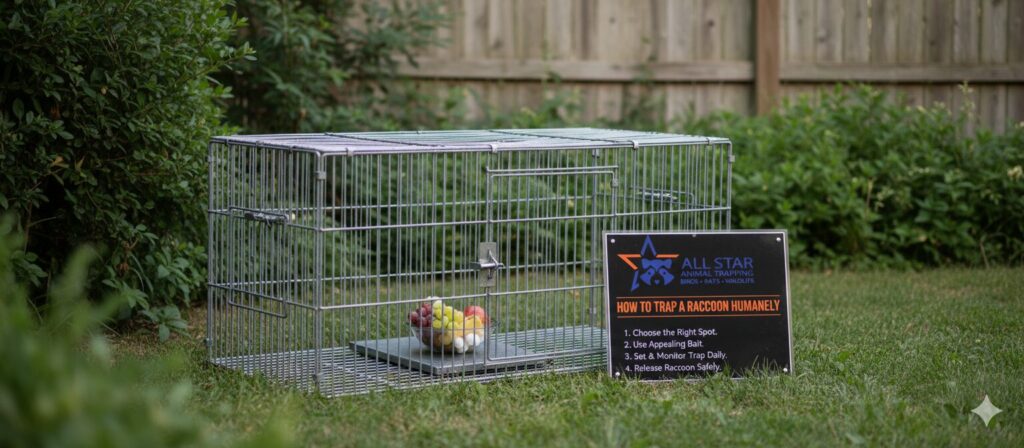
Cage traps are metal enclosures thatsafely confine raccoons once triggered. They use bait to attract raccoons, causing the door to close automatically. Sturdy construction minimizes stress and prevents escape or injury.
Drop Traps
Drop traps are elevated cages that fall when the raccoon steps on a trigger plate. They are useful in areas where raccoons feed at predictable times. Proper setup is essential to avoid harm during capture
Selecting Effective Bait
Bait plays a central role in humane raccoon trapping. Raccoons are attracted to strong-smelling and high-protein foods, which encourage them to enter traps.
Popular baits include canned fish, marshmallows, peanut butter, fruits, and pet food. Proper placement ensures that the raccoon fully enters the trap and triggers the mechanism, increasing capture success.
- Canned tuna or sardines: Strong scent attracts raccoons from a distance.
- Marshmallows: Soft and sweet, they encourage interaction with the trap.
- Peanut butter on bread: Sticky texture motivates raccoons to engage.
- Fruits like apples or grapes: Effective in backyard gardens.
- Pet food: Provides protein-rich bait that is hard for raccoons to ignore.
Strategic Trap Placement
Where traps are placed significantly impacts the effectiveness of humane raccoon trapping. Traps should be located near high-activity areas such as trash bins, gardens, or known burrow entrances.
Avoid areas with heavy foot traffic, pets, or other disturbances, which can cause the raccoon to avoid the trap. Proper placement ensures that the raccoon enters naturally without unnecessary stress.
Backyards and Gardens
Backyards with accessible food sources are prime trap locations. Observing raccoon activity during evening hours allows for optimal placement. Ensuring a stable, flat surface prevents tipping or accidental escapes.
Attics, Garages, and Sheds
Raccoons often enter buildings seeking warmth or nesting sites. Position traps near entry points but away from household traffic. Ventilation and shelter reduce stress on the trapped animal.
Monitoring Traps Regularly
Regular monitoring is essential for humane raccoon trapping. Leaving an animal in a trap too long can result in stress, dehydration, or injury.
Check traps at least twice daily, in the early morning and evening. Prompt attention ensures safety for both the raccoon and humans nearby.
- Morning inspection: Detect overnight captures quickly.
- Evening check: Adjust trap placement for optimal results.
- Wear protective gloves: Prevents disease transmission or injury.
- Handle gently: Avoid shaking or tilting the trap unnecessarily.
Safe Relocation Practices
Once captured, raccoons must be relocated safely and legally. Local wildlife regulations often dictate whether relocation is permissible.
Select release sites far from residential zones, ideally near natural food and water sources. Avoid extreme weather conditions during relocation to minimize stress and potential harm.
Legal Requirements
Many areas require permits for trapping and relocating wildlife. Relocating raccoons without authorization can result in fines or legal complications. Consult local authorities before attempting relocation.
Transport Tips
Secure the trap in the vehicle to prevent movement. Cover the trap with a breathable cloth to reduce stress. Maintain a quiet environment and avoid sudden movements to prevent panic.
Using Deterrents to Prevent Return
Humane trapping alone is often insufficient; deterrents are necessary to prevent raccoons from returning. Physical barriers, lighting, and scent deterrents discourage repeat visits.
Keeping the environment clean and free of food sources further reduces the likelihood of raccoon re-entry.
- Secure trash bins with tight lids.
- Remove pet food from outdoors at night.
- Install motion-activated lights at access points.
- Trim trees and remove brush that provide climbing routes.
- Use non-toxic repellents such as ammonia-soaked rags or predator urine.
Seasonal Considerations for Humane Raccoon Trapping
Raccoon activity varies with the seasons, affecting trap placement and bait effectiveness. Spring and summer see increased activity due to mating and foraging.
During fall, raccoons increase food-seeking behavior to prepare for winter, making baited traps more effective. Adjusting methods seasonally improves humane trapping outcomes.
Common Mistakes to Avoid
Even the best humane raccoon trapping methods can fail if errors are made. Common mistakes include using the wrong bait, improper trap placement, or infrequent trap monitoring.
Avoid over-handling the trap, which can frighten the raccoon and reduce success. Following proper safety and hygiene practices ensures humane and effective removal.
Benefits of Humane Trapping
Using humane techniques protects both humans and raccoons. Proper methods reduce stress, prevent injury, and allow for safe relocation.
Homeowners benefit from property protection without resorting to lethal measures, and raccoons continue to fulfill ecological roles. Humane trapping promotes ethical wildlife management and coexistence.
FAQs
1. Can raccoons be trapped without harming them?
Yes, live traps safely capture raccoons for relocation or professional handling.
2. What is the best bait for raccoons?
Canned fish, peanut butter, or marshmallows are highly effective due to scent and sweetness.
3. How often should traps be checked?
Traps should be inspected at least twice daily to minimize stress and ensure humane treatment.
4. Are raccoons dangerous to humans?
Raccoons may bite or scratch if threatened and can carry diseases like rabies.
5. Can I relocate a raccoon to my property?
No, most areas prohibit relocation onto private property; legal release sites are required.
6. Is professional help necessary?
Professional wildlife removal services provide expertise, legal compliance, and safer removal.
7. How do I prevent raccoons from returning?
Combine trapping with deterrents such as lights, fencing, and secure trash bins.
8. Can traps be left out overnight?
Yes, but they must be monitored to ensure humane treatment and prevent injury.
Conclusion
Learning how to trap a raccoon humanely ensures safe and ethical removal while protecting property from damage. Using live traps, appropriate bait, strategic placement, and preventive deterrents creates an effective solution.
Combining these methods with seasonal adjustments and professional guidance enhances long-term results. Humane trapping prioritizes both human safety and animal welfare, promoting coexistence with wildlife in residential and commercial areas.
Humane Wildlife Removal You Can Trust
When nuisance wildlife becomes a problem, rely on All Star Animal Trapping for professional and humane animal removal services. We safely remove raccoons, skunks, squirrels, rodents, and more — protecting your home and family the right way.