Birds have long fascinated humans with their colors, songs, and graceful flight. They are an essential part of our ecosystem, helping with pollination, pest control, and seed dispersal. However, not all birds that visit urban and rural areas are beneficial. Some species have adapted so well to human environments that they can become pests, causing significant property damage, noise disturbances, and health concerns. Understanding which birds are problematic is essential for managing them responsibly and protecting both your property and your local ecosystem.
Pest birds often thrive where humans live because of readily available food sources, nesting sites, and shelter. They can be found in urban centers, suburban neighborhoods, farmland, and even in natural areas that border human activity. Identifying the species causing issues and understanding their behavior helps homeowners, farmers, and city planners develop effective strategies to prevent infestations. By taking proactive steps, you can reduce property damage, protect crops, and maintain a safer, cleaner environment.
What Are Common Pest Birds?
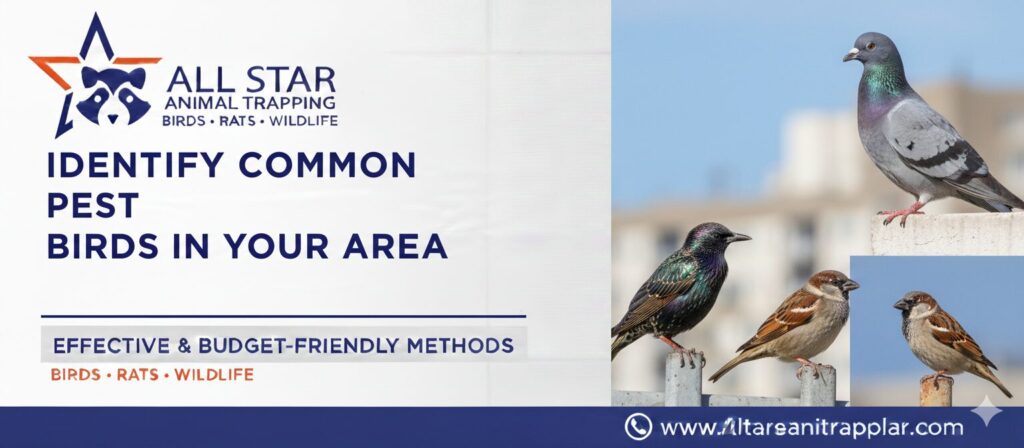
Common pest birds are those species that thrive in human-dominated areas and create problems either economically, socially, or environmentally. These birds are highly adaptable and opportunistic, feeding on leftover food, grain, garbage, or ornamental plants. Typical examples include pigeons, house sparrows, starlings, crows, and sometimes even gulls.
Pest birds can appear harmless at first, but their populations can grow rapidly. Left unchecked, they can damage buildings, vehicles, gardens, and crops. Additionally, they can spread pathogens through their droppings, nesting materials, or direct contact. Accurate identification is critical to determine which species is causing the problem, allowing for targeted management that is both humane and effective.
How Do Pest Birds Affect Your Property?
Pest birds can impact homes, businesses, and farms in several ways. Their droppings are highly acidic, which can corrode building materials, metal surfaces, roofs, and even vehicles over time. This corrosion can lead to costly repairs if not addressed promptly.
Nests can block gutters and drainage systems, increasing the risk of water damage or fire hazards in certain cases. Noise is another concern, especially when birds roost in large numbers on rooftops or near living spaces. By recognizing these impacts early, homeowners and property managers can take preventive measures to mitigate damage and reduce long-term costs.
Additionally, pest birds can damage gardens, orchards, and crops. They feed on fruits, seeds, and young plants, often in large groups that can decimate entire harvests. For commercial growers, unaddressed pest bird activity can translate into significant financial losses. Understanding these risks allows for timely intervention to protect both personal property and commercial investments.
When Are Pest Birds Most Active?
Pest birds are most active during daylight hours, particularly in the early morning and late afternoon when they search for food and water. Their activity levels can vary seasonally; during breeding season, they become more aggressive and territorial.
In urban areas, birds are especially active around garbage bins, outdoor dining areas, and public parks, where human activity provides abundant food sources. In rural and agricultural areas, fields, orchards, and grain storage sites see peak activity during harvest periods. Understanding the timing of bird activity is critical for scheduling control and deterrent measures, allowing interventions to be more effective and targeted.
What Are the Signs of a Bird Infestation?
Identifying a pest bird infestation early can save property owners significant time and money. Common signs include the accumulation of droppings on roofs, window sills, and outdoor structures. You might notice nests in gutters, eaves, attics, or under bridges.
Other indicators include excessive noise, particularly in early mornings, and visible damage to crops, gardens, or stored food. Some birds, like starlings and crows, often form large roosts, creating disturbances noticeable from a distance. Regular inspections of buildings, gardens, and food storage areas can help detect these signs before populations expand.
How Can You Identify Different Pest Bird Species?
Pigeons
Pigeons are medium-sized birds that are highly adaptable to urban life. They come in a range of colors, though gray with iridescent neck feathers is most common. Pigeons prefer ledges, roofs, and other flat surfaces for nesting and roosting. Their cooing sounds and flocking behavior make them easy to identify.
House Sparrows
House sparrows are small, brown, and gray birds that thrive in urban and suburban environments. They often nest in crevices, gutters, and roof eaves, sometimes displacing native birds from their natural habitats. House sparrows are highly territorial, aggressive around food sources, and produce high-pitched chirping sounds.
Starlings
Starlings are medium-sized, dark-colored birds with speckled, glossy plumage. They are social, often forming massive flocks that move in synchronized patterns called murmurations. Starlings’ loud chattering and ability to overwhelm areas quickly make them a highly visible pest bird.
Crows
Crows are large, black birds known for their intelligence and problem-solving abilities. They often forage in groups, raid garbage, and target crops. Crows can recognize human activity patterns, making them persistent and challenging pests in urban and rural settings.
Gulls
In coastal or lakeside areas, gulls can become pests. They scavenge on human food, create noise, and leave droppings that damage property. Gulls are aggressive, particularly around food sources, and can dominate areas where humans gather outdoors.
Why Are Certain Birds Considered Pests?
Birds are labeled as pests when their behavior causes harm, financial loss, or health risks to humans. Large populations of pigeons, starlings, or sparrows can damage structures, vehicles, gardens, and crops. Their nesting habits, droppings, and aggressive feeding behaviors exacerbate these problems.
Pest birds can also carry diseases such as salmonella, histoplasmosis, or avian influenza. They may spread pathogens through droppings, feathers, or nesting materials, increasing health risks for humans and pets. By understanding the reasons behind their classification as pests, property owners can adopt effective strategies to reduce the impact of these birds while remaining environmentally responsible.
How Can You Humanely Control Pest Birds?
Humane bird control focuses on deterring birds without harming them. Common methods include:
- Bird Spikes: Installed on ledges and rooftops to prevent landing.
- Reflective Objects: Using mirrors, reflective tape, or shiny surfaces to scare birds away.
- Predator Decoys: Fake owls, hawks, or snakes can discourage birds from frequenting areas.
- Netting and Screens: Covering fruit trees, gardens, or vents to prevent nesting.
- Sound Deterrents: Certain high-frequency noises can deter birds from roosting areas.
Implementing multiple methods together enhances effectiveness. For example, combining netting with visual deterrents can significantly reduce bird activity without harming them. Regular monitoring and adjustments ensure these humane methods continue to work over time.
What Are Common Mistakes to Avoid in Bird Control?
Ignoring Early Signs
Ignoring droppings, nests, or minor damage allows pest bird populations to grow rapidly. Early intervention is always more effective and cost-efficient.
Using Harmful Chemicals
Avoid pesticides or poisons that can harm birds or other wildlife. Such measures may also violate local regulations and create environmental hazards.
Improper Food Storage
Leaving food accessible encourages birds to return. Open garbage bins, unsealed compost, or leftover pet food are prime attractants.
Overcrowding Deterrents
Installing too many spikes, nets, or decoys can create hazards, reduce aesthetic appeal, or even confuse the birds, making control efforts less effective.
Neglecting Property Maintenance
Failing to seal cracks, clean gutters, or trim trees allows birds to find new nesting and roosting spots. Regular maintenance prevents repeated infestations.
How Can You Maintain a Pest-Free Environment?
Maintaining a pest-free environment requires proactive and ongoing efforts. This includes regular inspections, cleaning of roosting areas, and removing food sources. Preventive measures like sealing vents, covering garbage bins, and trimming trees and shrubs are essential.
- Seal cracks and openings in buildings.
- Remove or cover food sources.
- Trim trees and shrubs near structures.
- Install bird deterrents such as spikes, nets, or reflective tape.
- Regularly inspect and clean gutters, ledges, and roofs.
- Keep outdoor eating areas clean and free of scraps.
By combining these efforts consistently, property owners can significantly reduce pest bird populations and protect both property and public health.
Comparison of Common Pest Birds
| Bird Species | Size | Habitat Preference | Behavior |
| Pigeon | Medium | Urban ledges, rooftops | Flocking, cooing |
| House Sparrow | Small | Urban crevices, gutters | Aggressive, noisy |
| Starling | Medium | Trees, rooftops, open areas | Large flocks, chattering |
| Crow | Large | Open fields, urban areas | Intelligent, foraging in groups |
| Gull | Medium-Large | Coastal areas, landfills | Aggressive, scavenging |
This detailed comparison helps property owners identify which species is causing problems and plan targeted control strategies.
Conclusion
Identifying common pest birds in your area is essential for maintaining a safe, healthy, and property-friendly environment. Understanding the species, their habits, and peak activity periods enables timely interventions.
By combining early detection, humane deterrents, and consistent maintenance, property owners can reduce bird-related damage effectively. These strategies not only protect homes and businesses but also ensure that wildlife is treated ethically, creating a balanced coexistence between humans and birds.
FAQs
1. Can pest birds carry diseases harmful to humans?
Yes, pest birds can transmit diseases like salmonella and histoplasmosis. Proper cleaning and preventive measures help reduce health risks.
2. Are all pigeons considered pests?
No, not all pigeons cause problems. Urban populations that roost on buildings and scavenge for food are usually the problematic ones.
3. Do bird spikes harm birds?
No, spikes prevent landing without causing injury, making them a humane control method.
4. Can starlings damage crops?
Yes, starlings feed in large flocks and can cause significant crop loss.
5. Are crows intelligent enough to bypass deterrents?
Crows are highly intelligent, but combining visual, auditory, and physical deterrents can effectively limit their impact.
6. How can I stop sparrows from nesting in my gutters?
Install mesh or netting over gutters to prevent sparrows from nesting. Regular cleaning also discourages repeated attempts.
7. Is it legal to remove pest birds from my property?
Regulations vary by region. Some birds are protected, so always check local wildlife laws before removal.
8. Can reflective tape actually keep birds away?
Yes, reflective tape confuses and deters birds from landing in certain areas effectively.
Humane Wildlife Removal You Can Trust
When nuisance wildlife becomes a problem, rely on All Star Animal Trapping for professional and humane animal removal services. We safely remove raccoons, skunks, squirrels, rodents, and more — protecting your home and family the right way.