
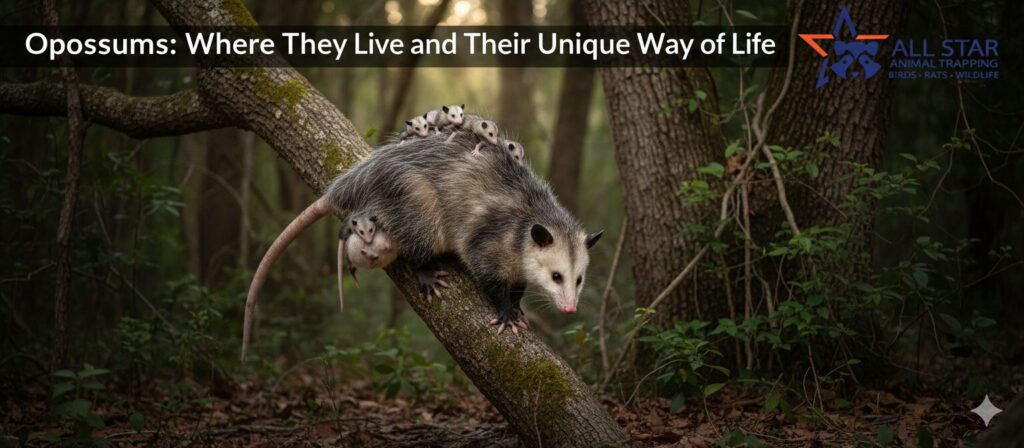
Opossums, often called possums, are highly adaptable wild animals thriving in diverse environments, from rural woodlands to urban backyards. Their unique way of life, marked by nocturnal scavenging and remarkable survival strategies, makes them fascinating contributors to ecosystems. Understanding opossum habitat and their behaviors helps homeowners manage their presence humanely, preventing issues like attic nesting or garden rummaging. This guide explores where opossums live, their ecological benefits, and humane opossum removal strategies to ensure safe coexistence with these resilient marsupials.
Introduction to Opossums
Opossums are widespread, known for their ability to adapt to varied landscapes and climates. As the only marsupials native to their range, they play a vital role in ecosystems, yet their scavenging habits often spark misunderstandings among homeowners. Recognizing opossum behavior and habitats is essential for addressing opossum infestations without resorting to harmful methods.
Their presence in both rural and urban areas highlights their resilience, but it can also cause concerns about health risks or minor property disturbances. By understanding where opossums live and their ecological contributions, residents can appreciate these creatures and seek professional solutions for managing opossum-related issues effectively.
Prevalence of Opossums in Urban and Rural Areas
Opossums are found in diverse settings, from humid forests and farmlands to city neighborhoods, thriving wherever food and shelter are available. In rural areas, they inhabit wooded regions and fields, feeding on insects and fruits, while in urban settings, they are drawn to backyards and garbage bins. Their adaptability contributes to frequent encounters with homeowners seeking to manage opossum infestations.
In cities like Los Angeles, opossums are often spotted in residential areas, nesting under decks or in attics. Understanding their prevalence helps residents implement preventive measures to coexist peacefully with these beneficial creatures, reducing conflicts through humane wildlife control.
Importance of Understanding Opossum Habitats and Behaviors
Knowledge of opossum habitats and behaviors is crucial for preventing conflicts with homeowners. Their nomadic, nocturnal lifestyle leads them to rotate between dens, scavenging for food at night, which can result in unexpected backyard visits. Recognizing signs of opossum activity, such as droppings or noises, allows for timely intervention before issues escalate.
Misconceptions about opossums, such as their supposed aggression or disease risk, can lead to harmful actions that violate wildlife regulations. By learning about opossum habitat, residents can opt for humane opossum removal, ensuring both property protection and respect for these ecologically valuable animals.
Opossum Habitats
Opossum habitats span a wide range of environments, from dense forests to suburban neighborhoods, showcasing their remarkable adaptability. These marsupials thrive in areas with food, water, and shelter, making them common in both rural and urban settings. Their presence often leads to homeowner concerns about nesting or scavenging.
Their ability to occupy diverse environments requires tailored management strategies. By understanding their preferred habitats, urban vs. rural differences, and distribution, homeowners can address opossum presence humanely, ensuring safe coexistence without disrupting their ecological contributions.
Preferred Environments for Opossums
Opossums prefer moist, wooded areas like forests, wetlands, and farmlands, where insects, fruits, and small animals are abundant. These environments provide natural shelters, such as tree hollows or brush piles, ideal for nesting and raising young. Their preference for secure, warm spaces makes them adaptable to a variety of conditions.
In urban areas, opossums nest in man-made structures like attics, garages, or under porches, drawn by food sources such as trash or pet food. Their flexibility in choosing opossum habitat highlights the need for preventive measures to deter them from residential properties while respecting their ecological role.
Urban vs. Rural Opossum Habitats
In rural areas, opossums are found near rivers, woodlands, and fields, where they feed on pests and scavenge carrion, contributing to ecosystem health. Natural shelters like hollow logs or abandoned burrows provide safe nesting sites. These habitats support their role as pest controllers, though they may occasionally raid farms or coops.
Urban environments offer opossums ample food from trash bins, compost heaps, or gardens, leading to frequent sightings in city neighborhoods. In places like Los Angeles, they use fences or rooftops as pathways, adapting to human-made landscapes. This urban-rural versatility requires humane wildlife control to manage opossum infestations effectively.
Opossum Distribution
Opossums are found across a wide range, thriving in diverse climates and landscapes due to their adaptability. Warm regions with abundant vegetation support dense populations, while milder conditions allow them to inhabit insulated spaces like barns or attics in cooler areas. Their widespread distribution emphasizes the need for humane management strategies.
Their ability to expand into new areas is driven by urbanization and access to food sources. Understanding their distribution helps homeowners implement preventive measures to manage opossum presence, ensuring properties remain free of infestations while supporting their ecological contributions.
Characteristics of Opossum Behavior
Opossum behavior is defined by their nocturnal, nomadic lifestyle and adaptable feeding habits, making them unique among wildlife. Their ability to scavenge and navigate varied environments ensures their survival in diverse settings. Understanding these behaviors helps homeowners manage opossum presence without resorting to harmful measures.
From their omnivorous diet to their distinctive defense mechanisms, opossums exhibit traits that contribute to their resilience. These characteristics explain their frequent appearances in backyards and their minimal risk to humans, supporting the need for humane wildlife control.
Nocturnal and Nomadic Lifestyle
Opossums are nocturnal, resting in dens during the day and foraging at night, which leads to their common sightings in residential areas after dark. Their nomadic nature means they rotate between multiple dens, such as tree hollows or under decks, to avoid predators and find food. This movement makes predicting opossum habitat challenging for homeowners.
Their nocturnal patterns allow them to scavenge quietly, avoiding human activity. This lifestyle supports their survival in both rural and urban settings, where they seek out food sources like insects or trash, highlighting the need for preventive measures to manage their presence.
Diet and Feeding Habits
Opossums are opportunistic omnivores, consuming insects, fruits, small rodents, carrion, and human leftovers like pet food or garbage. This diverse diet enables them to thrive in varied opossum habitats, from forests to suburbs. Their feeding habits make them valuable for natural pest control, reducing harmful insects and rodents.
In residential areas, opossums are drawn to unsecured trash, compost, or garden fruits, leading to backyard encounters. Removing these attractants can deter opossums naturally, minimizing the need for humane opossum removal while supporting their ecological contributions.
Unique Defense Mechanisms
Opossums are renowned for “playing dead,” or thanatosis, an involuntary defense where they collapse, become limp, and emit a foul odor to deter predators. This behavior, lasting from minutes to hours, protects them from threats like foxes or dogs. Homeowners may mistake this for illness, but it’s a natural survival tactic.
Their prehensile tails and opposable thumbs aid in climbing trees or fences, enhancing their adaptability. These non-aggressive traits make opossums harmless, reinforcing the importance of humane wildlife control over harmful methods when managing opossum behavior.
Opossums in Urban Areas: A Closer Look
Opossums thrive in urban areas, adapting to neighborhoods with abundant food and shelter. Their presence often raises concerns among homeowners, who may find them nesting in attics or scavenging in yards. Understanding their urban habits helps in managing these encounters humanely and effectively.
Their ability to navigate city landscapes, from rooftops to backyards, showcases their resilience. By identifying common hiding spots and behaviors, residents can implement preventive measures to coexist with opossums without conflict, ensuring safe property management.
Common Hiding Spots in Urban Homes
Opossums often nest under decks, porches, or sheds, seeking secure, warm spaces to rest during the day. Attics, crawl spaces, and garages are also common, accessed through small gaps or vents. Their nomadic nature leads them to use multiple hiding spots, such as woodpiles or brush heaps, within residential areas.
These shelters are chosen for protection from weather and predators, making urban homes appealing due to abundant cover. Sealing entry points is essential to prevent opossum infestations, ensuring properties remain free of unwanted wildlife.
Opossum Behavior in Urban Settings
Opossum behavior in urban areas includes nocturnal scavenging for food in trash bins, gardens, or compost heaps. Their climbing skills allow them to navigate fences, power lines, or rooftops, avoiding detection. These habits lead to frequent backyard sightings, often surprising homeowners unfamiliar with their non-aggressive nature.
Their quiet, scavenging lifestyle poses little threat, but their presence can cause concern due to droppings or fleas. Understanding these behaviors helps residents implement deterrents, reducing the need for humane opossum removal while allowing coexistence with urban wildlife.
Challenges of Opossums in Urban Neighborhoods
Opossums in urban areas may create minor disturbances by nesting in attics or rummaging through trash, leading to homeowner concerns about hygiene or property issues. While they rarely cause significant damage, their droppings or parasites can pose health risks if not addressed properly, contributing to urban wildlife challenges.
Misconceptions about opossums can lead to fear or harmful actions, which may violate wildlife regulations. Professional intervention ensures these challenges are managed humanely, protecting both residents and opossums in urban settings.
Ecological Benefits of Opossums
Opossums provide significant ecological benefits, acting as natural pest controllers and environmental cleaners. Their role in reducing pests and recycling organic matter makes them valuable in both rural and urban ecosystems. Recognizing these benefits encourages humane wildlife control over harmful methods.
By consuming ticks, insects, and carrion, opossums contribute to healthier environments, reducing disease risks. Their presence in residential areas highlights their importance in maintaining ecological balance, supporting the case for humane management.
Natural Pest Control and Ecosystem Balance
Opossums consume insects, snails, slugs, and small rodents, reducing pest populations that damage crops or gardens. Their scavenging of carrion prevents the spread of bacteria, supporting ecosystem health. In urban and rural areas, this natural pest control reduces the need for chemical pesticides, benefiting homeowners.
Their role as environmental cleaners ensures cleaner landscapes by removing organic waste. This contribution to ecosystem balance underscores why protecting opossums through humane wildlife control is essential for maintaining healthy environments.
Role in Reducing Tick-Borne Diseases
Opossums are highly effective at reducing tick-borne diseases, such as Lyme disease, by consuming thousands of ticks each season. Their grooming habits trap and kill ticks, lowering disease transmission risks in backyards and rural areas. This makes them a natural ally in public health.
By reducing tick populations, opossums decrease the need for harmful pest control methods, benefiting both residents and ecosystems. Their ecological role reinforces the importance of humane opossum removal to preserve their contributions while managing their presence.
Contribution to Urban and Rural Environments
Opossums clean up organic waste, such as fallen fruit or carrion, preventing decay-related issues in both urban and rural settings. Their scavenging reduces attractants for other pests, like rats, enhancing neighborhood hygiene. This role supports cleaner, healthier communities.
Their adaptability to diverse habitats, from farmlands to city parks, makes them valuable for maintaining ecological balance. By supporting opossums through humane management, residents contribute to sustainable coexistence with urban and rural wildlife.
Common Myths About Opossums
- Opossums carry rabies: Rabies in opossums is rare due to their low body temperature, making them unlikely hosts for the virus.
- Opossums are aggressive: Opossums are non-aggressive, preferring to flee or “play dead” rather than attack humans or pets.
- Opossums are dirty scavengers: Opossums groom regularly and eat pests, benefiting ecosystems by reducing disease-spreading insects.
- Opossums destroy property: Opossums cause minimal damage, typically moving on after foraging without harming structures.
- Opossums are rodents: Opossums are marsupials, related to kangaroos, with unique traits like pouches for their young.
- Opossums are dangerous to pets: Opossums pose little risk to pets, avoiding confrontation and focusing on scavenging.
Managing Opossum Presence on Your Property
- Secure trash bins: Use wildlife-proof lids to prevent opossums from accessing garbage.
- Remove food sources: Store pet food indoors and clear fallen fruit or compost to deter opossums.
- Seal entry points: Close gaps in attics, vents, or under decks with mesh to prevent nesting.
- Install motion lights: Motion-activated lights discourage nocturnal opossum activity in yards.
- Use natural repellents: Mild vinegar or ammonia sprays near entry points deter opossums safely.
- Seek professional help: Contact experts for humane opossum removal if nesting persists.
Why Choose Professional Opossum Removal
Professional opossum removal ensures safe, humane, and legal management of opossum infestations. Experts use live traps and exclusion devices to relocate opossums without harm, addressing homeowner concerns effectively. Their services protect properties from health risks or disturbances while respecting wildlife.
DIY removal attempts can stress animals, cause health hazards, or violate wildlife regulations. Professional services provide comprehensive solutions, including inspections and prevention, ensuring opossums are managed responsibly in both urban and rural settings.
Benefits of Humane Opossum Removal
Humane opossum removal uses non-lethal methods like live traps or one-way doors, prioritizing animal welfare. This approach preserves opossums’ ecological role while addressing homeowner concerns about nesting or scavenging. It also minimizes health risks from droppings or parasites through professional sanitization.
By choosing humane methods, residents avoid legal issues and support sustainable coexistence with wildlife. These benefits make professional removal the preferred choice for managing opossum infestations, ensuring safe and ethical outcomes.
Compliance with Wildlife Regulations
Wildlife regulations protect opossums, prohibiting harmful removal methods without permits. Professional services ensure compliance, avoiding fines for harming opossums or violating regulations. Their expertise guarantees legal handling of opossum infestations.
These regulations promote ethical wildlife management, preserving opossums’ ecological contributions. By relying on professionals, homeowners ensure safe relocation, supporting conservation efforts and maintaining the balance of opossum habitat.
Expertise of Professional Services
Professional wildlife services are equipped to handle opossum behavior, from attic nesting to backyard scavenging. Their expertise includes identifying entry points, relocating opossums humanely, and sealing properties to prevent re-entry. This comprehensive approach addresses opossum infestations effectively.
Trained technicians provide tailored solutions, ensuring minimal disruption to homeowners while protecting opossums. Their knowledge of local ecosystems and regulations makes them the ideal choice for managing opossum presence in residential areas.
Conclusion
Opossums are resilient survivors, thriving in diverse habitats while providing ecological benefits like pest control and waste cleanup. Understanding opossum habitat and their behaviors helps homeowners manage their presence humanely, debunking myths and fostering coexistence. By implementing preventive measures and seeking professional help, residents can protect their properties without harming these beneficial marsupials.
Key Takeaways on Opossums
- Opossums thrive in varied habitats, from forests to urban backyards.
- Their pest control and scavenging habits benefit ecosystems, reducing ticks and waste.
- Humane opossum removal ensures safety and compliance with wildlife regulations.
- Preventive measures like sealing entry points deter opossums from nesting.
Next Steps for Coexisting with Opossums
If signs of opossum activity, such as droppings or noises, are noticed, immediate action is recommended. Contacting All Star Animal Trapping for a professional inspection ensures humane, legal resolution, keeping homes secure from opossum infestations while supporting their ecological role.
Frequently Asked Questions About Opossums
Where do opossums live?
Opossums live in forests, farmlands, and urban areas, nesting in tree hollows, under decks, or in attics. Their adaptability allows them to thrive in diverse opossum habitats wherever food and shelter exist.
Are opossums dangerous to humans or pets?
Opossums are non-aggressive and pose minimal risk to humans or pets, preferring to flee or “play dead.” Their peaceful nature makes them harmless neighbors in residential settings.
What should I do if I find an opossum in my backyard?
Trash bins and food sources should be secured, and the opossum left alone to move on naturally. For persistent nesting, professional humane opossum removal should be sought to ensure safe relocation.
How can I prevent opossums from entering my property?
Entry points like vents or gaps should be sealed, trash secured, and food sources removed. Motion-activated lights or mild repellents can deter opossums safely, preventing infestations.
Why is humane opossum removal important?
Humane opossum removal protects their ecological role, ensures compliance with wildlife regulations, and prevents health risks or property issues, making it the ethical choice for managing opossums.
Humane Wildlife Removal You Can Trust
When nuisance wildlife becomes a problem, rely on All Star Animal Trapping for professional and humane animal removal services. We safely remove raccoons, skunks, squirrels, rodents, and more — protecting your home and family the right way.