Owning property in Los Angeles, California requires more than vigilance; it demands a clear understanding of wildlife intrusions. Preventing bats from entering homes helps homeowners, property managers, and families stop infestations before they start, ensuring health safety, structural integrity, and peace of mind. Professional guidance covers entry point identification, sealing techniques, and deterrent strategies, reducing risks and avoiding bat colonies altogether.
From residential attics to home exteriors, these methods offer proactive bat control and assist with long-term prevention, protecting occupants and properties. By implementing effective prevention measures, bat management in Los Angeles becomes straightforward, compliant with regulations, and free from infestation worries, giving confidence to every client.
What Is Preventing Bats From Entering Home?
Preventing bats from entering home encompasses a wide range of proactive and protective techniques designed to keep wildlife out of residences. These approaches include sealing gaps, screening vents, installing barriers, and removing attractants. Their primary objective is to block access points before bats roost, complying with protected species laws. By applying prevention early, homeowners gain secure homes that avoid infestations and related issues.
Beyond reactive removal, preventing bats from entering home provides foundational strategies that help families make informed decisions. Professionals inspect exteriors, recommend seals, and suggest deterrents. This focus is particularly important in areas like Los Angeles, where bats seek shelter in homes and regulations protect them, making prevention essential for hassle-free living.
Definition and Scope of Home Bat Prevention Techniques
Home bat prevention techniques govern all aspects of entry blocking methods, deterrent practices, sealing solutions, and regulatory compliance. They include gap filling, mesh installation, chimney capping, and lighting deterrents. These techniques ensure bat welfare by avoidance, protect homes, and provide a framework that regulates residential wildlife access to maintain family safety. Home prevention also adapts to local protected species rules, making professional advice vital for effective results.
The scope of preventing bats from entering home also covers maintenance details, ensuring inspections, installations, reports, and seals are durable and proactive. Without solid prevention, small openings can lead to colonies, damage, or health concerns. Strong techniques guarantee that homes remain inaccessible to bats, safely and in accordance with wildlife laws, protecting residences long-term.
Who Needs Preventing Bats From Entering Home?
Anyone vulnerable to bat intrusions benefits from home prevention techniques, including homeowners, families, and landlords. Homeowners rely on prevention for potential roosting spots to identify risks, seal vulnerabilities, and ensure bat-free spaces. Families with children or pets depend on methods to avoid health risks and disturbances. Residential properties with attics or eaves require support to block access tied to common entry points.
Even without current infestations, prevention is key. Home bat techniques safeguard families from future guano hazards, noise, or diseases. Best methods ensure that every potential entry is closed, risks are eliminated, and homes stay protected, providing security for both health and property value.
Importance of Preventing Bats From Entering Home
- Preventing bats from entering home is essential for avoiding infestations, maintaining health, and complying with protected species regulations.
- Experts can spot vulnerable points and recommend seals that owners may overlook.
- Starting prevention early ensures homes stay bat-free before problems arise, making protection simpler and more effective.
- Prevention transparency also provides clarity and confidence. Home bat standards
- ensure measures align with local laws, ethical practices, and family safety requirements.
- Additionally, solid prevention helps eliminate future issues by blocking access, keeping homes undisturbed for years to come.
Protecting Homes and Exteriors
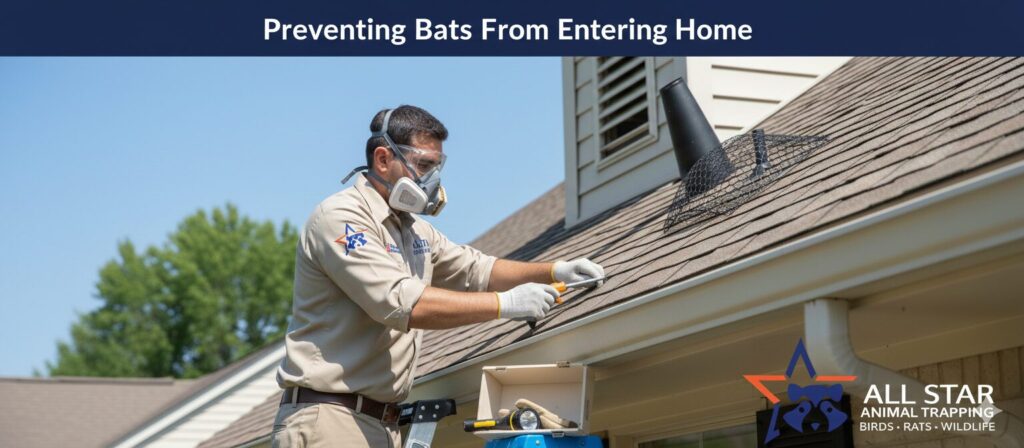
Protecting homes involves sealing cracks, screening openings, and deterring roosting. Professionals identify points, apply materials, and reinforce structures. Prevention verification gives assurance that residences are secure from intrusion.
Without proactive measures, homes risk sudden colonies, insulation damage, or staining. Home bat prevention addresses vulnerabilities early, preventing long-term repair and health complications, and ensuring stable, bat-free environments.
Avoiding Infestations and Costly Removals
Many bat problems start from open access, overlooked gaps, or attractive features. Avoiding issues involves regular checks, durable seals, and expert recommendations to stop entry. Professional prevention ensures all potential points, materials, and deterrents are reliable and effective.
Proactive prevention measures reduce removal needs, cleanup costs, and potential violations. When homes are properly secured upfront, owners enjoy confidence, knowing bats cannot enter and future problems are avoided.
Preventing Bats From Entering Home for Homeowners
Prevention support for homeowners ensures thorough surveys, vulnerability checks, and full compliance. Home bat techniques guide through sealing, screening, and deterrence, reducing risks and maintaining spaces.
In roosting-prone areas like Los Angeles, homeowners benefit greatly from prevention, where common bats demand early, legal barriers for undisturbed homes.
Sealing Common Entry Points
Closing gaps in eaves, soffits, and ridges blocks typical access. This foundational step prevents exploration and roosting.
Screening Vents and Openings
Covering vents with mesh maintains airflow while denying entry. Oversight requires secure fits for lasting protection.
Preventing Bats From Entering Home for Larger Homes
Larger homes often have more potential entries. Prevention ensures comprehensive coverage, verified seals, and ongoing deterrence.
Professional guidance protects from widespread vulnerabilities, health concerns, or multiple roosts, while maintaining clean and secure residences.
Installing Chimney Caps
Capping chimneys with mesh prevents descent while allowing smoke escape. Services ensure proper spacing and fit.
Roof and Exterior Sealing
Sealing defines thorough coverage for shingles, ridges, and frames. Reviews ensure reliable outcomes, protecting home exteriors.
Role of Bat Prevention Experts in Home Protection
Bat prevention experts provide specialized guidance for residences, ensuring compliance and safeguarding homes. Experts guide assessments, recommend seals, and suggest deterrents, maintaining standards and effectiveness throughout.
Home Survey and Vulnerability Assessment
Professional surveys ensure risks are clear, preventive, and compliant with standards. Experts identify points, choose materials, and prevent access.
Sealing and Deterrent Recommendations
Recommendations support homeowners during processes, address openings proactively, and ensure homes meet durability needs, avoiding future intrusions.
Common Vulnerabilities in Home Bat Prevention
Common issues include small cracks, vent gaps, chimney access, and eave openings. Early expert help identifies these, applies fixes, and ensures protection.
Overlooked Small Gaps
Handling tiny cracks resolves common entry risks, squeezing, or exploration. Clear checks prevent initial access.
Seasonal Roosting Attractions
Compliance with timing and deterrents prevents seasonal use, nesting, or returns. Oversight ensures all practices follow guidelines.
Is Preventing Bats From Entering Home Effective?
Prevention blocks access, ensures compliance, and protects long-term comfort. Proactive measures facilitate bat-free and worry-free homes.
Key Features of Preventing Bats From Entering Home
- Inspections ensure accurate vulnerability assessments and planning.
- Gap sealing covers cracks and crevices.
- Vent screening verifies airflow while blocking access.
- Chimney capping handles flue protection efficiently.
- Homeowner measures ensure proper exterior safeguarding.
- Family-focused approaches protect health and comfort.
- Compliance with regulations prevents issues.
- Residential methods manage common entry risks.
- Exterior seals safeguard structure and insulation.
- Long-term deterrence preserves home value and peace.
How to Implement Preventing Bats From Entering Home
Evaluating home features, vulnerabilities, and compliance ensures selection of effective measures. Home bat consultation helps owners decide on seals, materials, and timing.
Experience and Expertise
Experienced firms understand residential vulnerabilities, sealing techniques, and deterrent options. Their knowledge anticipates and manages risks effectively.
Prevention, Transparency, and Client Reviews
Proven prevention and positive client reviews indicate reliability. Consultation clarifies measures, scope, and service quality.
Reference Table
| Service Area | Purpose | Outcome |
| Exterior Home Inspection | Identify potential entry points | Customized prevention plan |
| Gap and Crack Sealing | Fill small openings with caulk | Permanent block of minor access |
| Foam Expansion Seals | Close irregular spaces | Weatherproof protection for uneven areas |
| Hardware Cloth Screening | Cover vents and openings | Maintained ventilation, bats excluded |
| Chimney Mesh Caps | Install protective covers | Safe flue use without entry |
| Soffit and Eave Reinforcement | Seal overhang gaps | Prevented climbing and squeezing |
| Roof Ridge Closure | Block peak vents | Eliminated high-roost attraction |
| Shingle Under-Seal | Close roofline spaces | Blocked common roof access |
| Window and Door Frame Seals | Address weathering gaps | Secured full envelope |
| Lighting Deterrents | Install motion lights | Discouraged night roosting |
| Tree Trimming Advice | Reduce branch proximity | Limited bridge access to roof |
| Attic Vent Protection | Screen or cap vents | Controlled airflow, no entry |
| Eave Gap Filling | Reinforce soffit areas | Maintained aesthetics, bats excluded |
| Post-Prevention Check | Monitor for new vulnerabilities | Confirmed ongoing protection |
| Material Recommendations | Durable, bat-resistant items | Extended prevention effectiveness |
| Seasonal Maintenance Tips | Regular checks and cleans | Reduced seasonal attraction |
| Home Deterrent Integration | Ultrasonic or natural options | Added layer of repulsion |
| Full Prevention Documentation | Record of measures taken | Proof for insurance or resale |
Preventing Bats From Entering Home Overview – Final Thoughts
Implementing preventing bats from entering home makes potential infestations avoidable, safe, and worry-free. Homeowners and families benefit from proactive techniques that block access, ensure compliance, and safeguard health. Early prevention applications strengthen confidence, eliminate risks, and ensure lasting tranquility.
When to Start Home Prevention
Home prevention should begin during routine maintenance or upon noticing vulnerabilities. Early consultation identifies points, recommends fixes, and clarifies measures.
Long-Term Benefits of Home Prevention
Home prevention provides long-term security, ensures ongoing protection, and maintains residential condition. Proactive steps safeguard against future bats over time.
Conclusion
Potential bat intrusions in homes are preventable with the right approach. Preventing bats from entering home provides clarity, protect residences and families, and ensure compliance with laws. Professional preventive strategies allow homeowners and managers to make informed decisions, avoid infestations, and preserve long-term safety. With thorough sealing, screening, deterrents, and expert advice, keeping bats out of homes becomes simple, effective, and permanent.
Frequently Asked Questions
1. What are ways to prevent bats from entering home?
Prevention includes sealing gaps, screening vents, capping chimneys, and installing deterrents. Additional steps cover caulking cracks and trimming branches. This ensures access denial from the start. Top ways identify common points. Effective prevention delivers bat-free homes without issues.
2. Do I need professionals to prevent bats in home?
Professionals ensure thorough, legal, and durable prevention for compliance. They help spot hidden vulnerabilities and recommend fixes. Protected laws support expert advice. Reviews highlight effectiveness and longevity. Smart choices lead to better protection and peace.
3. How does prevention help with attic bats?
Prevention for attics covers vent screening, sealing, and inspections. It minimizes risks before roosting starts. Custom measures address common access. Proactive seals protect family spaces. Professional guidance ensures ongoing safety without infestations.
4. What is a home bat prevention inspection?
A prevention inspection evaluates exterior points, rooflines, and potential roosts. It identifies vulnerabilities and recommends blocks. This forms the basis for proactive plans. Experts provide detailed, compliant advice. It prevents future colonies or disturbances.
5. Is preventing bats from home expensive?
Prevention varies by home size and vulnerability count. Basic seals are affordable, while full coverage adds longevity. Competition offers reasonable options. Investing in prevention prevents costly removals. Overall, home prevention proves cost-effective long-term.
6. Can prevention stop bat entry completely?
Detailed prevention includes seals and deterrents. It reduces risks through precise identification and materials. Transparent processes avoid overlooked spots. Comprehensive measures handle potential access. Good prevention ensures lasting, intrusion-free results.
7. How do laws affect home bat prevention?
Laws protect bats and encourage non-harmful prevention. This supports sealing outside maternity seasons. Strong regulations cover ethical timing. Adhering to rules avoids issues and harm. Reliable prevention ensures fully legal protection.
8. Is professional prevention needed for residential homes?
Residential homes often have subtle entries, making professional prevention essential for thorough safeguarding. It covers extensive screening and sealing. Expert advice provides family coverage. Custom measures prevent health risks. Professional approaches maintain home standards.
9. How do I implement preventing bats from home?
Evaluate home features, vulnerabilities, and compliance first. Check transparency in recommendations and reviews. Compare materials, deterrents, and timing. Consult experts about points directly. Select based on durability, effectiveness, and expertise.
10. What are the long-term benefits of home prevention?
Home prevention delivers ongoing protection, reducing intrusion chances. It ensures compliance and property value. Savings come from avoiding removals and damages. Peace of mind lasts with secure homes. Overall measures maintain safety and comfort over years.
Humane Wildlife Removal You Can Trust
When nuisance wildlife becomes a problem, rely on All Star Animal Trapping for professional and humane animal removal services. We safely remove raccoons, skunks, squirrels, rodents, and more — protecting your home and family the right way.