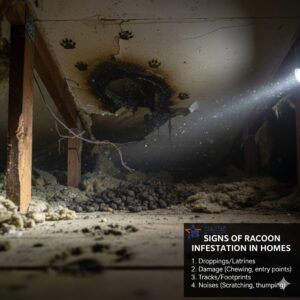
Raccoons are highly intelligent and remarkably adaptable animals that often find their way into human dwellings. Their nocturnal habits, combined with dexterous paws and problem-solving skills, allow them to enter attics, basements, and crawl spaces with ease. Recognizing the signs of a raccoon infestation in homes early can help prevent serious damage and potential health hazards.
These creatures are capable of causing structural damage, spreading parasites, and creating significant disturbances within the home environment. Understanding the signs of raccoon activity empowers homeowners to respond promptly and effectively. Timely intervention is critical to ensure that small infestations do not escalate into costly and dangerous problems.
What Are the Early Signs of a Raccoon Infestation?
Early signs of raccoon activity are often subtle and can be easily overlooked. Scratching, scurrying, or thumping noises in attics, walls, or ceilings are common indicators of nocturnal visitors. Homeowners may initially attribute these sounds to rodents, but raccoons produce deeper and more pronounced noises due to their larger size.
Other early signs include small holes in vents, displaced debris, or unusual odors emanating from previously unused areas. Observing these warning signs allows homeowners to intervene before raccoons establish permanent nesting sites. Prompt detection is especially important when young kits may be present, as disturbing them prematurely can create further risks.
Scratching and Movement Noises
Scratching and movement sounds are the most noticeable early indicators of raccoon presence in attics or walls. These noises often occur at night when raccoons are most active, signaling attempts to move, feed, or establish nesting areas. Homeowners should pay attention to repeated sounds over several nights, as consistent activity is a strong sign of an active infestation.
Displaced Debris
Debris such as twigs, insulation, or nesting materials near potential entry points suggests raccoon activity. Raccoons often carry these materials from outdoor areas into attics to create comfortable nests. Observing piles of shredded insulation or small sticks around vents or rooflines can indicate ongoing habitation.
Small Holes and Entry Points
Holes in roofs, vents, or eaves are often created or enlarged by raccoons to gain access to the home. These entry points can start small but grow larger over time as raccoons repeatedly enter and exit. Identifying and securing these holes early can prevent the infestation from worsening.
How Can Raccoon Droppings Indicate Infestation?
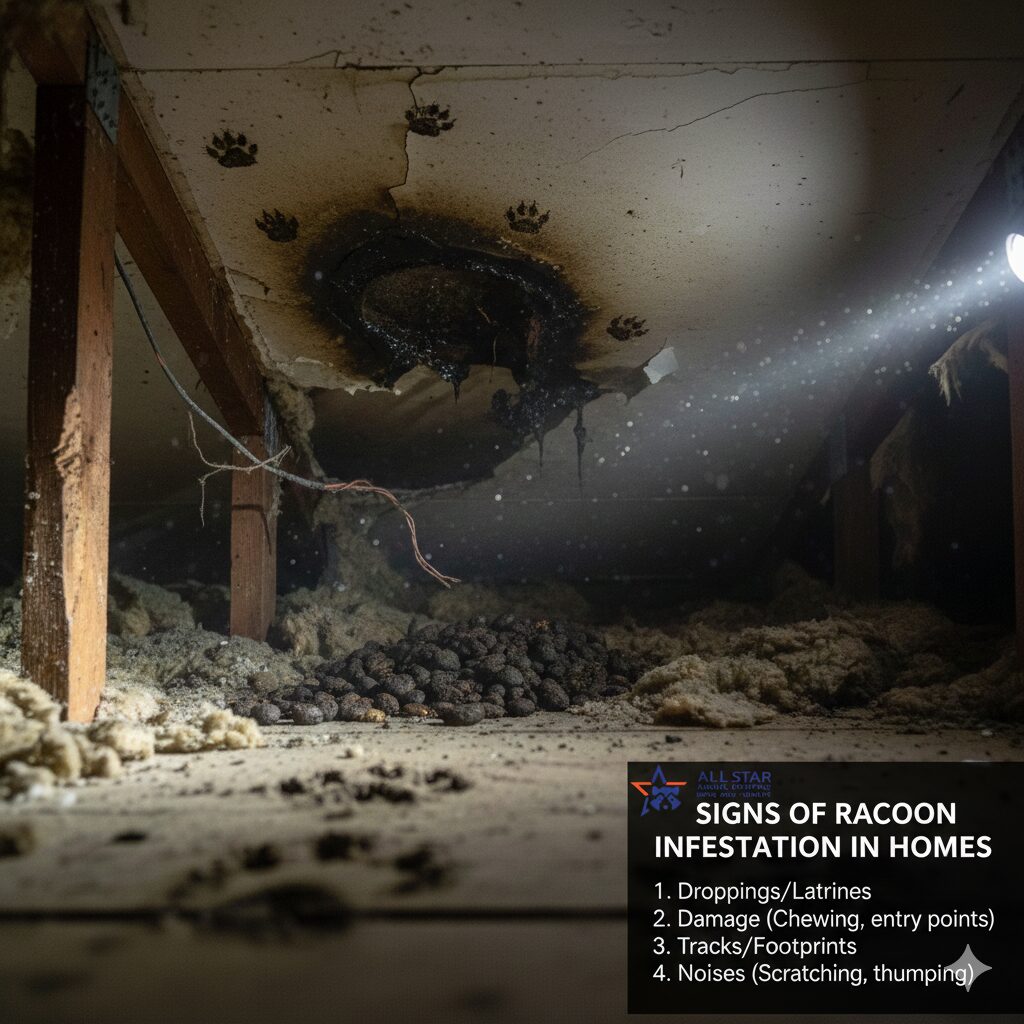
Raccoon feces, also known as scat, are a key sign of their presence. Typically dark, tubular, and segmented, raccoon droppings often contain remnants of seeds, hair, or insect exoskeletons. Consistent spotting of such feces near attics, basements, or travel routes signals active raccoon movement.
Raccoon droppings are not just unsightly; they can harbor parasites like roundworms and bacteria harmful to humans and pets. Regular monitoring and safe cleanup of droppings are essential for both infestation management and public health.
Feces Characteristics
Raccoon feces are usually dark brown, tubular, and often tapered at one end. They vary in size depending on the age and diet of the raccoon, with adult droppings typically measuring 2–4 inches. The presence of seeds or hair in the droppings can help distinguish raccoons from other wildlife species.
Placement and Frequency
Droppings are commonly found near dens, along walls, or on pathways that raccoons frequently use. Multiple piles in the same area suggest regular activity, often indicating more than one raccoon in the vicinity.
Health Implications
Scat can carry pathogens, including roundworm eggs and bacteria like Leptospira. Contact with contaminated surfaces or inhalation of dried droppings poses significant health risks, making proper handling and cleanup critical.
What Physical Evidence Suggests Raccoon Activity?
Raccoons leave clear physical signs in areas they inhabit. Chewed wires, torn insulation, claw marks, and displaced roofing materials are common indications. These signs often become more severe as the infestation progresses, particularly when raccoons are raising young kits.
Identifying physical damage early allows homeowners to secure potential entry points and reduce structural hazards. Regular inspections of attics, vents, and roofs can reveal these telltale signs before infestations escalate.
Chewed Wires and Insulation
Raccoons frequently chew on wires, posing fire risks, and tear insulation for nesting material. These behaviors can compromise the structural integrity and safety of the home. Visible shredding of insulation or chewed electrical cables should trigger immediate action.
Claw Marks and Scratches
Claw marks on walls, ceilings, or wooden beams indicate frequent raccoon activity. They use their sharp claws to climb, manipulate objects, and create entry points. The location and frequency of these marks can help locate their denning area.
Enlarged Entry Points
Raccoons often enlarge preexisting gaps or holes to gain repeated access. These can be found in roof vents, eaves, or soffits. Securing and reinforcing these points is crucial to preventing re-entry after removal.
How Do Raccoon Noises Signal an Infestation?
Raccoons are vocal animals, and their sounds can reveal infestation severity. Growls, squeals, and hissing often indicate disputes between individuals or defensive behavior when disturbed. Homeowners frequently detect these noises at night, usually between 10 PM and 3 AM.
Movement noises, such as scratching and thumping, are amplified in confined spaces like attics. Paying attention to auditory cues can help locate dens, identify active raccoons, and assess the scale of the infestation.
Scratching and Thumping
Scratching and thumping noises are produced by raccoons moving across insulation, beams, and attic floors. These sounds are typically rhythmic and concentrated in one area, helping pinpoint the nest location.
Vocalizations
Growls, hisses, and squeals serve as warning signals or communication between raccoons. Distinguishing these from rodent sounds can aid in early identification.
Nocturnal Timing
Raccoons are most active at night, so consistent nighttime noises often indicate an active infestation. Early evening or pre-dawn activity may suggest food sources inside the home.
Can Odors Reveal Raccoon Infestation?
Musky, ammonia-like odors in attics, crawl spaces, or basements are a common sign of raccoon activity. These odors originate from urine, feces, and body oils. Odors intensify with multiple raccoons or when kits are present.
Homeowners may notice these smells before visual evidence appears. Prompt identification and cleanup help prevent lingering odors and reduce the risk of pathogen exposure.
Urine and Fecal Odors
Strong musky or ammonia-like smells near potential entry points suggest nesting or frequent use. The intensity of the odor can correlate with the size of the infestation.
Amplified Smells with Kits
The presence of kits can increase odor intensity due to urine marking and higher activity levels.
Sensitivity to Humans and Pets
Humans and pets are often the first to detect odors, making them an important early warning system.
What Damage Can Raccoons Cause Inside Homes?
Raccoons can inflict serious damage, including torn insulation, chewed wiring, and weakened structural components. They often target attics, basements, and vent spaces for nesting and shelter.
The damage is not limited to aesthetics; electrical hazards and structural integrity risks are significant. Prompt intervention reduces repair costs and prevents further escalation.
Electrical Hazards
Chewed wires can create fire hazards and disrupt electrical systems. Early detection of wiring damage is crucial for safety.
Structural Damage
Scratched beams, holes in ceilings, and torn vents compromise the home’s structure. Professional assessment is often necessary after prolonged infestation.
Insulation Damage
Raccoons shred insulation to create nests, which may require replacement after removal. The accumulation of shredded materials can also attract other pests.
How Do Raccoons Use Attics and Crawl Spaces?
Raccoons prefer secluded spaces such as attics and crawl spaces for nesting, sleeping, and raising kits. These areas protect from predators and harsh weather conditions.
Even a single raccoon can cause noticeable damage over time, including shredded insulation and contaminated surfaces. Observing these areas regularly is essential for early detection and prevention.
Nesting Behavior
Raccoons use insulation, debris, and shredded materials to build comfortable nests. Nesting locations are often elevated, secure, and undisturbed during daylight hours.
Accessibility
Attics and crawl spaces allow easy access while remaining hidden from humans. Their dexterity allows them to exploit small openings and create nesting sites efficiently.
Multipurpose Use
These spaces serve as sleeping quarters, breeding sites, and storage for nesting materials. Long-term occupation can significantly affect structural integrity.
What External Signs Indicate Raccoon Presence?
External signs include footprints, overturned garbage, claw marks, and damaged gardens. Frequent outdoor activity often precedes indoor infestation.
Short paragraph: Tracking raccoon movements around the property can reveal potential entry points. Identifying these early allows homeowners to implement exclusion measures effectively.
Footprints and Tracks
Raccoon prints are distinctive, with five fingers resembling small human hands. They are often visible in soft soil, mud, or snow near potential entry points.
Garbage Raiding
Raccoons frequently tip over trash cans and scatter garbage while scavenging for food. Observing repeated raiding patterns indicates regular visits.
Garden and Yard Damage
Raccoons dig in lawns, compost, and gardens to access food. Damage patterns are often irregular and concentrated near edges or vulnerable plants.
Severity and Location of Raccoon Infestation Signs
| Sign Type | Example Indicators | Severity Level | Likely Location |
| Audio | Scratching, growling, thumping | Moderate | Attic, walls |
| Visual | Droppings, shredded insulation, claw marks | High | Attic, crawl space |
| Odor | Strong musky/ammonia-like smells | Moderate | Attic, basement |
| Structural Damage | Chewed wires, torn vents, weakened beams | High | Attic, roof, walls |
| Outdoor Activity | Footprints, overturned garbage, and garden damage | Low-Moderate | Yard, garden |
How Can Homeowners Prevent Raccoon Infestations?
Preventive measures include sealing entry points, securing food sources, and monitoring potential nesting areas. Chimneys, vents, and attics should be inspected and reinforced regularly.
Proper landscaping, waste management, and lighting can reduce the likelihood of raccoons entering the property. Timely action helps avoid costly repairs and long-term infestations.
Prevention Tips
- Seal roof gaps, vents, and chimneys with metal mesh.
- Use raccoon-proof trash bins with secure lids.
- Feed pets indoors or remove leftovers promptly.
- Trim tree branches overhanging roofs.
- Install motion-activated lights or alarms to deter nocturnal visitors.
Conclusion
Recognizing the signs of raccoon infestation in homes is essential for early intervention and effective management. Auditory, visual, olfactory, and structural clues all provide critical information about active raccoon presence.
Homeowners can prevent damage and health risks by identifying infestations early and taking proactive measures. Combined with professional removal, these strategies ensure homes remain secure while maintaining ecological respect for wildlife.
Frequently Asked Questions (FAQs)
Q1: Can one raccoon cause significant damage?
Yes, even a single raccoon can shred insulation, chew wires, and leave droppings that require cleanup.
Q2: How can raccoon droppings be distinguished from those of other animals?
Raccoon droppings are tubular, segmented, and often contain seeds or hair.
Q3: Are raccoons dangerous indoors?
Yes, they carry parasites and bacteria that can pose health risks to humans and pets.
Q4: How quickly can raccoons infest an attic?
Infestation can begin within days if entry points and food sources are available.
Q5: Do raccoons leave identifiable tracks outside?
Yes, they have five-fingered footprints resembling small human hands.
Q6: Can preventive measures fully stop raccoons?
They reduce risk, but raccoons are persistent and require ongoing monitoring.
Q7: Do raccoons return after removal?
Yes, they may return if food and entry points are still accessible.
Q8: What is the best method for professional removal?
Humane trapping, exclusion, and sealing entry points ensure effective and lasting results.
Humane Wildlife Removal You Can Trust
When nuisance wildlife becomes a problem, rely on All Star Animal Trapping for professional and humane animal removal services. We safely remove raccoons, skunks, squirrels, rodents, and more — protecting your home and family the right way.