Squirrels may look harmless outdoors, but when they move inside, they can quickly become a serious household problem. Understanding the signs of squirrel infestation in your home helps homeowners take early action before structural damage and health risks increase. These pests are highly active, destructive, and capable of nesting in hidden areas for long periods.
Ignoring the early signs of squirrel infestation in your home often leads to chewed wiring, insulation damage, and contamination. Squirrels are persistent and intelligent, making infestations difficult to control without proper awareness. This guide explains every major warning sign so you can protect your property effectively.
Common Signs of Squirrel Infestation in Homes
One of the earliest signs of squirrel infestation in your home is unusual activity in normally quiet areas. Squirrels are diurnal, meaning they are active during the day, especially early mornings and late afternoons. Their movement often goes unnoticed until the infestation grows.
Homeowners may also notice repeated disturbances near ceilings, attics, or walls. These sounds are not random and usually indicate nesting behavior. Recognizing these common signs of squirrel infestation in homes can prevent costly repairs later.
Noises as Signs of Squirrel Infestation
Strange sounds are among the most obvious signs of squirrel infestation in your home. These noises often come from above ceilings or behind walls where squirrels build nests. The sounds are usually louder during daylight hours.
You may hear running, scratching, or rolling noises that follow a pattern. Unlike rodents that move quietly, squirrels are heavier and more active. Persistent noise is a strong indicator of ongoing infestation.
Visual Signs of Squirrel Infestation in Your Home
Seeing a squirrel inside or near entry points is a major warning sign. Squirrels often travel the same paths repeatedly, making their presence easier to detect. Visual signs of squirrel infestation in your home should never be ignored.
You may also notice squirrels entering rooflines or attic vents. These repeated movements usually indicate nesting inside the structure. Spotting squirrels frequently around your home confirms infestation risk.
Structural Damage from Squirrel Infestation Signs
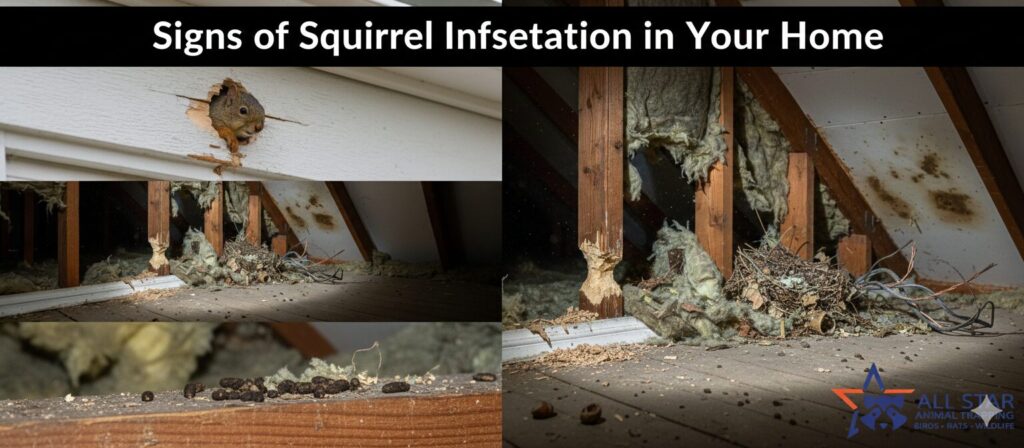
Physical damage is one of the most costly signs of squirrel infestation in your home. Squirrels chew constantly to keep their teeth trimmed. This behavior causes significant damage to wood, wiring, and insulation.
Over time, these damages weaken the structure of your home. Gnawed beams, broken vents, and torn soffits are common results. Structural damage often worsens quickly if left untreated.
Signs of Squirrel Infestation in the Attic
The attic is the most common nesting location for squirrels. Signs of squirrel infestation in the attic include disturbed insulation and nesting materials. These areas provide warmth, shelter, and safety.
You may also find droppings or urine stains near insulation. Squirrels often return to the same nesting spot year after year. Attic inspections reveal infestation signs early.
Nesting Materials as Infestation Indicators
Squirrels collect leaves, twigs, paper, and fabric to build nests. Finding these materials indoors is a clear infestation sign. Nesting materials are often hidden but cause insulation damage.
They may block ventilation and reduce energy efficiency. Over time, nesting increases fire risks and air quality problems. These materials strongly indicate squirrel presence.
Electrical Damage Signs of Squirrel Infestation
Chewed electrical wiring is a dangerous sign of squirrel infestation in your home. Squirrels gnaw on wires, increasing the risk of electrical fires. Many house fires begin due to rodent-related wiring damage.
You may notice flickering lights or tripped breakers. These electrical issues often appear before visible damage is found. Electrical problems should be treated as urgent infestation warnings.
Odors as Signs of Squirrel Infestation
Unusual smells are often overlooked signs of squirrel infestation in your home. Urine, droppings, and decaying nest materials produce strong odors. These smells are most noticeable in enclosed spaces.
The odor may worsen over time as contamination increases. Persistent musty or ammonia-like smells are common. Odors indicate long-term infestation activity.
Entry Points Showing Squirrel Infestation Signs
Squirrels create entry points by chewing through weak areas. Roof edges, vents, and siding are common access spots. These openings are visible signs of squirrel infestation in your home.
Repeated damage around the same location confirms entry use. Entry points also allow other pests inside. Early detection helps prevent recurring infestations.
Health-Related Signs of Squirrel Infestation
Squirrel infestations pose health risks to occupants. Droppings and urine contaminate air and surfaces. These health-related signs of squirrel infestation in your home should not be ignored.
Allergies, respiratory irritation, and unpleasant odors often appear. Parasites such as fleas may also spread. Health symptoms increase as infestations persist.
Secondary Signs of Squirrel Infestation in Homes
Some signs appear gradually and worsen over time. These secondary signs of squirrel infestation in your home often go unnoticed initially. Homeowners may assume normal wear and tear.
However, repeated damage patterns indicate pest activity. Monitoring these changes helps confirm infestation early. Delayed response increases repair costs significantly.
Seasonal Signs of Squirrel Infestation
Squirrel infestations increase during colder months. Signs of squirrel infestation in your home become more noticeable as squirrels seek warmth. Attics and wall voids are preferred winter shelters.
During spring, infestations may include baby squirrels. Increased noise and activity occur during breeding seasons. Seasonal awareness improves early detection.
Signs of Squirrel Infestation in Walls
Walls provide hidden travel paths for squirrels. Signs of squirrel infestation in walls include scratching and movement sounds. These noises often follow vertical patterns.
You may also notice wall discoloration from urine. Damage inside the walls remains hidden but severe. Wall infestations require immediate attention.
Long-Term Effects of Ignoring Squirrel Infestation Signs
Ignoring early signs of squirrel infestation in your home leads to extensive damage. Squirrels multiply and return annually. Each season worsens the infestation’s impact.
Structural damage, fire hazards, and health risks increase significantly. Repairs become more expensive over time. Early intervention prevents long-term consequences.
How to Confirm Signs of Squirrel Infestation
Confirmation requires careful inspection of affected areas. Signs of squirrel infestation in your home often appear together. No single sign should be evaluated alone.
Professional inspections help identify hidden nests. Cameras and attic checks are often necessary. Confirmed infestation allows proper planning.
Preventive Awareness of Squirrel Infestation Signs
Understanding warning signs helps prevent infestations. Regular inspections reduce infestation risks. Awareness of the signs of squirrel infestation in your home is the first defense.
Preventive maintenance limits access points. Early detection saves money and protects safety. Knowledge empowers homeowners.
FAQs
1. Can squirrels live inside walls for long periods?
Yes, squirrels can live inside walls for months if undisturbed. They create hidden nests and travel paths inside wall cavities.
2. Are squirrel droppings dangerous indoors?
Squirrel droppings can contaminate surfaces and air. Prolonged exposure may cause health issues.
3. Do squirrels return after leaving a home?
Yes, squirrels often return to the same nesting location. Unsealed entry points encourage repeat infestations.
4. Can squirrel infestations increase fire risk?
Chewed electrical wiring significantly increases fire hazards. This is a serious infestation risk.
5. Do squirrels infest homes year-round?
Yes, but infestations peak during colder months and breeding seasons. Activity varies seasonally.
6. How fast do squirrel infestations grow?
Infestations can grow quickly due to breeding. A small problem can become severe within weeks.
7. Can odors indicate squirrel infestation?
Strong ammonia or musty odors often indicate urine buildup. Odors usually appear in advanced infestations.
8. Are squirrels harder to detect than other pests?
Yes, squirrels hide well and cause damage silently. Many signs go unnoticed initially.
Conclusion
Recognizing the signs of squirrel infestation in your home is essential for protecting your property and health. These pests cause extensive damage through chewing, nesting, and contamination. Early detection allows homeowners to act before problems escalate.
By understanding both obvious and subtle signs of squirrel infestation in your home, you can reduce long-term risks. Regular inspections and awareness prevent costly repairs and safety hazards. Knowledge remains the strongest defense against infestation.
Humane Wildlife Removal You Can Trust
When nuisance wildlife becomes a problem, rely on All Star Animal Trapping for professional and humane animal removal services. We safely remove raccoons, skunks, squirrels, rodents, and more — protecting your home and family the right way.