
Skunks are fascinating yet often troublesome creatures that leave unmistakable signs of their presence. One of the clearest indicators of skunk activity is their droppings, also known as scat. By learning how to identify skunk droppings, homeowners can monitor wildlife activity and take steps to prevent potential damage to their property.
Recognizing skunk droppings is essential for both safety and wildlife management. Their droppings not only indicate that skunks are nearby but can also provide clues about their diet and the areas they frequent. Understanding these signs helps homeowners protect gardens, lawns, and outdoor structures while minimizing unwanted encounters.
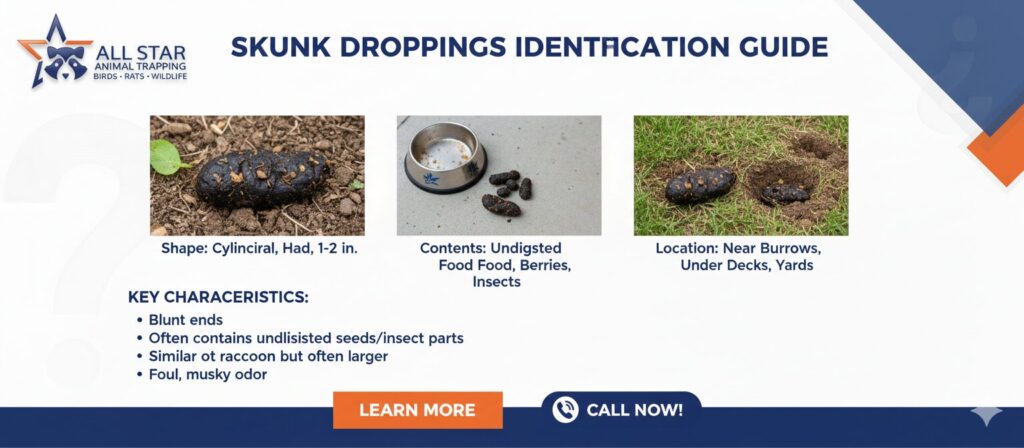
Characteristics of Skunk Droppings
Skunk droppings have distinct features that make them identifiable compared to other wildlife scat. Knowing these characteristics allows homeowners and wildlife enthusiasts to quickly determine if skunks are active in a particular area.
Typically, skunk droppings are dark in color, ranging from brown to black, and have a tubular shape with tapered ends. They usually measure between 1.5 and 3 inches in length and contain undigested material like seeds, berries, and insect parts. Unlike raccoon or cat droppings, skunk scat often has a strong, musky odor, which becomes more noticeable when the droppings are fresh.
Shape and Size
Skunk droppings are generally cylindrical with pointed ends. Their length ranges from 1.5 to 3 inches, depending on the skunk’s diet and size, while the diameter is usually around half an inch. This small, elongated shape distinguishes them from larger, more irregular scat left by raccoons or opossums.
Color and Texture
Fresh skunk droppings are typically dark brown to black and have a moist, soft consistency. Over time, they dry out and become gray or crumbly, often breaking apart if touched. The droppings may also contain visible contents like seeds, berries, insect shells, or small bits of fur, which provide clues about the skunk’s recent diet.
Odor Characteristics
Skunk scat has a distinctive musky smell, much like their infamous spray, but less overpowering. The odor is strongest when droppings are fresh and diminishes as they dry. Even if the shape or contents of the scat are slightly degraded, the smell can often help confirm skunk presence, making odor a useful identification tool.
Common Locations for Skunk Droppings
Skunks often leave droppings in areas that serve as travel routes, feeding zones, or territorial markers. Recognizing these locations helps homeowners monitor activity and reduce the risk of property damage.
Skunks typically defecate along fences, pathways, garden edges, or near burrows. They prefer undisturbed, quiet areas where they feel safe while foraging at night. Knowing the common locations of skunk droppings can aid in tracking their movements and implementing targeted control measures.
Garden and Lawn Areas
Skunks forage extensively in lawns and garden beds, leaving droppings nearby. Mulched areas, compost piles, and vegetable patches are especially prone to scat deposition. Observing droppings in these zones helps identify high-activity areas and protects plants from repeated digging or foraging.
Near Structures
Skunks often deposit droppings near buildings or structures where they feel secure. Sheds, decks, and garages are common sites, as are fence lines that serve as travel corridors. Checking these areas regularly can help prevent skunks from burrowing or causing structural damage.
Trails and Pathways
Droppings are frequently found along skunk travel routes or pathways used repeatedly at night. Skunks tend to follow established trails when moving between feeding areas and dens. Identifying droppings along these paths allows homeowners to anticipate skunk movement and take preventive measures.
Seasonal Variations in Skunk Droppings
The appearance and location of skunk droppings can vary depending on the season and available food sources. Understanding these variations helps with accurate identification year-round.
During spring and summer, skunks feed primarily on insects, worms, and grubs, producing droppings rich in insect parts. In the fall, their diet shifts to berries, fruits, and seeds, making droppings more fibrous and colorful. Winter droppings are less common due to reduced activity, but may occur near den entrances.
Spring and Summer
During spring and summer, skunks actively search for insects and worms in lawns and gardens. The resulting droppings often contain visible insect exoskeletons or worm fragments. Fresh droppings are typically moist, dark, and have a strong odor, making them easier to identify during these seasons.
Fall
In the fall, skunks consume more fruits, berries, and seeds to build fat reserves for the colder months. Droppings from this period often contain fibrous plant matter or small seeds, which can help track feeding patterns. Homeowners with berry bushes or fruit trees may notice an increase in droppings near these areas.
Winter
Skunk droppings are rare during winter due to reduced activity and limited food sources. They are usually found near dens or sheltered areas where skunks occasionally venture. Droppings in winter are smaller, drier, and less odorous compared to other seasons.
Differences Between Skunk Droppings and Other Wildlife Scat
Distinguishing skunk droppings from other wildlife scat is crucial for accurate identification. Common confusions include raccoon, cat, opossum, and rabbit droppings.
Skunk droppings are smaller than raccoon scat and lack the segmented shapes typical of cat feces. Rabbit droppings are round pellets with a dry texture, while opossum droppings are larger, irregular, and often flattened. Learning these differences ensures proper identification and prevents mismanagement of wildlife activity.
Key Differences
Skunk droppings are tubular and tapered, distinguishing them from raccoon droppings, which are larger and often segmented. Cat droppings are more uniform and lack seeds or insect fragments, while rabbit pellets are small, round, and dry. Opossum scat is irregular and soft, which makes it easily distinguishable from skunk droppings. Correctly identifying scat is essential for monitoring wildlife without misinterpreting signs from other animals.
How Skunk Droppings Indicate Diet and Health
Analyzing skunk droppings can provide insights into their diet, health, and behavior. This information is useful for wildlife management and understanding the impact on your property.
Droppings containing mostly insects indicate foraging in lawns or garden beds, while berries and seeds suggest feeding in fruit-bearing areas. Abnormal droppings, such as those with mucus, blood, or parasites, may indicate illness. Monitoring droppings can help predict feeding patterns and potential problem areas.
Dietary Insights
By observing droppings, homeowners can determine which food sources skunks prefer in the area. Insect-rich droppings indicate lawn or garden foraging, while seeds and berries suggest orchard or shrub feeding. Tracking these patterns can guide preventative strategies and reduce property damage.
Health Indicators
Changes in droppings, such as the presence of blood, mucus, or unusual consistency, can signal health issues in skunks. Monitoring these indicators helps wildlife specialists assess the condition of local skunk populations. Observing signs of parasites or digestive irregularities can also alert property owners to potential disease risks.
Safety Tips When Handling Skunk Droppings
Skunk droppings can carry bacteria, parasites, and diseases. Proper precautions are essential when cleaning or analyzing droppings to ensure safety for humans and pets.
Always wear gloves and avoid direct contact with droppings. Use disinfectants when cleaning surfaces contaminated by droppings. Wash your hands thoroughly after handling and avoid inhaling dust from dried scat. Pets should be kept away from droppings to reduce the risk of disease transmission.
Recommended Safety Measures
Gloves and protective clothing are essential when removing or examining skunk droppings. Masks can prevent inhalation of harmful spores or dust particles. Disinfecting the area with bleach or other safe cleaners reduces the risk of bacterial contamination. Keeping pets and children away ensures household safety during cleanup.
Monitoring and Controlling Skunk Activity
Identifying skunk droppings is the first step toward monitoring and controlling skunk presence on your property. Implementing preventive measures can reduce damage and limit encounters.
Regularly inspect lawns, gardens, and common travel routes for droppings. Remove food sources such as pet food, compost, or fallen fruit. Installing fencing or motion-activated deterrents can discourage skunks from frequenting your yard. For persistent problems, professional wildlife control may be necessary.
Preventive Measures
Homeowners can reduce skunk activity by eliminating attractants such as accessible trash bins and fallen fruit. Securing compost piles and removing debris discourages skunks from foraging in the yard. Installing fencing around vulnerable gardens or planting deterrent vegetation also helps keep skunks at bay. Motion-activated sprinklers or lights can prevent nocturnal visits without harming the animals.
Summary of Skunk Droppings Identification
- Cylindrical, tubular shape with tapered ends.
- Length 1.5-3 inches, diameter ~0.5 inches.
- Dark brown to black in color; dries gray with age.
- Contains seeds, berries, insect parts, and fur.
- Strong musky odor when fresh, indicative of skunk activity.
Conclusion
Skunk droppings provide valuable clues for homeowners seeking to identify and manage wildlife activity. By observing size, shape, contents, and location, property owners can distinguish skunk scat from other animals and determine the level of activity. Accurate identification allows for timely action to prevent property damage, protect gardens, and minimize encounters.
Monitoring skunk droppings is not only an identification method but also a preventive strategy. By combining observation with proper environmental management, homeowners can reduce the risk of skunk-related issues while maintaining a safe and healthy outdoor space. Understanding skunk droppings is an essential part of responsible wildlife management.
Frequently Asked Questions (FAQs)
1. Can skunk droppings harm my pets?
Yes, skunk droppings can carry bacteria and parasites that may affect pets. Keep pets away from droppings and clean areas promptly.
2. How long does skunk scat last in the environment?
Fresh droppings last several days before drying and degrading. Weather conditions like rain can accelerate decomposition.
3. Can skunk droppings indicate the number of skunks in an area?
Multiple droppings in different locations may suggest several skunks are active nearby. Tracking patterns helps estimate the population.
4. Is it safe to handle skunk droppings without gloves?
No, direct contact increases the risk of exposure to pathogens. Always use gloves and disinfect after handling.
5. How can I tell if a skunk is visiting my yard regularly?
Frequent droppings along the same paths or garden areas indicate repeated visits. Observing tracks can also confirm activity.
6. Do skunks bury their droppings?
No, skunks typically leave droppings in open areas to mark territory or along travel routes.
7. Can skunk droppings attract other animals?
Yes, droppings may attract predators or scavengers looking for insects or seeds. Monitoring and removal reduce attraction.
8. Should I contact wildlife control for skunk droppings alone?
Not necessarily; droppings indicate presence but not infestation. If damage or repeated visits occur, professional control may be recommended.
Humane Wildlife Removal You Can Trust
When nuisance wildlife becomes a problem, rely on All Star Animal Trapping for professional and humane animal removal services. We safely remove raccoons, skunks, squirrels, rodents, and more — protecting your home and family the right way.