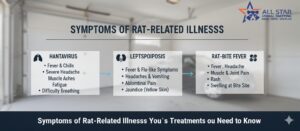
Rats are not just destructive pests; they are serious carriers of diseases that can threaten human health. Understanding the symptoms of rat-related illnesses is essential because many of these diseases start with mild signs that people often ignore. When left untreated, these illnesses can quickly turn severe and even life-threatening.
Rat-related illnesses are commonly transmitted through rat urine, droppings, saliva, contaminated food, or direct bites. Because rats often live hidden inside walls, basements, and storage areas, exposure can happen without your knowledge. Recognizing symptoms early helps prevent complications and allows for timely medical treatment.
What Are Rat-Related Illnesses?
Rat-related illnesses refer to diseases caused by bacteria, viruses, or parasites carried by rats. These illnesses can affect multiple systems of the human body, including the digestive system, respiratory system, nervous system, and skin. Some infections are mild, while others can result in hospitalization or long-term health damage.
The most dangerous aspect of rat-related illnesses is that their symptoms often resemble common flu or stomach infections. This similarity causes delays in diagnosis and treatment. Being aware of the symptoms of rat-related illnesses helps individuals take action before conditions worsen.
Understanding Rat-Related Illnesses
Rat-related illnesses are infections caused by bacteria, viruses, and parasites carried by rats. These illnesses affect different parts of the body, including the digestive system, respiratory system, nervous system, and skin. Some diseases cause mild discomfort, while others can be life-threatening.
Why Rat-Related Diseases Are Often Misdiagnosed
Many symptoms of rat-related illnesses resemble common flu or stomach infections. Fever, fatigue, nausea, and body aches are often treated at home without medical consultation. This misinterpretation allows the disease to progress unnoticed.
The Hidden Danger of Long-Term Exposure
Continuous exposure to rats increases the risk of repeated infections. Even if symptoms seem mild at first, prolonged contact can cause chronic health issues. This is especially concerning in homes with ongoing rat infestations.
How Rats Transmit Diseases to Humans
Rats transmit diseases through both direct and indirect contact. Direct transmission usually occurs through rat bites or scratches. Indirect transmission happens when humans touch surfaces, food, or water contaminated with rat urine or droppings.
Airborne transmission is also possible when dried droppings become airborne during cleaning. Poor sanitation, overcrowding, and unmanaged waste increase the risk of disease spread. Understanding these transmission methods is critical to preventing rat-related illnesses.
General Symptoms of Rat-Related Illnesses
Most rat-related diseases share a set of common early symptoms. These symptoms often appear within days or weeks of exposure. Ignoring them can allow the disease to progress to more dangerous stages.
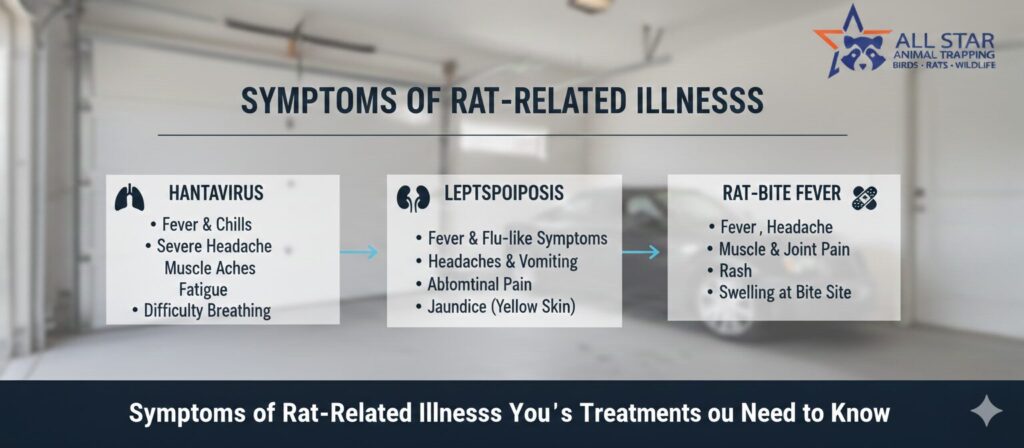
Common symptoms include fever, fatigue, headaches, muscle pain, nausea, vomiting, and diarrhea. Some people may also experience respiratory distress, rashes, or swollen lymph nodes. Any unexplained illness following possible rat exposure should be taken seriously.
Symptoms of Leptospirosis Caused by Rats
Leptospirosis is a bacterial infection spread mainly through water or soil contaminated with rat urine. It is one of the most common rat-related illnesses worldwide. Symptoms may begin mildly but can escalate rapidly.
In the early stage, patients experience high fever, chills, headache, muscle pain, and vomiting. As the infection progresses, liver and kidney damage may occur, leading to jaundice and dark urine. Early diagnosis significantly improves recovery outcomes.
Severe Leptospirosis Symptoms
- Yellowing of skin and eyes due to liver failure
- Decreased urine output indicates kidney damage
- Internal bleeding and chest pain
Symptoms of Hantavirus Pulmonary Syndrome
Hantavirus is a rare but deadly viral disease associated with rat droppings and urine. Infection usually occurs when contaminated dust is inhaled. The early symptoms are often mistaken for the flu.
Initial signs include fever, muscle aches, fatigue, and headaches. Later, the disease attacks the lungs, causing shortness of breath and fluid buildup. Without immediate medical care, hantavirus can be fatal.
Advanced Warning Signs of Hantavirus
- Rapid breathing and chest tightness
- Sudden drop in blood pressure
- Severe respiratory failure
Symptoms of Salmonellosis Linked to Rats
Salmonellosis is a bacterial infection caused when rats contaminate food or kitchen surfaces. This illness mainly affects the digestive system and can be dangerous for children and elderly individuals.
Symptoms typically include diarrhea, abdominal cramps, fever, nausea, and vomiting. Dehydration is a major risk if fluid loss is not managed. Proper food storage and hygiene help prevent infection.
Rat-Bite Fever: Symptoms You Should Never Ignore
Rat-bite fever develops after a bite or scratch from an infected rat. It can also occur through handling rats without proper protection. Symptoms usually appear within a week.
Common signs include fever, chills, vomiting, muscle pain, and joint swelling. A rash may develop on the hands and feet. Without treatment, complications such as heart infection or blood poisoning may occur.
Complications of Rat-Bite Fever
- Persistent joint inflammation
- Endocarditis (heart infection)
- Sepsis in severe cases
Respiratory Symptoms Caused by Rat Exposure
Rats can trigger respiratory issues even without causing infection. Rat urine, dander, and droppings act as allergens that irritate the airways. This is especially dangerous for asthma patients.
Symptoms include coughing, wheezing, chest tightness, and shortness of breath. Long-term exposure may worsen chronic respiratory conditions. Proper ventilation and pest control reduce these risks.
Skin and Allergic Reactions from Rats
Some people develop allergic reactions after exposure to rats or their waste. These reactions affect the skin and eyes and may worsen with repeated exposure.
Common symptoms include itching, rashes, redness, watery eyes, and swelling. In sensitive individuals, symptoms can progress into severe allergic reactions. Eliminating rat infestations is the most effective solution.
Neurological Symptoms of Severe Rat-Related Illnesses
Certain rat-related diseases can affect the nervous system. These symptoms are often overlooked but can indicate serious complications.
Patients may experience confusion, dizziness, neck stiffness, sensitivity to light, or seizures. These signs require immediate medical attention. Early treatment can prevent permanent neurological damage.
Who Is Most at Risk of Rat-Related Illnesses?
Certain groups face higher risks due to weaker immune systems or increased exposure. Children often touch contaminated surfaces unknowingly. Elderly individuals may develop severe symptoms quickly.
Workers in sanitation, construction, agriculture, and food storage are also at higher risk. Awareness and protective measures are essential for these groups.
Key Symptoms of Rat-Related Illnesses
- High fever and chills
- Muscle aches and joint pain
- Diarrhea, vomiting, and abdominal cramps
- Breathing difficulty or chest tightness
- Skin rashes and allergic reactions
Conclusion
Understanding the symptoms of rat-related illnesses is vital for protecting yourself and your family. Many diseases start with mild symptoms that can be easily ignored. Early recognition allows for faster treatment and better recovery.
Rats pose serious health risks through direct and indirect exposure. Maintaining cleanliness, controlling infestations, and seeking medical care when symptoms appear can prevent severe outcomes. Awareness is your strongest defense against rat-related diseases.
FAQs
1. Can rat-related illnesses develop without direct contact?
Yes, indirect exposure through air, food, or surfaces is common.
2. Are rat-related symptoms similar to flu?
Yes, many symptoms mimic flu, which causes a delayed diagnosis.
3. How serious are rat-related illnesses?
They range from mild infections to life-threatening diseases.
4. Should I seek medical help after seeing rat droppings?
Yes, especially if symptoms appear afterward.
5. Are antibiotics always required?
Only bacterial infections require antibiotics, not viral ones.
6. Can children recover fully from rat-related illnesses?
Yes, with early treatment and proper care.
7. Can cleaning rat areas cause illness?
Yes, improper cleaning can release airborne pathogens.
8. Is prevention better than treatment?
Absolutely, preventing infestations is the most effective approach.
Humane Wildlife Removal You Can Trust
When nuisance wildlife becomes a problem, rely on All Star Animal Trapping for professional and humane animal removal services. We safely remove raccoons, skunks, squirrels, rodents, and more — protecting your home and family the right way.