Crawl spaces are often overlooked areas of a home, yet their condition can dramatically influence crawl space repair cost and overall home safety. Understanding how crawl space complexity directly influences remediation pricing and costs is essential for homeowners in Los Angeles, where older foundations and seasonal moisture can create unique challenges. Factors like poor crawl space ventilation, water intrusion, pest infestations, and structural issues increase labor, materials, and long-term maintenance needs.
Proper crawl space inspection identifies hidden problems early, while effective crawl space encapsulation and moisture control in crawl spaces prevent recurring damage. Planning remediation carefully ensures better ROI and a safer, healthier home.
Introduction to Crawl Space Complexity
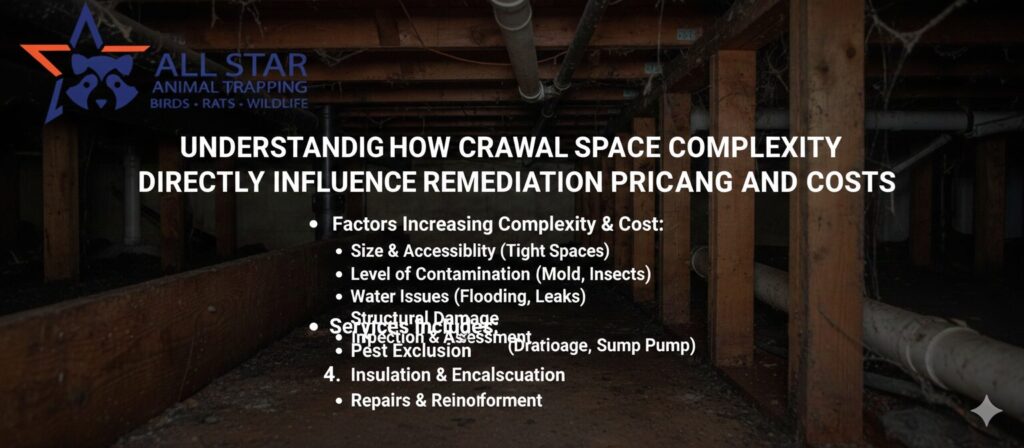
Crawl spaces are often underestimated parts of a home, yet their condition has a significant impact on overall crawl space repair cost. Factors such as moisture, pests, insulation, and structural issues combine to create varying levels of complexity. In Los Angeles, older homes often show unique challenges due to historic building practices and regional climate conditions. Understanding how crawl space complexity directly influences remediation pricing and costs can help homeowners plan budgets, anticipate potential hidden problems, and choose the most effective home remediation services.
Complex crawl spaces often feature uneven floors, sagging beams, hidden water leaks, and poor ventilation. Each of these issues increases labor requirements and material needs, directly affecting the cost of crawl space cleanup. Contractors conduct thorough crawl space inspections to identify these challenges and recommend solutions like vapor barrier installation, encapsulation, or improved ventilation. Addressing these problems proactively helps prevent recurring issues and ensures long-term structural integrity.
What Makes a Crawl Space Complex?
Several factors determine crawl space complexity, including size, moisture levels, insulation, structural damage, and crawl space accessibility. Moisture accumulation and poor airflow often worsen the problem, requiring more extensive remediation. Homes in Los Angeles with older foundations are particularly prone to these challenges, which can increase both labor and material requirements significantly.
Hidden problems such as mold or pest infestations further complicate repairs. Effective solutions often involve multiple strategies, including pest control, insulation upgrades, and crawl space encapsulation. Contractors must evaluate the condition of each space to provide accurate estimates, making complexity a key driver of crawl space repair costs and overall home remediation services.
Common Crawl Space Issues That Impact Costs
Moisture, mold, and pests are the primary contributors to crawl space repair costs. Water intrusion accelerates wood decay, promotes mold growth, and can compromise insulation, which increases labor requirements. In Los Angeles, seasonal rains and older plumbing systems often create additional challenges. Addressing these issues typically involves crawl space waterproofing, vapor barrier installation, and improved ventilation to stabilize humidity and temperature.
Pest infestations, such as termites, carpenter ants, and rodents, further increase complexity. They not only damage wood and insulation but also pose health risks for occupants. Effective remediation requires specialized treatment, follow-up inspections, and sometimes structural reinforcement. The combination of moisture, pests, and structural issues significantly impacts the total cost, emphasizing the importance of proactive preventive crawl space maintenance tips.
Moisture and Water Damage
Water intrusion causes structural damage, mold growth, and increased remediation effort. Homes with persistent moisture problems require vapor barriers, encapsulation, and improved crawl space ventilation to maintain dry, stable conditions. Addressing these issues early can prevent higher future crawl space repair costs, especially in flood-prone areas of Los Angeles.
Pest Infestation and Mold
Pest infestations and mold increase both health risks and labor requirements. Specialized treatments, chemical applications, and follow-up inspections raise the overall crawl space repair cost. Ignoring these problems can lead to recurring issues that are more expensive to resolve later.
Types of Crawl Space Remediation Services
Remediation services vary depending on crawl space complexity and the factors affecting crawl space remediation pricing. Encapsulation and vapor barriers are standard solutions that control moisture, improve air quality, and protect insulation. Older Los Angeles homes with poor ventilation often require these solutions to prevent long-term structural damage. Homeowners can choose services based on the crawl space condition and long-term goals for energy efficiency and indoor air quality.
Insulation and ventilation upgrades ensure stable temperature, reduce energy consumption, and prevent mold growth. Complexity affects labor hours and materials needed, with contractors often providing customized solutions for irregular or difficult-to-access spaces. Investing in proper remediation can reduce future maintenance and maximize the return on investment for proper crawl space repair.
Encapsulation and Vapor Barriers
Encapsulation seals the crawl space from moisture and pests, stabilizing temperature and reducing mold risk. Costs vary depending on crawl space accessibility, size, and existing structural conditions. Older homes or irregular layouts in Los Angeles often require more extensive installation, increasing overall crawl space repair cost.
Insulation and Ventilation Upgrades
Proper insulation and ventilation prevent future moisture buildup and mold growth. Homes with older construction may need airflow modifications to enhance energy efficiency and maintain stable indoor air quality.
Factors Determining Remediation Pricing
Several elements influence crawl space repair costs, including accessibility, structural barriers, material quality, and labor rates. Crawl spaces with low clearance or blocked entries require additional labor and specialized equipment, which increases costs. Structural complexity, such as sagging beams or weakened joists, further contributes to total remediation pricing.
Premium materials, like treated wood, high-grade insulation, and vapor barriers, also raise costs. Skilled contractors ensure proper installation and long-term durability, which may increase upfront labor charges. Regional variations in crawl space repair pricing, local building codes, and climate conditions in Los Angeles can further influence labor and material costs.
Accessibility and Structural Barriers
Low clearance, uneven floors, or obstructed access increases labor requirements and structural complexity pricing. Contractors often need specialized equipment to navigate these challenges safely, which raises the overall remediation cost.
Material Quality and Labor Rates
High-quality materials combined with skilled labor raise upfront costs but provide better long-term performance. Choosing inferior materials may reduce initial expenses but lead to recurring repairs and higher overall crawl space repair costs.
How Crawl Space Size Influences Costs
Crawl space size significantly impacts small vs large crawl space remediation costs. Larger spaces require more labor, materials, and time for encapsulation, insulation, and moisture control. Accurate measurements during crawl space inspections help contractors estimate the budget more effectively and prevent unexpected costs.
Even small crawl spaces can have hidden moisture or structural issues that complicate remediation. Prompt attention reduces future repair costs and improves crawl space maintenance. The combination of size and complexity determines labor hours, materials needed, and overall project duration.
Small vs. Large Crawl Spaces
Larger crawl spaces require more labor and materials to remediate effectively, while smaller areas may still incur significant costs if hidden water damage, mold, or pests are present.
Regional Variations in Remediation Costs
Regional differences, such as climate, labor rates, and building codes, impact crawl space repair pricing. In Los Angeles, older homes often need additional steps for moisture control and pest prevention. Coastal areas may face higher foundation repair costs due to soil conditions and humidity.
Understanding regional variations in crawl space repair helps homeowners plan budgets and choose contractors wisely. Local inspections identify specific challenges and ensure the most effective remediation strategy, reducing hidden costs in crawl space remediation.
Geographic Price Differences
Labor and material costs, climate, and regional building standards influence crawl space remediation pricing. Homes in Los Angeles often require extra moisture control and ventilation improvements, increasing total costs.
Hidden Costs of Crawl Space Remediation
Hidden costs in crawl space remediation often arise from unexpected structural damage, mold, or hazardous materials. Rotting beams, outdated supports, and unseen water damage may double the initial estimates. Comprehensive crawl space inspections help uncover these issues before remediation begins.
Failure to anticipate hidden costs can delay projects and increase labor and material expenses. Planning for potential surprises ensures that homeowners maintain budgets while addressing all necessary repairs efficiently. Properly addressing these challenges improves long-term crawl space maintenance and prevents recurring problems.
Unexpected Structural Repairs
Sagging joists, rotten beams, or outdated supports require additional labor and materials, significantly increasing total remediation costs.
Mold Remediation and Hazardous Materials
Mold removal and handling hazardous substances require specialized equipment, protective gear, and proper disposal procedures, which raise overall project costs.
Tips to Reduce Crawl Space Remediation Expenses
Preventive crawl space maintenance tips can reduce complexity and future expenses. Regular inspections, moisture management, and minor repairs prevent extensive remediation. Homes that maintain proper ventilation and encapsulation are less prone to costly repairs.
Obtaining multiple estimates allows homeowners to perform contractor comparison for crawl space work. Comparing pricing, materials, and methods ensures competitive offers and helps avoid overpaying. Taking preventive steps and choosing experienced professionals can reduce future crawl space repair costs significantly.
Preventive Maintenance
Routine inspections, minor repairs, and moisture control prevent problems from escalating and reduce overall remediation costs.
Getting Multiple Quotes
Comparing contractors ensures fair pricing and identifies the most effective solutions for the home, helping reduce labor and material cost in remediation.
How Complexity Affects Long-Term Home Value
Proper remediation improves home value by increasing structural stability, reducing health risks from mold and pests, and enhancing energy efficiency. Homes with well-maintained crawl spaces attract buyers and yield higher ROI of proper crawl space repair. Ignoring crawl space complexity can lead to recurring mold, pests, or structural problems that reduce property value.
Investing in comprehensive remediation ensures long-term savings and a healthier living environment. Proactive solutions like long-term benefits of crawl space encapsulation and moisture control improve both comfort and resale value, demonstrating how crawl space complexity directly influences remediation pricing and costs.
Return on Investment
Effective crawl space remediation prevents recurring issues, enhances structural integrity, and boosts home resale value, making it a sound investment for homeowners.
Key Factors Driving Crawl Space Remediation Costs
- Crawl space size directly affects labor and material requirements.
- Moisture intrusion increases mold growth and structural damage.
- Pest infestations like termites and rodents add complexity and cost.
- Accessibility issues, including low clearance and blocked entries, raise labor costs.
- Structural problems such as sagging beams or rotting wood increase repair needs.
- Quality of materials, like vapor barriers and insulation, impacts overall pricing.
- Regional factors, including climate and building codes, influence costs.
- Hidden issues, such as mold or hazardous materials, can unexpectedly raise budgets.
- Preventive maintenance and regular inspections reduce future remediation expenses.
- Comparing multiple contractor quotes ensures better pricing and effective solutions.
Table Section
| Factor | Influence on Cost | Notes |
| Crawl Space Size | High | Larger areas need more materials and labor |
| Moisture & Water | Moderate to High | Requires vapor barriers or pumps |
| Pest Infestation | Moderate | Specialized treatment adds cost |
| Structural Issues | High | Rotting beams and sagging joists increase labor |
| Accessibility | High | Narrow or obstructed spaces increase labor |
| Material Quality | Moderate to High | Premium materials raise costs |
| Regional Variation | Moderate | Local climate and codes affect pricing |
Conclusion
Understanding how crawl space complexity directly influences remediation pricing and costs is essential for homeowners. Thorough inspections, preventive maintenance, and careful contractor selection help manage crawl space repair costs while ensuring long-term safety. Proper remediation increases home value, reduces health risks, and ensures a stable, energy-efficient living environment. Planning, preventive care, and attention to detail remain the keys to minimizing expenses and maximizing the return on investment for crawl space management.
FAQs
1. What factors make a crawl space complex?
Crawl space complexity arises from size, moisture levels, insulation issues, structural damage, and poor accessibility. These elements increase labor, materials, and overall remediation costs.
2. How does moisture affect crawl space repair costs?
Excess moisture accelerates wood decay, mold growth, and pest infestations. Homes with high humidity often need vapor barriers and encapsulation, raising total costs.
3. What are the common pests in crawl spaces?
Termites, carpenter ants, and rodents are common pests. They damage wood, insulation, and create health hazards, increasing remediation expenses.
4. How does crawl space size influence pricing?
Larger crawl spaces require more materials and labor for insulation, ventilation, and encapsulation. Smaller spaces may be cheaper but hidden issues can still raise costs.
5. What is crawl space encapsulation?
Encapsulation involves sealing the space with a vapor barrier to prevent moisture, pests, and mold. It stabilizes temperature and protects structural integrity.
6. Why is accessibility important in crawl space repairs?
Low clearance or blocked entries increase labor time and require specialized equipment. Hard-to-access areas lead to higher crawl space repair costs.
7. Can mold and hazardous materials increase costs?
Yes, mold remediation and removal of hazardous substances require specialized treatment and disposal. These processes significantly raise overall remediation pricing.
8. How can homeowners reduce crawl space repair costs?
Regular inspections, moisture control, and minor repairs prevent major problems. Getting multiple quotes also ensures competitive pricing.
9. Do regional differences affect remediation pricing?
Yes, labor rates, climate, and local building codes impact costs. Homes in Los Angeles may require extra moisture control or structural work.
10. How does crawl space remediation affect home value?
Proper remediation improves structural integrity, prevents mold or pests, and boosts property value. It offers long-term benefits and better ROI.
Humane Wildlife Removal You Can Trust
When nuisance wildlife becomes a problem, rely on All Star Animal Trapping for professional and humane animal removal services. We safely remove raccoons, skunks, squirrels, rodents, and more — protecting your home and family the right way.