Understanding price variations based on animal type is key for homeowners needing dead animal removal services when dealing with different wildlife or pests. The species and size of the deceased animal directly influence labor, equipment, safety measures, containment needs, and disposal requirements, leading to different costs. Many are caught off guard by pricing differences, but they reflect the unique challenges each animal presents. Professionals handle everything from small rodents to larger wildlife safely and compliantly. Acting promptly reduces complications regardless of type. This guide explains how animal type impacts costs in 2026, expected pricing ranges, and ways to prepare. Transparent services help you anticipate accurate quotes tailored to the situation.
What Animal Type Really Means for Removal Pricing
Animal type refers to the species and size of the deceased creature, which determines handling difficulty, biohazard level, and regulatory needs. Small pests like mice require basic tools, while larger wildlife like raccoons demands heavier equipment and precautions. Pricing adjusts to cover specialized containment, transport, and sanitization. Services ensure safe extraction and disposal for all types. Costs reflect expertise needed for humane, effective resolution.
Why Animal Type Causes Price Variations
Price variations by animal type occur because each species presents distinct challenges—no one-size-fits-all rate works. Key factors drive the differences.
- Size affects physical handling, equipment, and disposal volume.
- Species biohazard level influences protective gear and sanitization intensity.
- Larger animals produce more fluids, increasing cleanup needs.
- Certain wildlife requires specific legal compliance or containment.
- Small pests often die in numbers, adding per-animal effort.
- Weight impacts transport and facility fees.
- Odor strength varies, affecting deodorization requirements.
- Risk of parasites or diseases heightens with some types.
Early identification helps providers quote accurately.
Common Animal Types and Pricing Impact
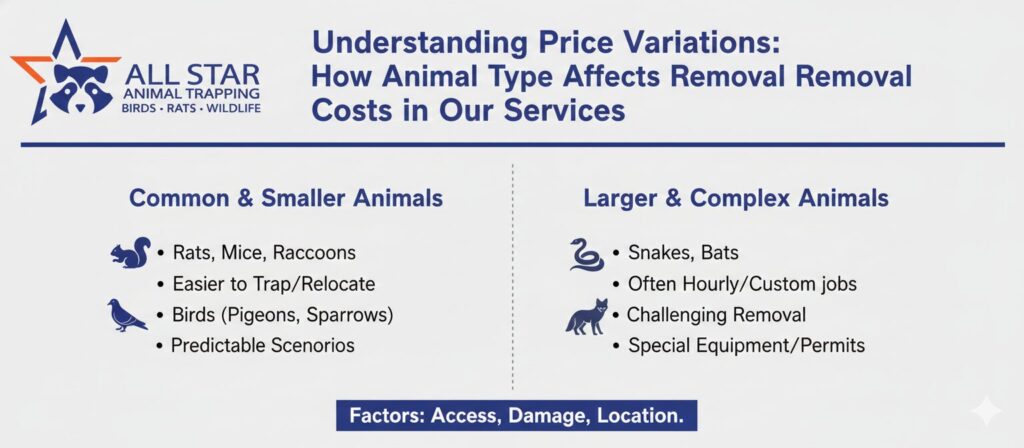
Certain animals commonly trigger specific costs. Small rodents like rats or mice are simplest and lowest priced. Medium pests such as squirrels or birds need moderate effort. Larger wildlife including raccoons, opossums, skunks, or cats involve heavier handling. Rare big cases like deer add significant fees.
Size Categories and Cost Differences
Size categories clearly define pricing tiers. Small (under 5 lbs) keeps costs minimal. Medium (5-20 lbs) raises moderate fees. Large (over 20 lbs) demands premium equipment and labor.
Decomposition and Species-Specific Challenges
Decomposition varies by type—rodents break down quickly in walls, while larger animals leak more fluids. Species like skunks add intense odor control needs. Advanced decay amplifies sanitization across all.
Required Equipment by Animal Type
Small animals use basic bags and tools. Medium require stronger containment. Large demand heavy gloves, lifts, or sealed carriers. Specialized gear justifies higher rates.
Optional Services Influenced by Animal Type
Larger or smellier animals often need enzyme deodorization, extensive disinfection, or insulation replacement. Entry sealing prevents same-species recurrence. Providers tailor recommendations.
Professional Handling vs DIY by Type
DIY risks escalate with larger or riskier animals—exposure to diseases or incomplete removal common. Professionals manage type-specific challenges safely.
Average Costs by Animal Type
Base removal averages $150-$400 in 2026, varying sharply by type. Small lowest; large highest. Quotes reflect specifics accurately.
Price Variations by Animal Type – Detailed Pricing Table
| Animal Type | Examples | Expected Price Range (2026) | Cost Impact | Notes |
| Small animals | Rats, mice, birds, small squirrels | $150 – $250 | Low | Minimal equipment and quick handling |
| Medium animals | Larger squirrels, cats, rabbits | $200 – $350 | Moderate | Standard containment and cleanup |
| Large animals | Raccoons, opossums, skunks | $300 – $500+ | High | Heavy lifting and stronger precautions |
| Extra-large/rare | Dogs, deer, foxes | $400 – $800+ | High | Specialized transport and disposal |
| Multiple small animals | Infestations of rodents | $250 – $400 | Moderate | Per-animal effort adds up |
| Odor-intensive species | Skunks, advanced decay | +$100 – $300 extra | High | Intensive deodorization required |
| Protected/wildlife | Certain regulated species | $350 – $600 | High | Compliance and documentation |
| Bird nests/removals | Pigeons, starlings in vents | $200 – $400 | Moderate | Nest debris and height access |
| Biohazard-heavy | Animals with parasites/fluids | +$150 – $400 extra | High | Enhanced disinfection needed |
| Standard disposal | Included for most types | Built-in | Low | Adjusted for size in large cases |
How to Manage Costs Based on Animal Type
- Identify the animal early for accurate quotes.
- Get detailed breakdowns by species from providers.
- Compare licensed services experienced with your type.
- Ask about type-specific packages or discounts.
- Check insurance for wildlife-related coverage.
- Prevent common species with sealing.
- Choose pros familiar with local animals.
- Act fast to limit type-related complications.
Preparation reduces surprises.
When Costs Vary More Than Expected
Costs rise sharply with misidentified large animals or infestations. Protected species or heavy contamination adds premiums. Delays worsen type-specific issues.
Conclusion
Price variations by animal type reflect necessary adjustments for size, risks, and handling in removal services. Professional quotes tailored to rats, raccoons, or other species ensure fair, safe resolution. Understanding these differences prepares you for realistic expectations. Licensed experts deliver effective outcomes matched to the animal involved.
FAQs
- How does animal type affect removal costs?
Animal type impacts pricing through size, biohazards, equipment, and cleanup needs. Small rodents lowest; large wildlife highest. Quotes adjust for species-specific challenges.
- Why are larger animals more expensive to remove?
Larger animals require heavier equipment, stronger containment, more labor, and increased disposal. Fluids and risks raise sanitization demands significantly.
- Do small animals always cost less?
Yes, typically $150-$250 due to minimal handling. Multiple small animals or hidden locations can add fees, but base remains lower.
- Is there extra for smelly animals like skunks?
Often yes—intense odor needs enzyme treatments adding $100-$300. Skunk-specific deodorization justifies the premium.
- How can I get an accurate quote by animal type?
Describe the suspected animal and signs to providers. Photos or details help. Request type-specific breakdowns upfront.
- Do all services price the same by animal type?
Variations exist by experience and methods—some handle large wildlife efficiently. Transparent quotes allow fair comparisons. Licensed pros align costs with actual effort.
Humane Wildlife Removal You Can Trust
When nuisance wildlife becomes a problem, rely on All Star Animal Trapping for professional and humane animal removal services. We safely remove raccoons, skunks, squirrels, rodents, and more — protecting your home and family the right way.