
Raccoons are highly adaptable mammals that have learned to coexist with human environments. They often establish nests, or “dens,” in areas that provide shelter, safety, and access to food. Understanding raccoon nesting patterns is essential for both wildlife enthusiasts and homeowners seeking to manage these animals safely.
Nesting behavior influences how raccoons interact with their surroundings. By identifying their preferred nesting sites and the factors that influence their choices, we can implement effective prevention and management strategies. This knowledge is critical for reducing property damage and maintaining ecological balance.
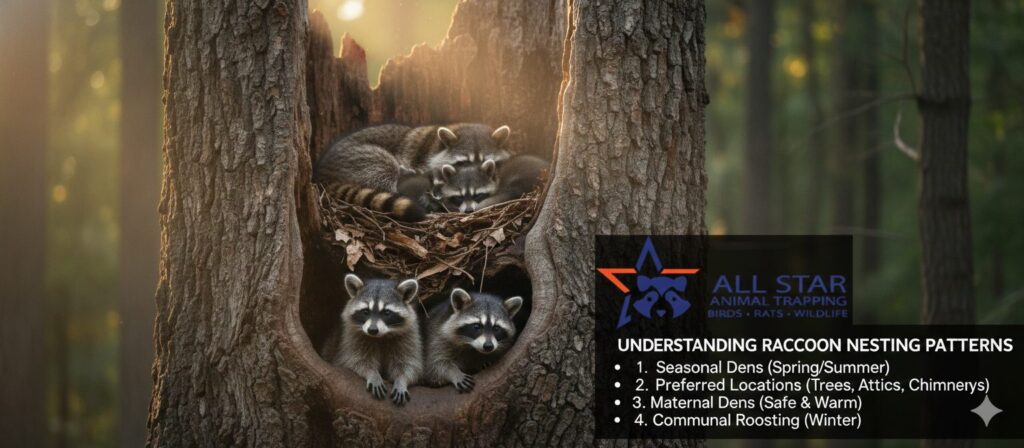
What Are Raccoon Nests and Why Do They Matter?
Raccoon nests, also known as dens, serve as places for shelter, rest, and raising offspring. These nests are often located in hollow trees, abandoned burrows, or even man-made structures. They protect from predators and harsh weather conditions.
Understanding the locations and structure of raccoon nests helps in predicting their behavior. It also aids in safely managing raccoon populations in areas where human activity overlaps with wildlife habitats.
Nest Functions
Nests protect raccoons from predators such as coyotes, owls, and humans. They also serve as a place for mothers to rear their young safely.
Seasonal Importance
Raccoons use nests year-round but are especially dependent on them during the breeding and winter months. This seasonal usage affects when and where humans are most likely to encounter them.
Human Interaction
Nests near homes increase the chances of property damage. Understanding nesting habits can guide effective mitigation strategies.
Where Do Raccoons Typically Build Their Nests?
Raccoons are highly adaptable and will build nests in diverse environments. In forests, they prefer hollow trees and tree cavities. In urban areas, they may occupy attics, garages, or abandoned buildings.
The location of a nest often depends on the availability of food and safety from predators. Urban raccoons are opportunistic, exploiting human structures for shelter when natural sites are limited.
Natural Nesting Sites
- Hollow trees provide elevation and safety.
- Abandoned burrows of other animals serve as convenient shelters.
- Dense shrubbery or brush piles may also be used.
Urban Nesting Sites
- Attics and chimneys are common nesting sites.
- Garages, sheds, and unused buildings attract raccoons seeking shelter.
- Decks or crawl spaces may also be utilized, especially near food sources.
Proximity to Water
Raccoons often build nests near water sources like streams, ponds, or wetlands. This ensures easy access to food, including aquatic animals and vegetation.
How Do Raccoons Choose Their Nesting Locations?
Several factors influence a raccoon’s choice of nesting site. Safety, accessibility, and proximity to food sources are the most important considerations. Raccoons prioritize locations that minimize risk while maximizing resource availability.
They also evaluate the structural characteristics of potential sites. Nests must offer sufficient space for raising young and protection against environmental elements like rain, wind, and cold temperatures.
Safety from Predators
Raccoons select elevated or concealed sites to reduce exposure to threats. High tree cavities or secluded attics provide security.
Accessibility
While nests need to be safe, they also must be easy to access for foraging. Raccoons prefer sites with multiple entry and exit points.
Shelter Quality
Insulated, dry, and stable structures are preferred. Hollow logs, thick vegetation, and attic spaces meet these requirements effectively.
What Are the Seasonal Patterns of Raccoon Nesting?
Raccoon nesting behavior changes with the seasons. During spring, female raccoons seek secure dens to give birth and raise their kits. By late summer, young raccoons begin exploring outside the nest.
Winter nesting patterns often involve huddling together in a single site to conserve warmth. Understanding these seasonal changes is crucial for timing interventions, especially in urban environments.
Spring Nesting
Females prepare dens before giving birth, ensuring safety and warmth. Nesting activity increases during this period.
Summer Activity
Young raccoons begin learning to forage but still rely on the nest for shelter. Adult raccoons maintain multiple dens for flexibility.
Winter Huddling
Raccoons remain in insulated dens to conserve heat. Limited movement helps them survive colder months.
How Do Raccoons Construct Their Nests?
Raccoons typically utilize existing structures rather than building nests from scratch. They may line tree cavities, burrows, or attic spaces with leaves, grass, and other soft materials.
The construction ensures comfort and warmth while providing a secure environment for young raccoons. Nesting materials vary based on location and availability, but are always aimed at insulation and protection.
Natural Materials
Leaves, twigs, and grass are common. These materials provide cushioning and insulation.
Human-Made Materials
Raccoons may use old clothes, insulation, or paper in attics and sheds. These items enhance comfort and may facilitate nest expansion.
Nest Maintenance
Raccoons regularly clean and adjust nests. They may shift materials or relocate young as needed.
What Are the Signs of Raccoon Nesting Around Your Property?
Detecting raccoon nests early can prevent property damage and reduce health risks. Common signs include scratching noises in attics, droppings, and displaced debris near trees or structures.
Other indicators include raccoon tracks, food remains, and shredded materials used for lining nests. Awareness of these signs allows timely intervention.
Audio Signs
Scratching, scurrying, or whining sounds indicate active nesting inside structures.
Physical Signs
Raccoon droppings, tracks, and flattened vegetation near dens suggest nesting activity.
Debris and Damage
Shredded materials near entry points indicate nest construction or maintenance.
How Can Homeowners Prevent Raccoons from Nesting?
Preventing raccoon nesting requires a combination of exclusion techniques, habitat modification, and deterrents. Sealing entry points, trimming trees, and removing food sources make properties less attractive.
Regular inspection of attics, sheds, and decks ensures early detection. Motion-activated lights and noise devices can also discourage raccoons from establishing nests.
- Seal gaps, vents, and chimneys with mesh or metal.
- Trim tree branches near roofs to limit access.
- Store garbage securely in raccoon-proof bins.
- Remove pet food and outdoor feeders at night.
- Use motion-sensor lights or noise deterrents around vulnerable areas.
When Should I Call a Professional for Raccoon Nesting Issues?
If raccoons have already established nests, professional wildlife removal services may be necessary. Experts can safely trap, relocate, and manage raccoon populations without causing harm.
Professional intervention is crucial in sensitive areas, such as attics with young kits. They also provide long-term solutions to prevent re-nesting.
Safe Removal Techniques
Professionals use humane traps and relocation methods. These ensure minimal stress to the animals.
Structural Repairs
After removal, sealing entry points and repairing damaged areas prevents future nesting.
Ongoing Monitoring
Follow-up inspections help maintain a raccoon-free property. Professionals can advise on deterrent placement and habitat management.
What Role Do Environment and Urbanization Play in Raccoon Nesting?
Urbanization significantly affects raccoon nesting patterns. Human structures provide alternative shelters that mimic natural dens, such as attics, chimneys, and sheds.
Proximity to food and water sources in urban areas attracts raccoons. Understanding these environmental influences is key to implementing effective management strategies.
Urban Advantages
Abundant food and shelter make cities attractive to raccoons. Attics and sheds offer elevated, secure nesting sites.
Environmental Limitations
Raccoons may face fewer predators in urban areas, but compete with other wildlife. Nesting site selection is influenced by these pressures.
Habitat Flexibility
Raccoons are highly adaptable and can shift nesting sites according to resource availability and human activity.
How Can Raccoon Nesting Patterns Affect Local Ecosystems?
Raccoons play a role in local ecosystems by controlling insect populations and dispersing seeds. However, excessive nesting near human habitats can cause conflicts.
Nesting patterns influence raccoon movement, foraging behavior, and interactions with other wildlife. Maintaining balance between wildlife needs and human safety is crucial.
- Seed dispersal helps plant propagation.
- Insect predation controls pest populations.
- Nesting near water affects amphibian and fish populations.
- Urban nesting may lead to human-wildlife conflicts.
- Proper management reduces ecological disruption.
Conclusion
Understanding raccoon nesting patterns is essential for both wildlife management and property protection. Knowledge of their preferred nesting sites, seasonal behavior, and construction habits allows proactive measures to prevent conflicts.
Homeowners can reduce property damage and minimize health risks by implementing exclusion techniques, removing attractants, and monitoring for signs of nesting. Combining this understanding with professional support ensures a safe and harmonious coexistence with raccoons.
Frequently Asked Questions (FAQs)
Q1: Can raccoons reuse the same nest each year?
Yes, raccoons often return to familiar dens, especially if they were provided safety and shelter previously.
Q2: Are raccoons dangerous to humans?
Raccoons can carry diseases like rabies, so contact should be avoided.
Q3: How many kits do raccoons usually have per litter?
Typically, 2–5 kits are born in a single litter, depending on the mother’s health and environmental conditions.
Q4: Can raccoons nest in attics without leaving signs?
Yes, raccoons are quiet and may go undetected for weeks until signs like droppings or noises appear.
Q5: Do male raccoons help with nest care?
No, males usually do not participate in raising the young. Only females care for kits.
Q6: What time of year is raccoon nesting most active?
Spring is the peak nesting season for giving birth and raising kits.
Q7: How long do young raccoons stay in the nest?
Kits remain in the nest for 8–12 weeks before venturing out.
Q8: Can raccoons survive in urban areas without trees?
Yes, urban raccoons adapt by using attics, sheds, and other man-made structures for shelter.
Humane Wildlife Removal You Can Trust
When nuisance wildlife becomes a problem, rely on All Star Animal Trapping for professional and humane animal removal services. We safely remove raccoons, skunks, squirrels, rodents, and more — protecting your home and family the right way.