
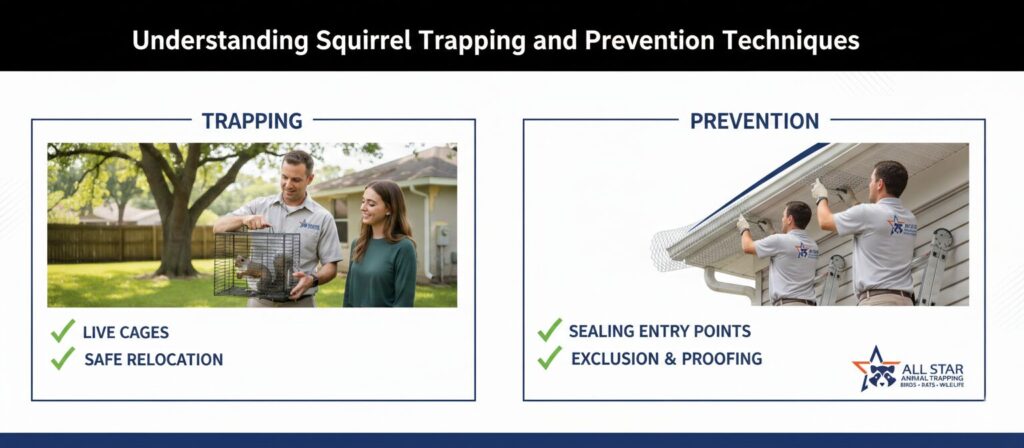
Understanding Squirrel Trapping and Prevention Techniques is essential for homeowners who want to protect their property from recurring wildlife problems. Squirrels are intelligent, adaptable animals that often seek shelter in attics, roofs, and wall voids, especially during colder seasons. Without proper knowledge, infestations can escalate quickly and cause long-term structural and health issues.
By Understanding Squirrel Trapping and Prevention Techniques, homeowners can address both active infestations and future risks. Ethical and effective strategies focus on humane removal, exclusion, and prevention rather than short-term fixes. A well-planned approach ensures lasting results while maintaining ecological balance.
Why Understanding Squirrel Trapping and Prevention Techniques Matters
Understanding Squirrel Trapping and Prevention Techniques matters because squirrels can cause significant damage once they enter a structure. Their constant chewing weakens wooden supports, damages insulation, and exposes electrical wiring. These hidden issues often go unnoticed until repairs become expensive.
Beyond property damage, squirrels create sanitation concerns that affect indoor air quality. Droppings, urine, and nesting debris accumulate in confined spaces, increasing health risks. Understanding Squirrel Trapping and Prevention Techniques helps address these problems before they worsen.
Common Causes of Squirrel Infestations in Homes
Squirrels enter homes due to easy access points and attractive shelter conditions. Roof gaps, damaged vents, and overhanging branches make entry simple. Once inside, squirrels rarely leave without intervention.
Food availability also contributes to infestations. Bird feeders, unsecured trash, and outdoor pet food encourage repeated visits. Understanding Squirrel Trapping and Prevention Techniques starts with identifying these root causes.
Understanding Squirrel Behavior Before Trapping
Effective removal begins with understanding squirrel behavior. Squirrels follow predictable travel paths and prefer quiet, elevated nesting areas. Recognizing these patterns improves trapping success.
Seasonal Activity Patterns
Squirrels are more active in spring and fall due to breeding and food storage. During these seasons, infestations increase rapidly. Understanding Squirrel Trapping and Prevention Techniques requires adjusting methods based on seasonal behavior.
Nesting Preferences
Attics and wall cavities provide warmth and safety for nesting. Female squirrels may create multiple nests within a structure. Identifying nesting zones is critical for complete removal.
Movement and Access Routes
Squirrels use rooflines, utility wires, and trees as highways. Tracking these routes helps position traps correctly. Strategic placement improves efficiency.
Humane Squirrel Trapping Techniques Explained
Humane trapping is a core element of Understanding Squirrel Trapping and Prevention Techniques. Live traps allow squirrels to be captured without injury. These traps are designed to reduce stress and prevent harm.
Correct placement and monitoring are essential for success. Traps must be checked regularly and handled responsibly. Humane trapping ensures ethical treatment while resolving infestations.
Types of Squirrel Traps Used in Humane Removal
Different trap designs serve different infestation scenarios. Selecting the right trap increases effectiveness and minimizes disruption.
Single-Catch Live Traps
These traps capture one squirrel at a time. They are ideal for low-to-moderate infestations. Proper baiting improves success rates.
Multi-Catch Traps
Multi-catch traps handle higher activity levels. They are commonly used when multiple squirrels are present. Monitoring is critical to avoid overcrowding.
Placement Strategies
Traps should be placed along known travel routes. Attic entry points and roof edges are common locations. Correct placement supports Understanding Squirrel Trapping and Prevention Techniques.
Prevention Techniques That Stop Squirrels From Returning
Prevention is the foundation of Understanding Squirrel Trapping and Prevention Techniques. Without prevention, removal efforts are temporary. Effective prevention eliminates access and attraction.
Sealing entry points and modifying the environment reduces reinfestation risk. Long-term prevention saves time and repair costs.
Exclusion Methods for Long-Term Squirrel Control
Exclusion physically blocks squirrels from re-entering a structure. It is one of the most effective prevention techniques available.
Identifying Vulnerable Areas
Inspections reveal weak points such as roof gaps and vents. Even small openings are potential entry points. Thorough identification is essential.
Reinforcement Materials
Metal flashing, hardware cloth, and vent covers resist chewing. These materials provide durable protection. Proper installation ensures longevity.
Permanent Protection Benefits
Exclusion provides lasting results. It also prevents other wildlife from entering. Understanding Squirrel Trapping and Prevention Techniques relies heavily on exclusion.
The Role of Repellents in Squirrel Prevention
Repellents discourage squirrels from nesting in treated areas. They are best used alongside trapping and exclusion. Repellents alone are rarely sufficient.
Proper application enhances overall prevention strategies. Understanding Squirrel Trapping and Prevention Techniques includes knowing their limitations.
Nest Removal and Sanitation Procedures
Nest removal eliminates breeding sites and reduces odors. Old nests attract new squirrels if left behind. Sanitizing affected areas improves air quality.
This step requires care, especially during breeding seasons. Humane practices ensure young squirrels are protected while resolving infestations.
Preventive Maintenance Tips for Homeowners
Ongoing maintenance is critical for long-term success. Simple actions reduce the likelihood of infestations.
Key Preventive Tips
- Seal roof gaps promptly to block access and prevent nesting.
- Trim tree branches to eliminate roof entry routes.
- Secure outdoor food sources to reduce attraction.
- Inspect attics regularly for early signs of activity.
- Install chimney caps and vent covers for added protection.
Each of these steps supports Understanding Squirrel Trapping and Prevention Techniques by addressing vulnerabilities before problems arise.
Why Professional Expertise Improves Trapping and Prevention Results
Professional services enhance understanding of Squirrel Trapping and Prevention Techniques through experience and training. Experts identify hidden nests and entry points often missed by DIY efforts. Their approach ensures complete resolution.
Professionals also follow ethical and safety standards. This reduces risks to homeowners and wildlife. Expert guidance leads to reliable, long-term outcomes.
The Most Effective Integrated Squirrel Control Approach
The most effective strategy combines trapping, exclusion, nest removal, and prevention. No single method works alone. Integration ensures complete control.
Understanding Squirrel Trapping and Prevention Techniques means addressing both current infestations and future risks. This balanced approach delivers sustainable results.
Conclusion
Understanding Squirrel Trapping and Prevention Techniques provides homeowners with the knowledge needed to manage infestations responsibly and effectively. Humane trapping removes active squirrels, while exclusion and prevention stop future access. This comprehensive approach protects property, health, and wildlife.
By applying Understanding Squirrel Trapping and Prevention Techniques consistently, long-term success becomes achievable. Preventive maintenance reduces recurring issues and repair costs. Ethical strategies ensure a balance between effective control and environmental responsibility.
Frequently Asked Questions (FAQs)
1. How do you know if squirrel trapping is necessary?
Trapping is necessary when squirrels are actively entering or nesting inside a structure. Sounds, droppings, and visible damage indicate the need for intervention.
2. Can prevention techniques work without trapping?
Prevention alone may help in early stages, but active infestations usually require trapping. Understanding Squirrel Trapping and Prevention Techniques means using both together.
3. Are humane traps effective for long-term control?
Yes, when combined with exclusion and prevention. Traps remove current squirrels, while prevention stops new ones.
4. How often should preventive inspections be done?
Inspections should be performed at least twice a year. Regular checks support ongoing prevention efforts.
5. Do squirrels damage homes year-round?
Damage can occur anytime, but activity/controllers peak during breeding seasons. Understanding seasonal patterns improves control timing.
6. Can squirrels chew through exclusion materials?
High-quality materials like metal flashing resist chewing. Proper installation is essential for durability.
7. Is nest removal always required?
Yes, nests attract future squirrels and harbor contaminants. Removing them is key to complete control.
8. Why is an integrated approach recommended?
An integrated approach addresses both cause and effect. Understanding Squirrel Trapping and Prevention Techniques requires multiple methods for lasting results.
Humane Wildlife Removal You Can Trust
When nuisance wildlife becomes a problem, rely on All Star Animal Trapping for professional and humane animal removal services. We safely remove raccoons, skunks, squirrels, rodents, and more — protecting your home and family the right way.