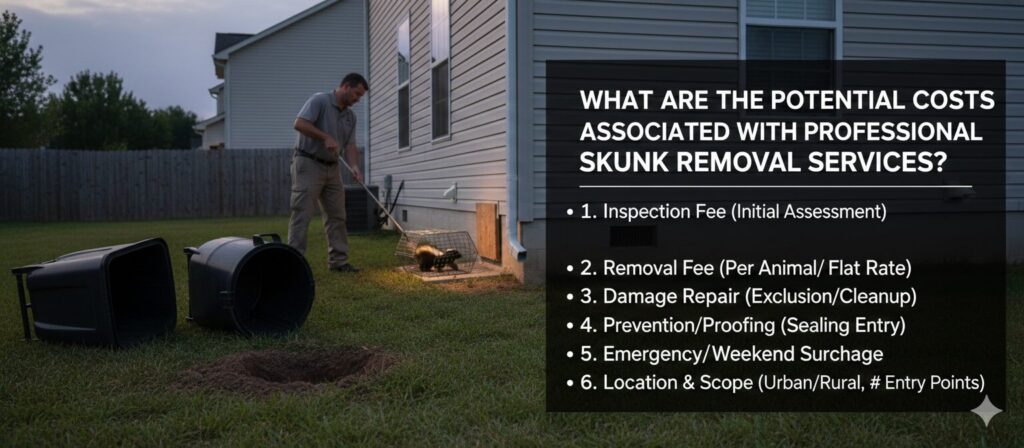
Dealing with skunks on your property is not just a nuisance—it can also be costly if left untreated. These nocturnal animals create strong odors, damage landscapes, and pose health risks that require immediate professional intervention. Understanding the potential costs associated with professional skunk removal helps homeowners plan both financially and strategically.
Hiring a professional skunk removal service ensures safe, efficient, and humane handling of these pests. However, the costs can vary depending on property size, skunk activity, and the removal methods used. By analyzing the different components that influence pricing, homeowners can make informed decisions and avoid unexpected expenses.
Initial Professional Skunk Removal Inspection Costs
Before skunk removal begins, most companies conduct a thorough inspection. This evaluation identifies burrows, nesting areas, and entry points that skunks may use. A proper inspection ensures that the removal plan is tailored to the property’s specific conditions.
Inspection costs vary depending on property size, the number of skunks, and accessibility. Urban areas often charge more due to service demand, while rural properties may require more time and effort. Accurate inspections prevent unnecessary treatments and ensure the overall skunk removal process is efficient.
Factors Affecting Skunk Removal Inspection Fees
- Property size and complexity
- Number of skunks present
- Accessibility of burrows and hidden areas
Standard Skunk Removal Trapping Fees
Trapping is one of the primary steps in professional skunk removal. Licensed technicians set humane traps, monitor them regularly, and safely relocate skunks away from residential areas. Standard fees for trapping often include setup, labor, and monitoring costs.
The total cost depends on the number of skunks, the number of traps required, and the duration of monitoring. Some companies charge per trap per night, while others offer all-inclusive packages. Homeowners can save money by understanding the pricing structure before committing to a service.
Typical Trapping Cost Estimates
- Single skunk removal: $100–$250
- Multiple skunks: $300–$600
- Extended trapping periods: $50–$100 per extra night
Emergency Professional Skunk Removal Costs
Sometimes skunks appear unexpectedly inside homes or garages, necessitating emergency professional skunk removal. Urgent situations often require after-hours service, specialized equipment, and additional labor. These services generally cost more than scheduled appointments.
Same-day skunk removal ensures immediate safety and reduces property damage risks. However, premium pricing may apply due to labor intensity and rapid response requirements. Homeowners should evaluate the urgency against potential costs for a balanced approach.
Emergency Cost Drivers
- After-hours labor fees
- Immediate trap setup and monitoring
- Additional risk management requirements
Seasonal Skunk Removal Price Variations
Seasonal activity affects the cost of professional skunk removal. Spring and summer often see higher skunk activity due to mating and foraging, which increases demand for services. Higher demand usually means higher service fees.
Winter months may reduce visible skunk activity, but hidden burrows still require inspection. Planning removals according to seasonal patterns can reduce costs and increase removal efficiency.
Skunk Removal Property Damage Costs
Skunks often dig in gardens, lawns, and under structures, causing property damage. Professional skunk removal sometimes includes minor cleanup, but extensive repairs can increase total costs. Removing skunks without addressing damage can lead to recurring expenses.
Repair costs depend on damage severity and labor requirements. Lawn restoration, fencing repair, and soil replacement are common areas that add to the overall skunk removal expense.
Common Skunk Damage Areas
- Lawns and flower beds
- Crawl spaces and attics
- Fencing and landscaping
Chemical and Natural Skunk Removal Deterrents
Many professional skunk removal companies apply deterrents to prevent recurrence. These may include chemical sprays, natural odor-based solutions, or ultrasonic repellents. Pricing depends on the type of deterrent and application frequency.
Chemical deterrents may require multiple applications, whereas natural deterrents are usually a one-time investment. Investing in deterrents reduces the likelihood of future skunk infestations, saving money long-term.
Average Deterrent Costs
- Chemical sprays: $20–$50 per application
- Motion-activated sprinklers: $100–$300
- Ultrasonic repellent devices: $50–$150
Exclusion Services for Professional Skunk Removal
Exclusion services seal entry points and prevent skunks from returning. This step is critical in ensuring the long-term effectiveness of professional skunk removal. Exclusion work may include fencing, burrow sealing, and foundation repair.
Costs for exclusion depend on the complexity and size of the property. Implementing these preventative measures is often more cost-effective than repeated removal attempts.
Long-Term Monitoring After Skunk Removal
Some companies offer post-removal monitoring to ensure skunks do not return. Regular inspections, trap checks, and maintenance visits are part of these plans. Long-term monitoring can help detect new skunks early, minimizing damage and emergency costs.
Pricing for monitoring varies depending on frequency and property size. Packages typically start at $100–$200 per visit, offering peace of mind to homeowners concerned about recurring skunk activity.
Benefits of Long-Term Skunk Removal Monitoring
- Early detection of new infestations
- Reduced risk of property damage
- Lower long-term removal costs
Hidden Fees in Professional Skunk Removal
Professional skunk removal can involve hidden costs that homeowners should be aware of. Extra charges may include animal disposal, additional labor for difficult areas, or specialized equipment fees. Being aware of these ensures budgeting accuracy.
Bullet Points: Common Hidden Costs
- Disposal of skunks: $25–$50 per animal
- Additional trap setups: $50–$100
- Labor for inaccessible areas: $75–$150
- Specialized equipment rental: $50–$200
- After-hours or weekend service fees: $100+
DIY vs. Professional Skunk Removal Costs
While DIY skunk removal may seem cheaper, it carries risks such as bites, property damage, and ineffective results. Professional skunk removal guarantees safe, humane, and effective solutions.
Investing in professional services prevents repeated DIY attempts that can be more costly over time. Professionals provide liability coverage, proper tools, and experience, ensuring long-term success in skunk management.
Conclusion
Understanding the potential costs of professional skunk removal is crucial for managing both finances and property safety. From inspection and trapping to repair, deterrents, exclusion, and monitoring, multiple factors influence the overall expense. Homeowners who are aware of these costs can make informed decisions and avoid unexpected charges.
Investing in professional skunk removal ensures safety, efficiency, and long-term prevention. While initial costs may seem high, the benefits of proper removal, reduced property damage, and peace of mind far outweigh the expense. Proper planning and choosing the right service provider can maximize value and effectiveness.
FAQs
Q1: How much does professional skunk removal typically cost?
Costs range from $100–$600, depending on skunk numbers, traps, and property size. Emergency services or additional labor can increase prices.
Q2: Is professional skunk removal safe for pets?
Yes, licensed professionals use humane traps and safe deterrents. Pet safety guidelines are provided during the process.
Q3: How long does professional skunk removal take?
Most cases are resolved in 1–3 days, but complex infestations can take up to a week.
Q4: Can skunks return after removal?
Yes, if entry points are not sealed. Exclusion and deterrent measures minimize this risk.
Q5: Do insurance policies cover skunk removal?
Generally, homeowner’s insurance does not cover removal unless property damage occurs. Policies should be reviewed for wildlife coverage.
Q6: Can multiple skunks be removed at once?
Yes, professional services handle multiple animals using several traps and strategies simultaneously.
Q7: Are chemical deterrents safe for the environment?
Licensed professionals use approved, safe chemicals. Natural deterrents are also eco-friendly options.
Q8: Do I need to stay home during skunk removal?
Not always; most companies can complete removal independently, but may require brief access to set traps or inspect areas.
Humane Wildlife Removal You Can Trust
When nuisance wildlife becomes a problem, rely on All Star Animal Trapping for professional and humane animal removal services. We safely remove raccoons, skunks, squirrels, rodents, and more — protecting your home and family the right way.