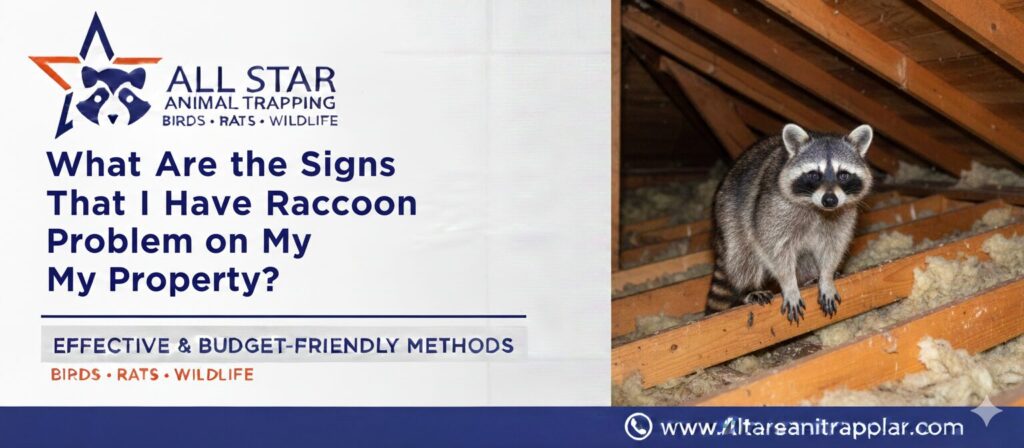
Raccoons are highly adaptable animals that can thrive in urban, suburban, and rural areas. While they may seem cute at a distance, raccoons can cause significant damage to property and pose health risks to humans and pets. Recognizing the early signs of a raccoon problem is essential for homeowners to prevent further infestation and minimize damage.
Identifying a raccoon issue early allows for safe, legal, and humane control measures. Ignoring warning signs can lead to property damage, contamination from droppings, and recurring infestations. Understanding what to look for helps homeowners act promptly and effectively.
Physical Damage Signs on Property
One of the most common indicators of a raccoon problem is visible physical damage around your property. Raccoons are strong, agile, and curious, often tearing apart areas in search of food or shelter.
Damage may appear on roofs, attics, vents, gardens, or garbage bins. Early detection of these signs allows homeowners to address the issue before it escalates.
Roof and Attic Damage
Raccoons often pry open shingles, vents, or eaves to gain entry. Once inside the attic, they can damage insulation, wiring, or stored items.
Garden and Yard Damage
Raccoons dig in gardens, lawns, and flower beds while foraging for insects, fruits, or vegetables. This can leave unsightly holes and uproot plants.
Structural Damage
Gutters, chimneys, and siding may also show signs of gnawing or clawing. Persistent damage often indicates regular raccoon activity.
Droppings and Urine as Warning Signs
Raccoon feces and urine are important signs of their presence. Raccoon droppings are typically dark, tubular, and contain seeds or fur. These can be found near garbage areas, gardens, or entry points to the home.
Urine stains or strong odors inside attics or crawl spaces are another indication of raccoon activity. Both droppings and urine can carry diseases such as roundworm, leptospirosis, and rabies, making it important to identify and address infestations promptly.
Location of Droppings
Droppings often accumulate near food sources, entry points, and travel routes.
Health Hazards
Exposure to raccoon waste can pose serious health risks to humans and pets. Protective measures are necessary during cleanup.
Nocturnal Sounds Indicating Raccoons
Raccoons are primarily nocturnal animals. Homeowners may notice scratching, thumping, or vocalizations at night. These sounds are often louder in attics, walls, or crawl spaces.
Listening for unusual nighttime noises can help detect raccoons before visible damage occurs. Early detection through sound is often the first clue to a hidden infestation.
Common Noises
- Scratching and scurrying on ceilings
- Loud thumps when moving large objects or nesting
- Hissing or chittering sounds
Monitoring Strategies
Using a flashlight or night-vision camera can help confirm the presence of raccoons without disturbing them.
Evidence from Food Sources
Raccoons are opportunistic feeders. Torn garbage bags, scattered pet food, or partially eaten crops in gardens indicateraccoon activity.
They often leave bite marks or claw scratches on food containers, which distinguishes raccoon activity from other wildlife such as squirrels or rats.
Garbage Raiding
Raccoons frequently target unsecured trash bins and compost piles.
Pet Food Access
Outdoor pet food left overnight can attract raccoons. Securing food prevents repeat visits.
Garden Impact
Raccoons forage for fruits, vegetables, and insects, leaving dug-up soil and damaged plants.
Tracks and Footprints
Raccoon tracks are unique and easily distinguishable. They resemble tiny human hands with five fingers and claw marks. These footprints are often found in mud, snow, or soft soil near suspected activity areas.
Identifying tracks can help pinpoint raccoon travel routes and nesting locations. Early detection using footprints allows for targeted control measures.
Identifying Tracks
Raccoon tracks have a palm-like appearance with elongated fingers. They can measure 2–3 inches across.
Trail Patterns
Tracks often lead from food sources to dens or water sources. Regular patterns indicate active raccoon pathways.
Sightings and Direct Observation
Seeing raccoons during the day or night is a strong sign of a problem. While raccoons are primarily nocturnal, food scarcity or overcrowding can make them active during daylight.
Repeated sightings around trash bins, gardens, or attics suggest an established presence. Homeowners should take sightings seriously to prevent escalating damage.
Daytime Activity
Unusual daytime activity may indicate illness or severe competition for resources.
Nighttime Observation
Checking areas around garbage bins and garden perimeters at night can confirm raccoon activity.
Secondary Signs: Damage to Other Wildlife
Raccoons often disrupt local wildlife when foraging. Missing birdseed, disturbed bird feeders, or displaced small mammals can indicate raccoon presence.
Monitoring secondary signs helps homeowners detect raccoons before more serious damage occurs.
Bird Feeder Impact
Raccoons often raid feeders, spilling seeds on the ground and scaring off smaller birds.
Small Mammal Disturbances
Raccoons may prey on small animals like squirrels or rabbits, leaving evidence of predation.
Comparison of Common Raccoon Problem Signs
| Sign Type | Description | Location Typical | Severity Indicator |
| Physical Damage | Chewed vents, shingles, and insulation damage | Roofs, attics | Moderate–High |
| Droppings/Urine | Tubular feces, urine stains | Attics, crawl spaces, and gardens | Moderate–High |
| Nocturnal Sounds | Scratching, thumping, chittering | Ceilings, walls | Low–Moderate |
| Garbage Raiding | Torn trash bags, spilled food | Yard, kitchen bins | Low–Moderate |
| Tracks/Footprints | Palm-shaped tracks with claws | Mud, snow, soft soil | Low–Moderate |
| Sightings | Visual confirmation of raccoons | Yard, garden, attic | High |
| Secondary Wildlife Impact | Disturbed feeders, missing small animals | Yard, garden | Low–Moderate |
Common Mistakes to Avoid When Detecting Raccoon Problems
- Ignoring small signs until severe damage occurs
- Mistaking other wildlife activity for raccoons
- Delaying professional help, which allows infestations to grow
- Not inspecting attics, crawl spaces, and rooflines regularly.
- Failing to secure potential food sources
Best Practices for Early Detection
- Conduct regular property inspections, especially after dusk.
- Secure trash bins, pet food, and compost piles
- Use motion-activated cameras to monitor nocturnal activity.
- Look for tracks, droppings, and signs of damage weekly.
- Address minor damage immediately to prevent escalation.
Conclusion
Recognizing the signs that you have a raccoon problem on your property is critical for preventing structural damage, protecting health, and avoiding costly repairs. Early detection through physical damage, droppings, tracks, and nocturnal activity allows homeowners to act promptly.
Taking a proactive approach by monitoring for signs, securing food sources, and consulting professionals ensures safe and effective raccoon control. Addressing issues early reduces long-term damage, health risks, and the likelihood of recurring infestations.
FAQs
1. Can raccoons cause health problems?
Yes, raccoon droppings and urine can carry diseases such as rabies and roundworm.
2. How do I differentiate raccoon damage from other animals?
Raccoons leave claw marks and hand-like tracks, whereas rodents leave smaller tooth marks and trails.
3. Are raccoons active during the day?
Primarily nocturnal, but food scarcity or overcrowding can cause daytime activity.
4. Can raccoons damage my attic insulation?
Yes, they often tear insulation to make nests, causing significant damage.
5. What should I do if I see raccoon droppings?
Wear protective gear and consult a professional for safe cleanup.
6. How can I tell if raccoons are in my garden?
Look for dug-up soil, missing fruits or vegetables, and claw marks on plants.
7. Can raccoons climb fences or trees?
Yes, raccoons are excellent climbers and can access rooftops or attics easily.
8. Is it necessary to call a professional if I see a raccoon?
Yes, professional removal ensures safety, legal compliance, and humane handling.
Humane Wildlife Removal You Can Trust
When nuisance wildlife becomes a problem, rely on All Star Animal Trapping for professional and humane animal removal services. We safely remove raccoons, skunks, squirrels, rodents, and more — protecting your home and family the right way.