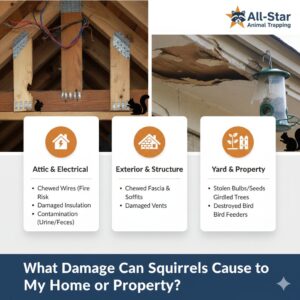
Squirrels may look harmless outside, but once they enter a home, they become highly destructive. Many homeowners do not realize theseriousness of squirrel infestations until damage becomes visible and costly. Understanding what damage squirrels can cause to your home or property is essential for protecting both safety and value.
When squirrels move indoors, they chew constantly, build nests, and contaminate living spaces. Their activity affects structural integrity, electrical systems, insulation, and indoor air quality. Early awareness helps prevent long-term damage and expensive repairs.
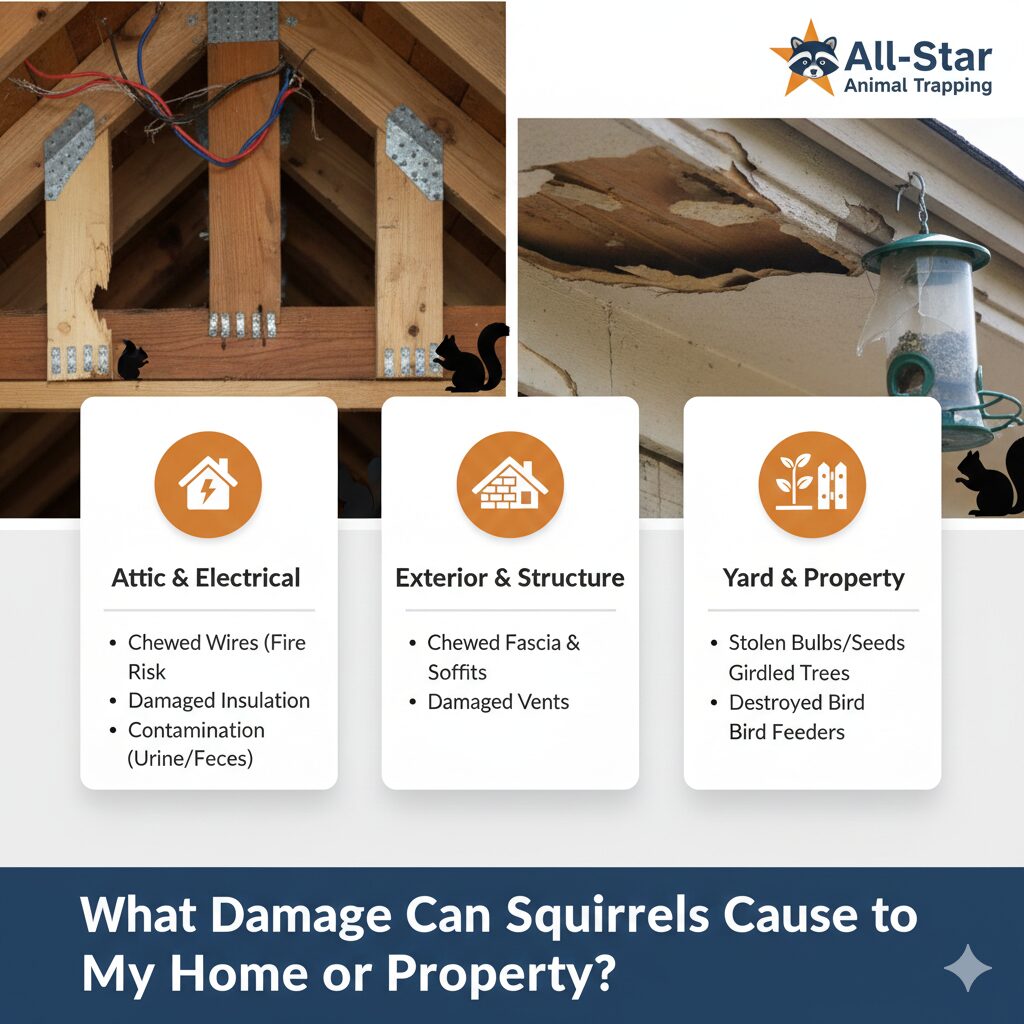
Structural Damage Squirrels Can Cause to Your Home
Structural damage is one of the most severe consequences of squirrel infestations. Squirrels chew wood, beams, soffits, and roof edges to gain and expand entry points. Over time, this compromises the strength of the home.
Once the structure is weakened, secondary issues like water intrusion and rot begin. Structural damage caused by squirrels often spreads faster than homeowners expect.
Common Structural Damage Areas
- Roof edges and fascia boards
Squirrels chew roof edges to access attic spaces. This weakens rooflines and exposes the home to moisture damage. - Wooden beams and framing
Continuous gnawing weakens support structures. Over time, this can affect the home’s stability. - Soffits and siding panels
These areas are soft and easy to chew through. Damage here allows other pests and rainwater to enter.
Electrical Damage Squirrels Can Cause to Property Systems
Electrical damage is one of the most dangerous effects of squirrel activity. Squirrels chew wiring insulation to manage tooth growth. This creates serious fire risks inside walls and attics.
Electrical damage often remains hidden until systems fail. Many homeowners only discover it after power outages or burning smells.
Electrical Hazards Created by Squirrels
- Chewed electrical wiring
Exposed wires can spark when electricity flows. Sparks can ignite nearby wood or insulation. - Short circuits and power failures
Damaged wires disrupt electrical flow. This causes frequent outages or appliance damage. - Increased fire risk
Squirrel-related electrical fires are a documented danger. Fire damage often exceeds the cost of prevention.
Insulation Damage Caused by Squirrels in Homes
Insulation damage is extremelycommon in squirrel infestations. Squirrels tear insulation apart to create nests and tunnels. This reduces energy efficiency throughout the home.
Damaged insulation also traps moisture and contaminants. This leads to poor indoor air quality and increased energy costs.
How Insulation Suffers
- Nesting material destruction
Squirrels shred insulation for nesting. Large areas become unusable. - Heat loss and cold drafts
Gaps allow air to escape. HVAC systems must work harder. - Moisture retention problems
Wet insulation promotes mold growth. Mold spreads quickly in attic spaces.
Roof Damage Squirrels Can Cause to Property Exteriors
Roof damage is often the first visible sign of squirrel infestation. Squirrels chew shingles, flashing, and roof decking to gain entry. Even small openings can cause major problems.
Once the roof is damaged, water leaks become common. Roof damage caused by squirrels leads to rot, mold, and ceiling stains.
Types of Roof Damage
- Shingle removal and chewing
Squirrels loosen or destroy shingles. This exposes the underlayment to the weather. - Flashing damage near vents
Metal flashing is chewed or bent. Water enters through these gaps. - Decking exposure
Chewed decking weakens the roof structure. Repairs become expensive if delayed.
Attic Damage Squirrels Can Cause Inside Homes
Attics provide warmth, shelter, and safety for squirrels. Once inside, they build nests, store food, and move constantly. Attic damage often goes unnoticed for long periods.
Squirrel activity in attics creates noise, contamination, and structural wear. Repairing attic damage can be complex.
Attic-Specific Damage Issues
- Nesting debris accumulation: Food and nesting materials pile up. This attracts insects and bacteria.
- Persistent scratching noises: Movement stresses ceiling materials. Drywall cracks may appear.
- Contamination from waste: Droppings and urine soak insulation. Odors spread through ventilation.
Wall and Ceiling Damage Caused by Squirrels
Squirrels frequently move between walls and ceilings. Their activity damages drywall, insulation, and internal supports. Damage is often hidden until it becomes severe.
Walls weakened from the inside may sag or crack. Ceiling damage can lead to collapse if ignored.
Interior Structural Problems
- Hidden drywall destruction: Damage occurs behind walls. Repairs often require demolition.
- Stains and moisture marks: Urine and water leaks stain ceilings. These stains worsen over time.
- Loss of structural support: Repeated gnawing weakens internal framing. Safety becomes a concern.
Health-Related Property Damage Caused by Squirrels
Squirrels contaminate properties through droppings, urine, and nesting debris. This creates unhealthy living conditions and strong odors. Contamination spreads quickly.
Airborne particles from waste affect indoor air quality. Health risks increase when contamination enters HVAC systems.
Contamination and Health Risks
- Bacterial growth in nesting areas: Waste supports harmful bacteria. Cleaning requires protective equipment.
- Persistent odor absorption: Odors seep into walls and insulation. Odor removal becomes difficult.
- Allergens spread through the air systems: HVAC circulation spreads contaminants. Entire homes become affected.
Damage to Stored Items and Personal Belongings
Stored belongings are common targets for squirrels. Attics and garages provide easy access to boxes and furniture. Items are often chewed beyond repair.
Cardboard containers offer no protection. Valuable or sentimental items are frequently lost.
Personal Property Damage
- Chewed boxes and containers
Squirrels destroy storage materials. Contents are exposed to moisture. - Fabric and furniture destruction
Cushions and fabrics are used for nesting. Replacement is often required. - Document and memory loss
Important papers may be destroyed. Recovery is usually impossible.
Exterior Property Damage Beyond the House
Squirrels also damage areas outside the main structure. Decks, sheds, gardens, and wiring are affected. Exterior damage reduces curb appeal.
Outdoor damage often leads to secondary infestations. Other animals may follow.
Exterior Damage Types
- Deck and railing chewing: Wooden decks are gnawed. Structural safety decreases.
- Garden and landscape destruction: Plants are uprooted or eaten. Landscaping costs increase.
- Shed and garage entry damage: Storage buildings become nesting sites. Damage spreads quickly.
Long-Term Property Value Impact of Squirrel Damage
Unresolved squirrel damage significantly reduces property value. Buyers view infestations as major red flags. Inspection reports often highlight squirrel-related issues.
Repair history affects resale potential. Homes with past infestations may face lower offers.
Financial Consequences
- Higher repair costs over time: Delayed action increases expenses. Small issues become major repairs.
- Insurance limitations: Many policies exclude wildlife damage. Homeowners pay out of pocket.
- Reduced buyer confidence: Visible damage discourages buyers. Negotiations favor the buyer.
Frequently Asked Questions
Q1: How fast can squirrels cause serious damage?
Significant damage can occur within weeks of entry.
Q2: Is electrical damage the most dangerous issue?
Yes, chewed wiring poses major fire risks.
Q3: Can squirrel damage spread to other areas quickly?
Yes, squirrels cause damage daily once inside.
Q4: Does attic damage affect the entire home?
Yes, insulation and air quality issues spread.
Q5: Are squirrel droppings dangerous indoors?
They can carry bacteria and contaminate the air.
Q6: Does squirrel damage lower resale value?
Yes, unresolved damage reduces buyer interest.
Q7: Can squirrels damage plumbing pipes?
Rarely pipes, but the surrounding materials are damaged.
Q8: Is professional inspection necessary after removal?
Yes, hidden damage must be identified.
Conclusion
Squirrels can cause extensive and dangerous damage to homes and properties. From structural weakening and electrical hazards to insulation loss and contamination, their impact is serious. Understanding what damage squirrels can cause to your home or property allows homeowners to act early.
Early detection and prevention protect both safety and financial investment. Addressing squirrel damage promptly prevents long-term consequences. Awareness is the first step toward protecting your property.
Humane Wildlife Removal You Can Trust
When nuisance wildlife becomes a problem, rely on All Star Animal Trapping for professional and humane animal removal services. We safely remove raccoons, skunks, squirrels, rodents, and more — protecting your home and family the right way.