Squirrels invading your home can lead to structural damage, electrical hazards, and costly repairs. Removing them is often necessary to protect both your property and safety. However, pricing for squirrel removal can vary significantly based on multiple factors. Understanding these factors can help you budget effectively and choose the right professional service.
Squirrel removal costs depend on the severity of the infestation, removal methods, property accessibility, and additional services provided. Homeowners who plan and understand these pricing influences can prevent unexpected expenses while ensuring effective, humane removal. This guide breaks down all key factors that influence the pricing of squirrel removal in your area.
Severity of the Squirrel Infestation
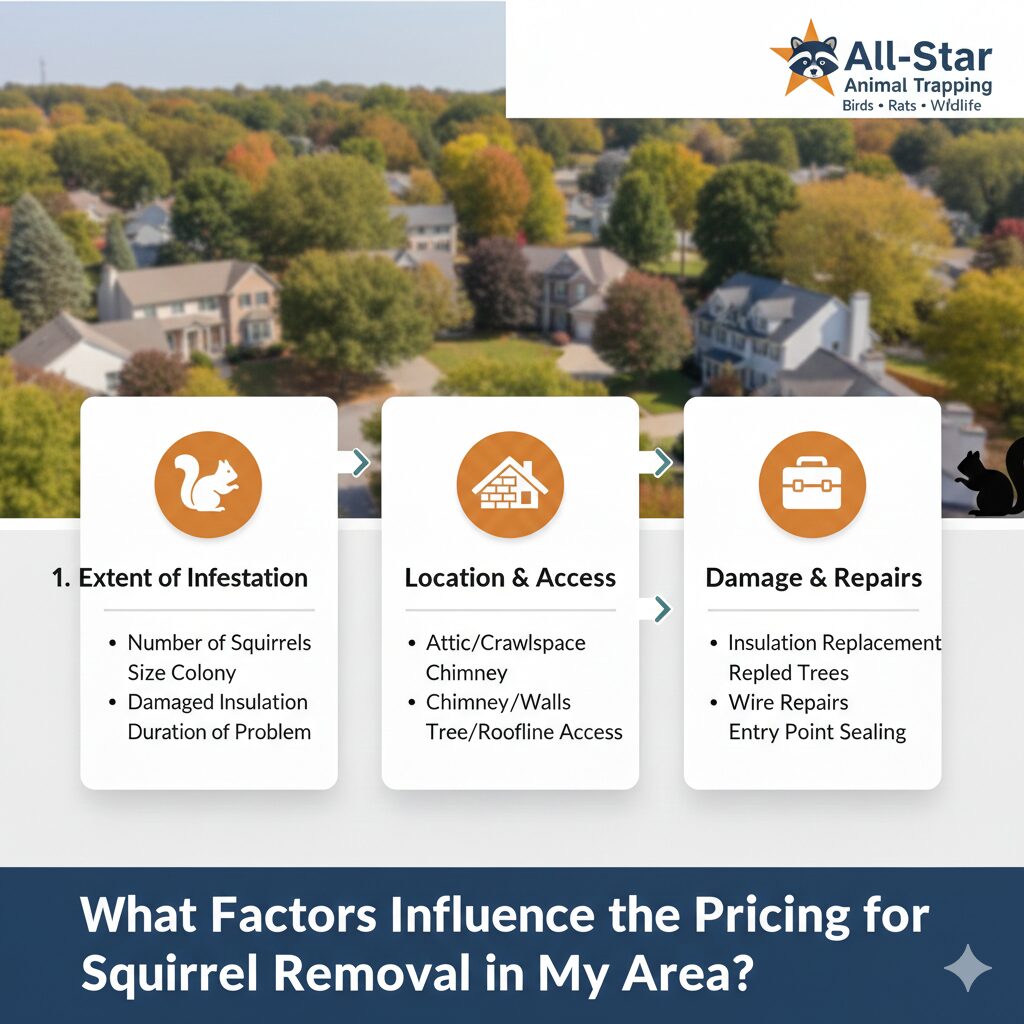
The severity of asquirrel problem is a primary factor affecting removal pricing. A minor infestation with only a few squirrels costs less to manage than a large-scale invasion.
Severe infestations often require multiple visits, several traps, and extensive exclusion methods. Homeowners may also face higher labor costs if repair or cleanup work is needed after removing the squirrels.
Signs of Severe Infestation
- Frequent scratching or scampering noises in the attic
- Visible chewed wires, vents, or insulation
- Presence of multiple squirrel nests inside the home
Methods of Squirrel Removal and Their Costs
The method used to remove squirrels significantly affects pricing. Some homeowners choose DIY solutions, while others hire professionals who use specialized equipment and humane methods.
Live trapping, one-way exclusion doors, attic repair, and repellents all vary in cost depending on the level of labor, materials, and expertise required. Combined strategies usually provide the most effective long-term results but are priced higher.
Popular Removal Methods
- Live Traps: Humane but may require multiple visits for effectiveness.
- One-Way Exclusion Doors: Allow squirrels to exit but not re-enter; installation requires skill.
- Attic Cleanup & Repair: Replacing insulation and repairing damage adds to the overall cost.
- Repellents & Deterrents: Often used alongside physical exclusion to prevent return.
Accessibility of Your Attic and Roofline
The more difficult it is for a technician to access your attic, the higher the cost of removal. Steep roofs, multi-story homes, or limited attic entry points require specialized equipment and additional labor.
Accessibility challenges increase both time and risk, making professional services more expensive. Homes with easier access typically see lower removal costs.
Geographic Location and Local Demand
Pricing for squirrel removal varies depending on the local area and demand for services. Urban regions with higher labor costs and greater demand generally have higher prices.
Rural or suburban locations may offer lower pricing, but seasonal peaks during fall and early spring can still drive costs upward. Local regulations regarding wildlife removal can also influence service pricing.
Seasonal Factors That Affect Squirrel Removal Pricing
Squirrels are most active during fall, preparing for winter, and in spring when young are born. High activity periods increase demand for removal services, which can raise prices.
Scheduling removal outside peak seasons often results in lower costs and faster service. Planning allows homeowners to take advantage of more competitive rates while avoiding emergency surcharges.
Additional Services That Impact Total Pricing
Some squirrel removal services include attic cleanup, insulation replacement, or minor repair work. These services prevent re-infestation and restore your attic, but they also raise total costs.
Common Additional Services:
- Insulation Replacement: Removing contaminated insulation ensures a clean and safe environment.
- Electrical Wire Repair: Prevents fire hazards caused by chewed wiring.
- One-Way Exclusion Installation: Permanent solution preventing squirrel re-entry.
- Attic Disinfection and Deodorization: Removes odors and bacteria left by squirrels.
Factors Homeowners Should Consider
When determining the pricing for squirrel removal in your area, homeowners should consider these unique factors:
- Property Size and Layout: Larger homes require more time to inspect and seal entry points. This increases labor and overall costs.
- Number of Entry Points: Each gap or vent needs to be secured individually, adding to material and labor expenses.
- Extent of Damage: Homes with chewed wires, insulation damage, or structural issues require repairs, raising pricing.
- Type of Roof and Attic: Multi-story or steeply angled roofs are harder to work on, leading to higher charges.
- Local Wildlife Regulations: Laws regarding humane removal or relocation can impact both cost and method choice.
Cost Estimates for Squirrel Removal Services
Squirrel removal pricing varies, but here’s a rough guide to what homeowners can expect based on infestation severity and additional services.
Estimated Pricing Table:
| Service Type | Average Cost (USD) | Notes |
| Minor trapping (1–2 squirrels) | $150 – $250 | Single visit, minimal cleanup required |
| Moderate infestation + exclusion | $300 – $500 | Includes one-way doors and basic attic inspection |
| Severe infestation + repair | $600 – $800+ | Includes insulation replacement, chewed wire repair, and cleanup |
| Emergency same-day removal | $400 – $900 | Rapid response for urgent infestations |
| Preventive squirrel-proofing | $200 – $400 | Includes barriers, vent protection, and attic inspections |
Cost-Saving Tips for Homeowners
- Schedule Early Removal: Acting at the first sign of squirrels prevents damage and reduces overall cost.
- Combine Services: Bundling removal with insulation repair or one-way doors often saves money in the long run.
- Choose Off-Peak Seasons: Lower demand outside fall and spring typically reduces pricing.
- DIY Prep Work: Clearing attic clutter or trimming branches before professionals arrive can lower labor fees.
- Request Written Estimates: Comparing multiple service providers ensures you receive competitive pricing and avoid surprises.
Long-Term Strategies to Avoid Repeat Squirrel Infestations
Preventing future infestations reduces the need for repeated removal services. Regularly inspect your roof, vents, and attic for new entry points.
Maintain tree branches away from the roofline, secure garbage bins, and remove fallen nuts or seeds. Proactive measures are both cost-effective and essential for long-term prevention.
Conclusion
Pricing for squirrel removal in your area depends on infestation severity, removal methods, property accessibility, and additional services provided. Understanding these factors allows homeowners to plan budgets and choose the best service.
Investing in professional removal ensures safe, humane, and permanent solutions while preventing costly re-infestations. Combining preventive measures with expert removal protects your property and saves money over time.
FAQs
1. Does the size of my attic affect removal costs?
Yes, larger attics require more time to inspect and seal, which increases labor costs. Smaller attics usually cost less to service.
2. Can I remove squirrels myself to save money?
DIY removal can be risky and may lead to re-infestation or damage. Professional removal ensures safety and permanent results.
3. How much does attic cleanup add to the total price?
Cleaning insulation, droppings, and debris usually adds $100–$300. The cost depends on infestation severity and attic size.
4. Are emergency squirrel removal services more expensive?
Yes, same-day or urgent removal services often charge higher rates due to immediate labor and equipment needs.
5. Do local regulations affect squirrel removal pricing?
Absolutely, rules on relocation, trapping, and humane treatment can influence both method and cost.
6. Will trimming trees reduce removal costs?
Yes, removing branches that provide roof access makes it easier for technicians, lowering labor fees.
7. Can repellents reduce the need for professional removal?
Repellents may help prevent re-entry, but usually cannot remove existing squirrels. Professional services remain necessary for infestations.
8. How often should I inspect my home to avoid re-infestation?
Inspect your roof and attic at least twice a year and after storms. Early detection prevents costly future removals.
Humane Wildlife Removal You Can Trust
When nuisance wildlife becomes a problem, rely on All Star Animal Trapping for professional and humane animal removal services. We safely remove raccoons, skunks, squirrels, rodents, and more — protecting your home and family the right way.