Rats are more than just a nuisance—they are carriers of a variety of dangerous pathogens that can impact both humans and pets. These rodents can transmit diseases directly through bites or indirectly through contaminated food, water, and surfaces. Understanding therisks posed by rats is essential for maintaining a healthy and safe home environment.
Even if you haven’t seen a rat, the presence of droppings, urine, gnaw marks, or nesting materials can indicate an infestation. Families with young children or pets are particularly vulnerable to the health hazards rats bring. Early detection and proper prevention can reduce exposure and protect the well-being of your loved ones.
How Rats Spread Diseases to Humans
Rats are vectors of many infectious diseases, which they can spread in multiple ways.
Direct Transmission Through Bites
- Rats can bite humans when they feel threatened, especially during infestations inside the home.
- Rat bites can introduce bacteria into the bloodstream, causing infections such as rat-bite fever.
- Children are particularly at risk because of their small size and tendency to interact with pets and household items that may be contaminated.
Indirect Transmission via Contaminated Food
- Rats contaminate food and surfaces with droppings and urine, which harbor harmful pathogens.
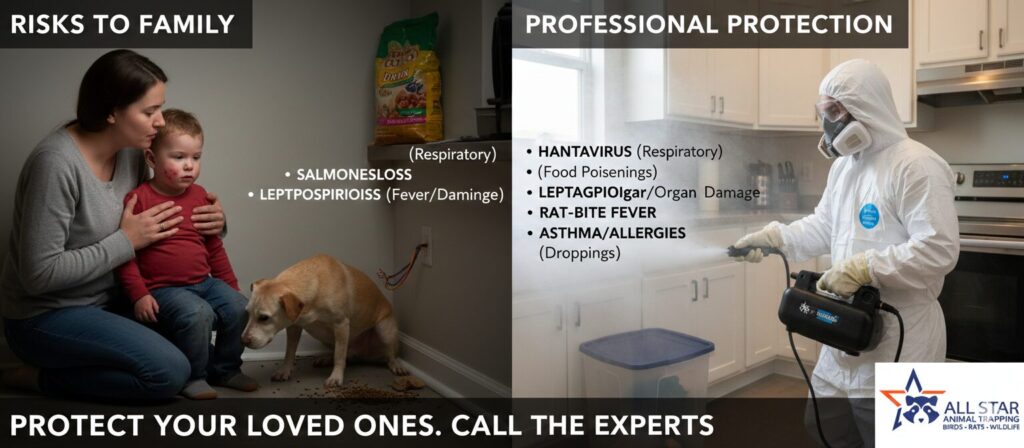
- Consuming contaminated food can lead to illnesses such as Salmonella and leptospirosis.
- Proper food storage and regular cleaning of kitchen areas are essential preventive measures.
Airborne Pathogens from Droppings
- Rat droppings and urine can dry and become airborne, creating dust particles that carry bacteria.
- Inhaling these particles may trigger respiratory issues, allergic reactions, or asthma attacks.
- Homes with heavy infestations often have a strong ammonia-like odor due to accumulated urine, which further increases health risks.
What Diseases Can Rats Transmit?
Rats are carriers of multiple diseases that affect humans and pets.
- Leptospirosis: Caused by bacteria in rat urine, leading to fever, muscle pain, and kidney problems.
- Salmonella: Contaminates food, causing severe gastrointestinal symptoms, including diarrhea and vomiting.
- Hantavirus: Rare but serious, transmitted via inhalation of dried urine or droppings.
- Rat-Bite Fever: Occurs after a bite or scratch, causing fever, rash, and joint pain.
- Lymphocytic Choriomeningitis Virus (LCMV): Transmitted via contact with infected urine or droppings, potentially leading to neurological complications.
These diseases highlight the importance of eliminating rats and practicing good hygiene.
How Pets Can Be Affected by Rats
Pets are at risk from rat-borne diseases and physical injuries caused by encounters with rodents.
Ingestion of Contaminated Food
- Cats and dogs can consume food or water contaminated with rat urine or droppings.
- This can lead to gastrointestinal problems, vomiting, and bacterial infections.
- Pets exploring areas where rats have nested or stored food are particularly vulnerable.
Bites and Scratches
- Pets may try to chase or attack rats, risking bites or scratches.
- Injuries can become infected and transmit bacterial diseases to both the pet and humans.
- Vet intervention may be required to treat wounds and prevent further complications.
Parasites Carried by Rats
- Fleas, ticks, and mites from rats can infest pets, causing discomfort and transmitting additional illnesses.
- Pets can act as carriers, spreading parasites throughout the home.
- Regular grooming and preventive veterinary care reduce risks.
When to Suspect a Health Risk in the Home
Even minimal signs of rats can indicate serious health hazards.
- Discovery of droppings or urine patches in kitchens, pantries, or bedrooms.
- Chewed packaging and food contamination.
- Unexplained illnesses in family members or pets after exposure to rat-infested areas.
- Scratching or movement noises at night that suggest nesting inside walls or ceilings.
What Preventive Measures Protect Families and Pets
Taking proactive steps reduces exposure to rat-borne diseases.
Sanitation and Cleaning
- Regularly clean floors, counters, and cupboards to remove food debris and droppings.
- Disinfect surfaces with bleach or other rodent-safe cleaners.
- Store food in sealed containers and avoid leaving pet food out overnight.
Securing Entry Points
- Inspect and seal cracks, gaps, and holes around the house, including vents and pipes.
- Use steel mesh, caulk, or heavy-duty materials to prevent rats from entering.
- Regularly check for new signs of damage to maintain security.
Outdoor Maintenance
- Keep yards clean, trim vegetation, and remove debris where rats may hide.
- Secure trash bins and compost heaps to prevent rodent attraction.
- Avoid leaving pet food outside for long periods.
How to Detect Early Signs of Rat-Related Health Hazards
- Look for droppings in corners, under furniture, or near food storage.
- Check for chewed wires, furniture, or packaging materials.
- Observe unusual symptoms in pets, such as vomiting, diarrhea, or lethargy.
- Be aware of unexplained illnesses in family members, including fever or rash.
- Listen for nighttime scratching, squeaking, or movement in walls or ceilings.
When to Seek Professional Help
Some situations require expert intervention to reduce health risks.
- Repeated sightings of rats or large numbers of droppings indicate a severe infestation.
- Structural damage or contamination of food sources requires professional assessment.
- Persistent noises and activity inside walls or attics suggest established nests.
- Professionals can safely remove rats, sanitize affected areas, and advise on prevention.
Benefits of Professional Rodent Control
- Experts have specialized tools to remove rats safely without spreading disease.
- Follow-up inspections ensure complete eradication and reduce the risk of reinfestation.
- Professionals provide preventive measures to protect families and pets long-term.
Key Points to Minimize Health Risks
- Inspect for Droppings: Regularly check hidden corners, cupboards, and pantries for rat droppings, which can harbor bacteria.
- Clean and Disinfect: Clean surfaces thoroughly, especially in kitchens and areas where pets eat, to prevent disease transmission.
- Seal Entry Points: Prevent rats from entering the home by sealing gaps around doors, windows, and utility lines.
- Monitor Pets: Watch pets for signs of illness or injury caused by rats and consult a veterinarian if necessary.
- Proper Food Storage: Store food and pet supplies in airtight containers and remove accessible sources of nutrition for rodents.
Conclusion
Rats pose serious health risks to both families and pets through disease transmission, bites, contamination, and parasites. Recognizing early signs, maintaining hygiene, and implementing preventive measures are essential steps to minimize exposure.
Professional intervention may be necessary for severe infestations to ensure complete eradication and protect the health of everyone in the household. By taking proactive precautions and staying vigilant, families can maintain a safe, healthy, and rat-free home environment.
FAQs
1. Can rats transmit diseases to children specifically?
Yes, children are more vulnerable due to their smaller size and weaker immune systems, making rat-borne illnesses like leptospirosis and salmonella particularly dangerous.
2. Are pets at higher risk indoors or outdoors?
Pets are at risk in both settings, but outdoor access increases the chance of contact with rats or their droppings.
3. Can rat urine cause asthma flare-ups?
Yes, exposure to rat urine and droppings can trigger asthma attacks or worsen respiratory conditions.
4. Do all rats carry diseases?
Not all rats are infected, but even a single rat can contaminate food or surfaces, posing a health risk.
5. How can fleas from rats affect pets?
Fleas from rats can bite pets, transmit infections, and infest the home, causing irritation and potential illness.
6. Are rat bites common in homes?
Bites are uncommon but possible, especially if rats feel threatened or trapped; bites can transmit infections.
7. Can professional cleaning reduce health risks after rat removal?
Yes, thorough cleaning and sanitization remove droppings, urine, and other contaminants, significantly reducing disease risk.
8. How can families prevent diseases after a rat infestation?
Disinfect affected areas, secure food, monitor pets for illness, and seal entry points to prevent future infestations.
Humane Wildlife Removal You Can Trust
When nuisance wildlife becomes a problem, rely on All Star Animal Trapping for professional and humane animal removal services. We safely remove raccoons, skunks, squirrels, rodents, and more — protecting your home and family the right way.