
Birds are a natural part of the environment, but when their populations grow unchecked near human spaces, they can create serious problems. If birds are not controlled or excluded properly, they may cause extensive damage to property, health, agriculture, and business operations. Understanding the risks helps property owners take preventive action before issues escalate.
When birds are allowed to nest, roost, and feed freely around buildings and open spaces, their presence can quickly become destructive. From structural damage to health hazards, the potential consequences are often underestimated. This article explains what potential damage birds can cause if they aren’t controlled or excluded and why proactive management is essential.
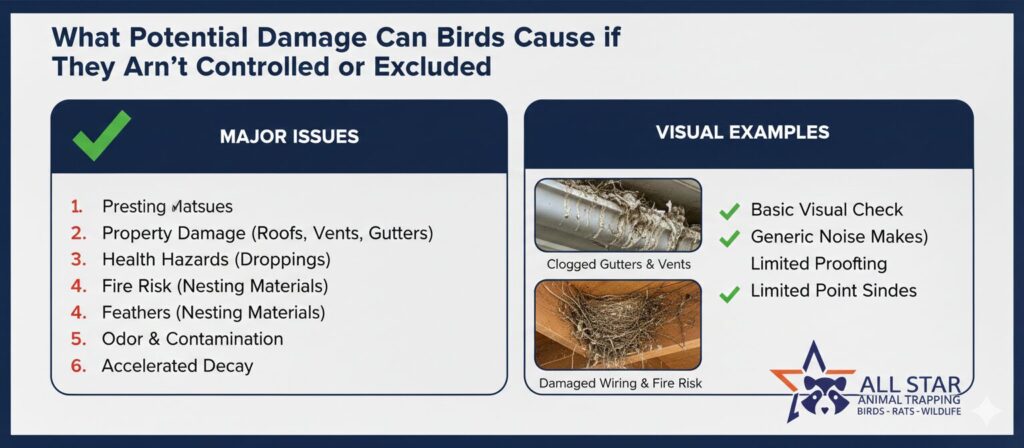
Structural Damage to Buildings and Infrastructure
One of the most common forms of damage caused by uncontrolled birds is structural deterioration. Birds frequently nest in roofs, gutters, vents, and ledges, leading to blocked drainage systems and weakened materials. Over time, nesting debris traps moisture, accelerating wear and tear on buildings.
Bird droppings are highly acidic and can corrode metal, stone, concrete, and paint. When birds are not controlled or excluded, their droppings accumulate rapidly on roofs, balconies, and walls. This damage often requires costly repairs and ongoing maintenance.
Roof and Gutter Damage
Birds often build nests in gutters and roof cavities, blocking water flow and causing leaks. Standing water increases the risk of mold, rot, and internal water damage. Over time, roof integrity may be compromised.
Vent and Chimney Obstruction
Bird nests in vents and chimneys restrict airflow and create fire hazards. These blockages can also interfere with heating and cooling systems. Poor ventilation reduces energy efficiency and indoor air quality.
Facade and Paint Corrosion
Bird droppings damage exterior finishes and discolor walls. The acidic nature of droppings erodes protective coatings. This leads to premature aging of building exteriors.
Health Risks from Bird Droppings and Parasites
If birds are not controlled or excluded, their droppings can pose serious health risks to humans. Dried droppings can become airborne and carry harmful pathogens. Exposure often occurs in attics, on rooftops, in warehouses, and in public spaces.
Birds also host parasites such as mites, fleas, and ticks. These pests can migrate indoors and infest homes or businesses. Health concerns increase significantly in areas with heavy bird activity.
Disease Transmission
Bird droppings may carry diseases like histoplasmosis, cryptococcosis, and psittacosis. These illnesses affect the respiratory system and may be severe for vulnerable individuals. Inhaling contaminated dust is a major risk factor.
Allergic Reactions
Feathers, droppings, and nesting debris can trigger allergies. Symptoms include coughing, skin irritation, and breathing difficulties. Prolonged exposure worsens allergic responses.
Pest Infestations
Bird nests attract insects and parasites. These pests can spread into living spaces. Once established, infestations are difficult and costly to remove.
Damage to Agricultural Crops and Food Supplies
Uncontrolled bird populations can lead to significant agricultural losses. Birds feed on seeds, fruits, grains, and vegetables at every stage of growth. Farmers often experience reduced yields when birds are not excluded from fields.
Large flocks can destroy entire sections of crops in a short period. Birds also contaminate produce with droppings, making it unfit for consumption. This leads to financial loss and food waste.
Seed and Seedling Destruction
Birds consume seeds immediately after planting. This disrupts crop establishment and reduces plant density. Replanting increases labor and operational costs.
Fruit and Grain Damage
Birds peck fruit, leaving it exposed to rot and insects. Grain crops such as corn and wheat are especially vulnerable. Partial damage often renders entire harvests unsellable.
Food Contamination
Bird droppings contaminate stored and harvested crops. Contaminated food fails safety inspections. This creates additional disposal and compliance expenses.
Commercial Property and Business Losses
Businesses face significant challenges when birds are not controlled or excluded. Bird activity affects storefronts, warehouses, restaurants, and industrial facilities. Customers often avoid locations with visible bird problems.
Bird droppings create slip hazards and unsanitary conditions. Repeated cleaning and repairs increase operating costs. Over time, brand reputation may suffer.
Retail and Hospitality Impact
Restaurants and cafes with outdoor seating are especially affected. Bird droppings deter customers and violate health codes. Negative experiences reduce repeat business.
Warehouse and Industrial Risks
Birds nesting in warehouses contaminate goods. Droppings damage packaging and products. This leads to inventory loss and regulatory issues.
Increased Maintenance Costs
Frequent cleaning and repairs strain budgets. Long-term neglect increases structural repair expenses. Preventive bird control is more cost-effective.
Fire Hazards and Electrical Damage
Bird nests pose serious fire risks when built near electrical systems. Dry nesting materials are highly flammable. Sparks from wiring or equipment can ignite nests easily.
Birds may also damage electrical components while nesting. This can lead to power outages and equipment failure. Fire risks increase when birds are not excluded from sensitive areas.
Electrical Short Circuits
Birds peck and displace wiring insulation. Exposed wires increase the risk of short circuits. This damages systems and creates safety hazards.
Equipment Overheating
Blocked vents prevent proper airflow. Equipment may overheat as a result. Overheating shortens equipment lifespan.
Increased Fire Risk
Dry nesting materials ignite easily. Fires spread rapidly through concealed spaces. Prevention is critical for safety.
Noise Pollution and Disruption
Large bird populations create constant noise. Continuous chirping, squawking, and flapping disrupt daily activities. Noise pollution affects both residential and commercial environments.
Persistent noise reduces comfort and productivity. In workplaces, it can impact concentration and employee morale. Noise complaints often increase in affected areas.
Early Morning Disturbances
Birds are most active at dawn. Loud calls disturb sleep patterns. Repeated disruption affects quality of life.
Roosting Noise
Large flocks create a constant sound while roosting. Noise levels increase during seasonal migrations. This can be overwhelming in urban areas.
Impact on Work Environments
Noise interferes with communication and focus. Offices and schools are particularly affected. Long-term exposure causes stress.
Environmental and Ecological Imbalance
When birds are not controlled or excluded, certain species dominate ecosystems. This disrupts natural balance and displaces native wildlife. Aggressive birds outcompete smaller species for food and nesting sites.
Overpopulation strains local resources. Vegetation damage affects insects and animals that rely on plants. Ecological imbalance spreads beyond the immediate area.
Displacement of Native Species
Invasive birds force native birds away. Biodiversity decreases as a result. Ecosystems become less resilient.
Vegetation Damage
Overgrazing and pecking damage plants. This affects soil stability and water retention. Environmental degradation follows.
Altered Food Chains
Bird overpopulation disrupts insect populations. This impacts pollination and pest control. The effects ripple through ecosystems.
Damage to Vehicles and Outdoor Assets
Bird droppings damage vehicles, machinery, and outdoor furniture. The acidic nature of droppings eats away at paint and protective coatings. Left untreated, surfaces corrode quickly.
Uncontrolled birds often roost above parking areas. Frequent exposure leads to costly repairs and cleaning. Businesses may face customer complaints and liability issues.
Vehicle Paint Damage
Droppings stain and etch paint surfaces. Repairs are expensive. Regular cleaning becomes necessary.
Outdoor Equipment Corrosion
Machinery exposed to droppings degrades faster. Metal components rust. Equipment lifespan is reduced.
Increased Cleaning Costs
Frequent cleaning is required to maintain the appearance. Labor and material costs increase. Neglect worsens damage.
Public Safety and Slip Hazards
Bird droppings create slippery surfaces on sidewalks, stairs, and entryways. Slips and falls become more likely in high-traffic areas. This increases the risk of injury.
Property owners may face legal liability if accidents occur. Public safety concerns rise when birds are not excluded from walkways. Preventive measures reduce risks significantly.
Slip and Fall Accidents
Wet droppings create slick surfaces. Injuries range from minor to severe. Liability claims may follow.
Accessibility Issues
Public access areas become unsafe. Elderly and disabled individuals are at greater risk. Safety compliance may be compromised.
Legal and Insurance Risks
Accidents lead to claims and lawsuits. Insurance costs may rise. Prevention helps avoid legal trouble.
Long-Term Financial Consequences
The long-term cost of ignoring bird problems can be substantial. Small issues often escalate into major repairs. Preventive bird control is significantly more affordable than restoration.
When birds are not controlled or excluded, expenses accumulate over time. Health issues, repairs, and lost revenue combine into a significant financial strain. Proactive management protects long-term investments.
Repair and Restoration Costs
Structural repairs are expensive. Damage worsens with time. Early intervention reduces expenses.
Lost Revenue
Businesses lose customers due to poor conditions. Agricultural losses reduce profits. Reputation damage impacts growth.
Ongoing Maintenance Expenses
Cleaning and repairs become routine. Costs never fully disappear. Prevention offers lasting savings.
Key Signs Birds Are Causing Damage
- Accumulated droppings on surfaces
- Blocked gutters or vents
- Frequent bird noise and roosting
- Visible nests in structures
- Damage to crops or landscaping
Conclusion
Understanding what potential damage birds can cause if they aren’t controlled or excluded is essential for property owners and businesses. Birds may seem harmless, but unchecked populations lead to structural damage, health risks, and financial losses. Early identification and preventive measures reduce long-term consequences.
Implementing bird control strategies protects buildings, health, and the environment. Proactive exclusion methods are humane, effective, and cost-efficient. Managing bird activity ensures safer, cleaner, and more sustainable spaces for everyone.
FAQs
Q1: Can bird damage worsen over time if ignored?
Yes, bird-related damage escalates quickly, leading to higher repair and health-related costs over time.
Q2: Are bird droppings dangerous when dry?
Yes, dried droppings can release airborne pathogens that pose respiratory risks.
Q3: Do birds damage insulation inside buildings?
Bird nests compress and contaminate insulation, reducing energy efficiency.
Q4: Can bird damage affect property value?
Yes, visible damage and sanitation issues lower property appeal and market value.
Q5: Are small birds less harmful than large birds?
Not necessarily, as small birds in large numbers can cause significant damage.
Q6: Can birds cause plumbing issues?
Yes, nests and debris can block drainage systems and pipes.
Q7: Is bird damage covered by insurance?
Coverage varies, and many policies exclude bird-related damage.
Q8: Does bird exclusion improve long-term maintenance costs?
Yes, exclusion significantly reduces ongoing cleaning and repair expenses.
Humane Wildlife Removal You Can Trust
When nuisance wildlife becomes a problem, rely on All Star Animal Trapping for professional and humane animal removal services. We safely remove raccoons, skunks, squirrels, rodents, and more — protecting your home and family the right way.