Bird infestations can pose serious health, safety, and structural risks to both residential and commercial properties. Identifying the signs of an infestation early allows property owners to act promptly. Recognizing warning signals ensures that professional bird control measures can be implemented effectively.
Ignoring these signs can lead to property damage, hygiene concerns, and costly repairs. Early detection also prevents the spread of disease carried by birds. Understanding the common indicators of infestation is key to maintaining a safe and clean environment.
Visible Droppings as a Primary Sign of Bird Infestation
Accumulated bird droppings on rooftops, ledges, and outdoor furniture indicate that birds have been frequently visiting. Droppings are acidic and can damage metal surfaces, corrode paint, and weaken concrete structures.
Professional bird control helps remove droppings and prevent future accumulation. Early intervention minimizes repair costs and protects property aesthetics.
Roof and Gutter Damage from Bird Droppings
Bird droppings in gutters can clog drainage systems, leading to water damage and leaks. Roof shingles may corrode over time if droppings are not removed. Installing professional exclusion systems protects these vulnerable areas.
Outdoor Equipment Contamination
Droppings on HVAC units or machinery can cause rust and operational issues. Regular cleaning and protective barriers prevent damage. Professionals ensure proper sanitation during removal.
Unusual Noises as Signs of Bird Infestation
Persistent cooing, squawking, or flapping sounds around properties may signal overcrowding. Birds are usually active at dawn and dusk, but unusual noises at other times suggest a severe problem.
Professional assessment can identify species and nesting locations. Noise control methods combined with exclusion prevent recurring disturbances.
Identifying Bird Species by Sound
Recognizing specific bird calls helps target control methods effectively. Pigeons, sparrows, and starlings exhibit different behavior patterns. Accurate identification ensures proper mitigation strategies.
Mitigating Noise Disturbances
Sound deterrents, including ultrasonic devices, reduce disruptive bird activity. Combining auditory methods with visual barriers maximizes effectiveness. Routine monitoring ensures long-term noise control.
Nesting Material and Debris Indicate Infestation
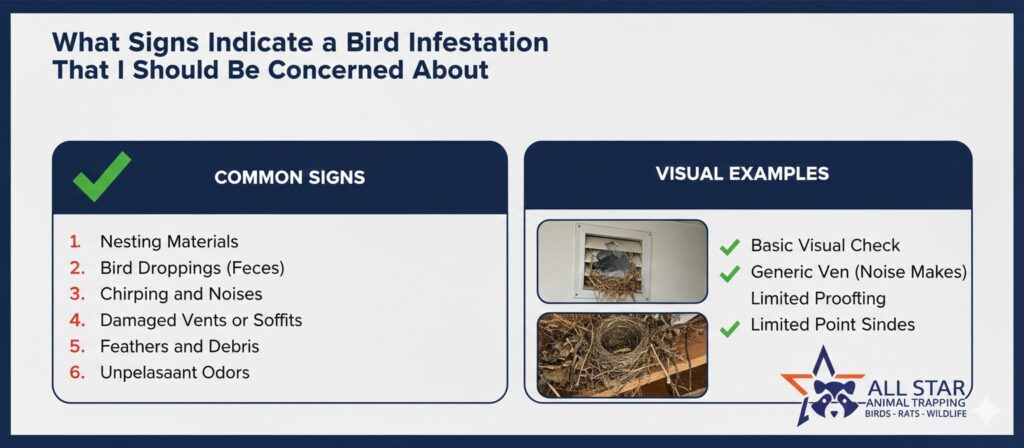
Twigs, feathers, and seeds found near vents, attics, or roofs indicate nesting activity. Nests can obstruct airflow, block chimneys, and attract secondary pests. Professional removal and exclusion prevent repeated nesting.
Behavioral deterrents discourage birds from rebuilding in the same location. Regular inspections ensure early detection and long-term prevention.
Attic and Vent Blockages
Nesting in vents reduces HVAC efficiency and increases fire hazards. Professionals seal gaps and install deterrents for protection. Preventing entry avoids costly damage and energy loss.
Chimney Nesting Concerns
Birds nesting in chimneys prevent smoke escape, creating fire hazards. Chimney caps and professional exclusion solutions eliminate risk. Regular maintenance ensures continued safety.
Structural Damage as a Sign of Bird Infestation
Pecking, droppings, and nesting can erode roof tiles, wooden structures, and facades. Early signs include scratches, chipped paint, or corroded metal.
Professional bird control prevents further structural deterioration. Maintaining buildings proactively saves repair costs and protects the property’s integrity.
Roof and Shingle Erosion
Roof tiles and shingles deteriorate faster when exposed to droppings. Installing spikes or netting reduces bird activity. Routine maintenance preserves roofing materials.
Window Frame Damage
Birds pecking at window frames cause cracks and scratches. Protective barriers prevent further damage. Professionals combine exclusion and monitoring for lasting results.
Increased Pest Presence as an Indicator of Bird Infestation
Bird activity often attracts insects such as mites, flies, and beetles. Rodents are drawn to leftover seeds and nesting materials. Professional control addresses these secondary pest problems effectively.
- Insect Attraction: Feathers and droppings provide breeding grounds for flies and mites.
- Rodent Infestation: Seeds and debris attract rats and mice. Exclusion prevents access.
- Disease Spread: Birds carry pathogens affecting humans. Professionals reduce risks.
- Property Contamination: Droppings create unsanitary conditions that attract pests.
- Warehouse and Storage Damage: Bird activity can contaminate goods. Monitoring and barriers protect inventory.
Behavioral Changes in Birds Around Property
Aggressive or unusual bird behavior, such as frequent swooping or territorial squawking, may indicate overcrowding. Birds may repeatedly attempt to access food sources or roosting areas.
Professional bird control addresses behavioral patterns effectively. Observing bird habits helps in implementing targeted exclusion methods.
Feeding Area Interference
Birds congregating around food storage or outdoor kitchens are a concern. Installing protective covers and deterrents prevents contamination. Regular monitoring ensures sustained results.
Roosting Patterns
Identifying frequent roosting spots allows precise installation of spikes, nets, or wires. This prevents further damage and discourages repeated visits.
Signs of Contamination and Health Risks
Bird droppings carry pathogens such as Histoplasmosis, Salmonella, and Psittacosis. Contamination of surfaces, HVAC systems, or food storage areas increases infection risk.
Professional bird control reduces exposure and maintains hygiene standards. Regular cleaning and exclusion methods ensure compliance with health regulations.
Bird Sightings Inside Buildings as a Serious Sign
Birds entering kitchens, warehouses, or offices indicate urgent intervention is needed. Food contamination and droppings pose immediate health risks.
Professional exclusion secures entry points and prevents repeat intrusions. Visual deterrents and monitoring maintain a bird-free environment.
Kitchen Safety Measures
Bird presence in kitchens spreads bacteria and droppings. Professionals implement barriers and cleaning protocols to maintain safety.
Warehouse Protection Strategies
Bird activity in warehouses can damage stored products. Exclusion and monitoring prevent contamination and operational disruption.
Seasonal Activity as a Sign of Potential Infestation
Bird nesting and migration increase activity during spring and summer. Droppings, noises, and debris accumulate faster during these seasons.
Seasonal monitoring and temporary deterrents prevent problems from escalating. Professional strategies ensure property protection year-round.
Early Signs That Require Professional Evaluation
DIY attempts often fail to detect underlying issues. Experts assess property-specific risks and implement long-term solutions.
Identification of bird species, nesting habits, and access points allows targeted interventions. Follow-ups ensure sustained protection.
Conclusion
Recognizing what signs indicate a bird infestation that I should be concerned about prevents extensive damage and health risks. From droppings and debris to structural damage and pest attraction, early detection is essential. Professional services provide humane, effective, and compliant solutions. Long-term monitoring and exclusion ensure sustained results, saving money and protecting property.
Investing in professional bird control safeguards property, employees, and residents. Timely action prevents costly repairs, maintains hygiene, and ensures safety. Humane, ethical, and effective bird management creates a secure environment year-round.
FAQs
1. How can I tell if a bird infestation is severe?
Large amounts of droppings, nesting debris, and loud noises indicate a serious problem. Professional assessment confirms severity.
2. Do bird nests pose fire hazards?
Yes, nests in chimneys or vents can block airflow and increase fire risk. Exclusion solutions prevent this hazard.
3. Can bird droppings damage HVAC systems?
Yes, droppings can clog filters and corrode components. Regular cleaning and protective barriers prevent damage.
4. Are ultrasonic deterrents effective?
Yes, they repel birds without harming humans. Combined with physical barriers, they provide long-term results.
5. How often should property be inspected for birds?
Inspections every 3–6 months detect early signs. Regular checks prevent severe infestations.
6. Can bird activity increase pest infestations?
Yes, droppings and nesting materials attract insects and rodents. Professional control addresses both problems.
7. Is bird control legal for all species?
Most methods are legal if they comply with wildlife protection laws. Experts ensure ethical and legal compliance.
8. Do seasonal changes affect bird infestations?
Yes, nesting and migration heighten activity in spring and summer. Seasonal monitoring prevents escalation.
Humane Wildlife Removal You Can Trust
When nuisance wildlife becomes a problem, rely on All Star Animal Trapping for professional and humane animal removal services. We safely remove raccoons, skunks, squirrels, rodents, and more — protecting your home and family the right way.