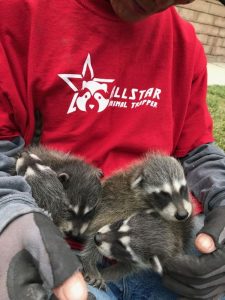
At All Star Animal Trapping, we understand that dealing with wildlife can be a daunting and stressful task, especially when it involves caring for raccoons with babies. These intelligent and curious creatures are known for their scavenging and adaptive abilities, making them a common nuisance for many homeowners and businesses.
Raccoons have remarkable problem-solving skills — they can open latches, climb steep surfaces, and even remove shingles to reach attics. This makes them difficult to deter without professional help. When they have babies, the problem becomes even more sensitive, as removing them improperly can result in injury or orphaned kits.
When raccoons choose to make their homes in human-occupied areas, they not only cause property damage but also pose a health hazard for residents and their pets. However, what makes dealing with raccoons with babies even more complicated is the ethical and legal considerations that must be taken into account.
Removing nursing mothers or their babies without care can violate local wildlife protection laws. Timing is everything — female raccoons give birth in late winter through early spring, and the young remain dependent for up to three months. Understanding this biological timeline helps our technicians act at the right moment, balancing legal compliance and humane care.
At our company, we have a team of experienced and trained professionals who have extensive knowledge in handling raccoons with babies. Our priority is to ensure the safety of both the raccoons and our clients while providing humane and effective solutions for their removal.
So, how do we deal with raccoons with babies?
1. Thorough Inspection:
The first step in removing raccoons with babies is to conduct a thorough inspection of the property. Our team will search for any potential entry points and assess the extent of the infestation. This allows us to develop a customized plan tailored to your specific situation.
We inspect everything — rooflines, attic vents, soffits, and crawl spaces — because even a three-inch gap can be enough for a raccoon to squeeze through. We use infrared cameras and endoscopic scopes to confirm if babies are present, which prevents premature sealing or relocation.
Homeowner Tip:
If you hear scratching or chittering at night, resist the urge to investigate directly. Instead, document where the noise is coming from and call a professional. Disturbing the nest can cause the mother to relocate her babies deeper into the structure.
2. Humane Trapping:
At All Star Animal Trapping, we use only the most humane and effective trapping methods. Our state-of-the-art traps are designed to ensure no harm comes to the raccoons or their babies. We also use baby-safe exclusion doors, which allow the adult raccoons to exit the property but prevent them from re-entering.
Our exclusion strategy follows a “mother-first” approach — we allow the mother to leave naturally before removing the young. This reduces panic behavior and ensures the family is relocated together.
Professional Insight Table:
| Objective | Humane Approach | Why It Matters |
|---|---|---|
| Evict mother | One-way exclusion door | Prevents re-entry without harm |
| Relocate babies | Manual, gloved removal | Avoids injury or separation |
| Monitor activity | Motion sensors or cameras | Confirms complete evacuation |
| Prevent return | Repair entry points | Long-term protection |
Pro Tip: Never use deterrent sprays or loud music to “chase out” raccoons with babies — mothers often scatter their young into hidden, inaccessible areas, making safe removal far harder.
3. Safe Removal:
Once the adult raccoons are safely removed, our team will carefully and gently remove the babies from the nesting area. We understand that these babies are vulnerable and require special care and attention. That is why we have trained experts who will handle them with utmost care and transport them to a rehabilitation center for proper care and release back into the wild.
During removal, babies are kept in insulated wildlife containers to maintain warmth. We coordinate with licensed rehabilitation partners that specialize in raccoon care — ensuring the young are bottle-fed and raised until they’re ready to return to natural habitats.
Did You Know?
Baby raccoons (called kits) are born blind and deaf and depend entirely on their mother for the first five weeks. Improper removal during this stage almost always leads to their death, which is why humane, professional handling is critical.
4. Property Repairs:
After completing the raccoon removal, our team will thoroughly inspect the property for any damages caused by the raccoons. We will then provide necessary repairs and exclusion services to prevent future infestations.
Raccoons can cause thousands of dollars in attic damage — tearing insulation, contaminating air ducts, and gnawing electrical wires. Once repairs are complete, we seal every entry hole using metal flashing, hardware cloth, and raccoon-proof materials rated for outdoor use.
Preventive Maintenance Checklist:
Install heavy-gauge steel chimney caps and vent covers.
Trim tree branches within 8–10 feet of your roofline.
Secure pet doors and outdoor food sources.
Store garbage in raccoon-resistant containers.
Schedule semi-annual wildlife inspections.
Pro Insight: Raccoons return to former den sites over multiple seasons. Proper sealing and sanitization are the only ways to ensure permanent exclusion.
5. Follow-up Services:
We don’t just remove animals; we also provide follow-up services to ensure that the problem does not recur. Our team will return to the property to remove the traps, check the exclusion work and make sure the property is secure from any future intrusions.
At All Star Animal Trapping, we strictly adhere to all state and federal laws regarding the handling and removal of raccoons and their babies. We are also licensed and insured, giving our clients the peace of mind that they are working with a professional and responsible company.
Contact Our Experts for Safe, Humane Raccoon Baby RemovalIn Conclusion
Dealing with raccoons with babies requires expertise, patience and a humane approach. At All Star Animal Trapping, we have years of experience in handling these situations, and our methods have been proven to be effective. So if you are facing a raccoon problem, contact us, and we will be happy to assist you in a safe and humane way.
Thank you for choosing All Star Animal Trapping, where your satisfaction is our top priority. Beyond solving today’s wildlife issues, our mission is to educate communities on coexistence — protecting homes while preserving nature’s balance.
Bonus FAQ Section for Homeowners
Q1: How do I know if raccoons have babies in my attic?
Listen for soft “chirping” or “chattering” at night. Adult raccoons are heavy and loud, while babies make lighter, squeaky noises.
Q2: Can I remove raccoons myself?
No. In many regions, it’s illegal to trap or relocate raccoons without a license — and improper handling may orphan the babies.
Q3: What months are raccoons most likely to give birth?
Typically between March and June, though mild winters can extend breeding into early summer.
Q4: How much does professional raccoon removal cost?
The cost varies depending on the severity of the infestation and structural damage, but humane removal typically ranges from $300–$900, including inspection and exclusion repairs.
Q5: How can I prevent raccoons from returning?
Seal entry points, keep outdoor lights on at night, secure garbage bins, and remove food attractants like pet bowls or compost piles.
Humane Wildlife Removal You Can Trust
When nuisance wildlife becomes a problem, rely on All Star Animal Trapping for professional and humane animal removal services. We safely remove raccoons, skunks, squirrels, rodents, and more — protecting your home and family the right way.