In films and TV, raccoons are often depicted as playful, mischievous creatures with cute faces. While entertaining, the reality is far different. Raccoons are destructive, disease-carrying animals capable of causing severe damage to homes, offices, and commercial buildings. Their intelligence, agility, and persistence allow them to exploit weak points in a structure, often going unnoticed until major damage occurs.Raccoons are nocturnal and highly opportunistic. They can climb, squeeze through small openings, and are attracted to areas offering warmth, shelter, and food. Once inside a property, their behavior can quickly escalate from minor nuisance to serious structural and health problems.
Destroying Your Attic Insulation
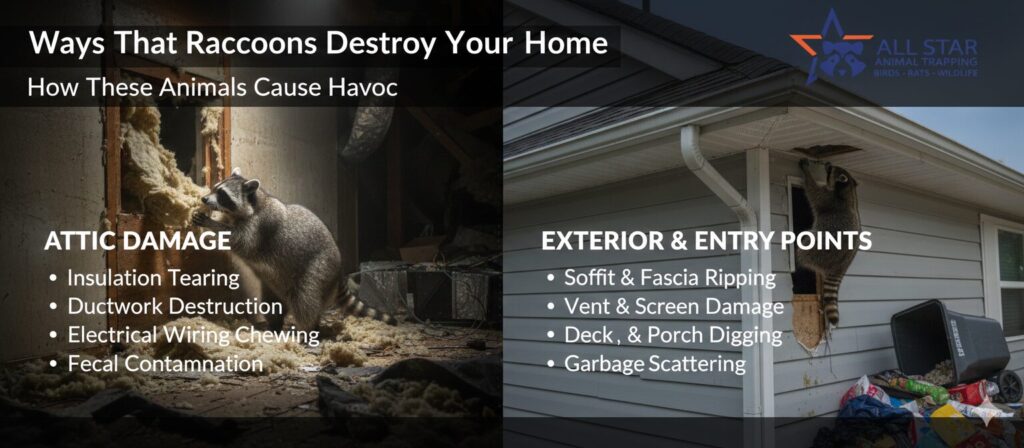
One of the first areas raccoons target is the attic insulation. Insulation relies on trapped air pockets to maintain energy efficiency, keeping a home or business at a stable temperature. Unfortunately, raccoons trample insulation as they explore, compacting it and reducing its effectiveness.
This damage results in higher heating and cooling costs, as HVAC systems must work harder to maintain comfortable temperatures. Over time, the insulation becomes flattened and compromised, losing its ability to provide thermal regulation. In addition, trampled insulation is more susceptible to contamination from raccoon droppings and urine, further reducing its performance and creating a health hazard.
Droppings and Sanitation Problems
Raccoons often use attics or hidden spaces as toilets, leaving behind urine and feces. This behavior introduces multiple problems:
The accumulation of droppings and urine can produce strong, unpleasant odors. High temperatures, especially in summer, can intensify the smell, spreading it throughout the building. Urine and feces can also leave permanent stains on insulation, ceilings, and other surfaces. Additionally, raccoon droppings may carry parasites such as roundworms, posing serious health risks to humans and pets.The combination of odor, stains, and potential pathogens makes an attic with raccoon activity both hazardous and unpleasant, highlighting the importance of immediate intervention once an infestation is detected.

Creating Holes and Exposing Buildings to the Outdoors
Raccoons are skilled at tearing holes in roofs, vents, siding, and eaves to gain access to structures. These entry points create multiple problems.Once a raccoon has established access, the openings can allow other pests, such as squirrels, birds, or insects, to enter as well. These gaps also reduce energy efficiency, letting heat or air-conditioned air escape, and can compromise the structural integrity of walls or roofs. Holes in building envelopes often become permanent vulnerabilities, leading to repeated problems if not properly repaired.

Chewing Electrical Wiring
Attics often contain key electrical wiring networks that deliver power throughout a building. Raccoons may chew on these wires, causing exposed copper and increasing the risk of sparks and potential fires.
Electrical damage caused by raccoons is extremely dangerous. In addition to fire hazards, a deceased or decaying raccoon in the attic can create additional odor and contamination issues. Damage to wiring not only threatens safety but also leads to costly repairs. Immediate detection and professional intervention are critical in preventing serious incidents.
Prevention Tips for Raccoon Infestations
- Seal all potential entry points, including gaps in roofs, vents, eaves, and foundations.
- Secure garbage cans and compost bins to eliminate attractants.
- Remove outdoor food sources, such as fallen fruit, pet food, or birdseed.
- Trim trees, shrubs, and branches that provide access to roofs or attics.
- Install attic barriers, screens, or mesh to protect vulnerable areas.
Common Raccoon Damage and Risks
| Type of Damage | Description | Impact | Professional Advice |
| Attic Insulation | Trampling and compaction | Reduced energy efficiency, higher bills | Inspect attic regularly, replace damaged insulation |
| Droppings & Urine | Contamination in insulation | Foul odors, stains, health hazards | Professional cleaning and sanitization |
| Structural Damage | Creating holes for entry | Vulnerability to other pests, energy loss | Seal entry points, repair exterior damage |
| Electrical Wiring | Chewing wires | Fire hazard, power issues | Inspect wiring, hire licensed electrician |
| Odors | Decomposition or waste buildup | Unpleasant smell, health concerns | Professional odor removal, deep cleaning |
FAQs About Raccoon Infestations
Q1: How can I tell if raccoons are in my attic?
A: Listen for scratching or movement at night. Check for droppings, torn insulation, or small entry holes.
Q2: Are raccoon droppings dangerous?
A: Yes, they can carry parasites and bacteria harmful to humans and pets.
Q3: Can raccoons cause electrical fires?
A: Yes, chewing on electrical wiring can expose copper wires, creating fire hazards.
Q4: Should I remove raccoons myself?
A: For safety and effectiveness, hire a professional wildlife removal service.
Q5: How can I prevent raccoons from returning?
A: Seal entry points, secure trash, maintain landscaping, and regularly inspect vulnerable areas.
Why Professional Raccoon Removal Is Essential for Your HomeConclusion
While raccoons may appear cute on TV, they are destructive intruders capable of causing significant damage to homes and businesses. From destroying insulation and leaving droppings to creating holes and chewing wiring, these animals pose both financial and safety risks.
Early detection, professional removal, and preventive measures are essential to protecting your property. By understanding raccoon behavior and taking proactive steps, homeowners and business owners can minimize damage, reduce health hazards, and avoid costly repairs.
Even a small raccoon infestation can quickly escalate, so acting before it’s too late is the key to maintaining a safe and healthy property.
Humane Wildlife Removal You Can Trust
When nuisance wildlife becomes a problem, rely on All Star Animal Trapping for professional and humane animal removal services. We safely remove raccoons, skunks, squirrels, rodents, and more — protecting your home and family the right way.